
Marriage and Spiritual Alignment
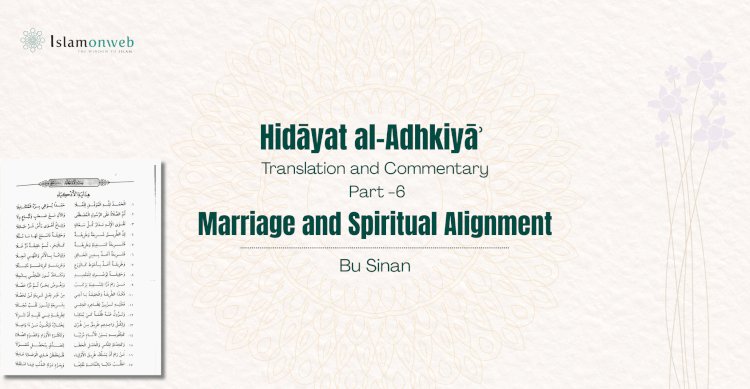
[This article is sixth part of a series presenting an English translation and brief explanation of Hidāyat al-Adhkiyāʾ ilā Ṭarīq al-Awliyāʾ by Shaykh Zayn al-Dīn ibn ʿAlī al-Malībārī
28.واتَّخِذْ من الأزواجِ من ما ساعدتْ في طاعةٍ واخترْ عزوباً فاضلا
28.Leave off a spouse who do not assist you
In obedience and choose noble celibacy.
Further explaining dimensions of Zuhad, the poet says that if a spouse becomes a barrier between you and obedience to Allah, pulling you away from your higher purpose, then do not allow that bond to override your devotion. Marriage is meant to support faith, not suffocate it. If companionship strengthens your path to Allah, it is a blessing; but if it consistently distracts and derails you from righteousness, then it is better to choose a state of dignified solitude than a union that weakens your soul.
The marriage, in itself, is not opposed to zuhd. It was legislated for profound purposes: preservation of chastity, continuity of the Ummah, and cultivation of mercy between hearts. The Prophet ﷺ himself married, built a family life, and encouraged it. He said:
“Whoever Allah grants a righteous spouse, He has helped him in half of his religion.”
Thus, a righteous spouse is not a distraction from ascetic discipline; she (or he) is its reinforcement. The problem arises only when desire overwhelms discipline, when indulgence clouds purpose, or when companionship becomes spiritually draining rather than spiritually elevating.
Imām al-Ghazālī, in his balanced approach, explains that marriage may either assist or hinder the path depending on the condition of the individual. If marriage protects one from temptation, organises one’s life, and supports worship, it is superior. But if it overwhelms the heart with preoccupation and weakens spiritual focus, then restraint may be safer for that individual. The measure is not the institution itself, but its impact upon the heart.
Allah says:
“O you who believe, indeed among your spouses and your children are enemies to you, so beware of them. But if you pardon, overlook, and forgive — then indeed Allah is Forgiving and Merciful.” (64:14)
This “enmity” is not inherent, nor rooted in hatred, but in obstruction. As explained by the early scholars, a spouse or child becomes an “enemy” when their love diverts one from obedience — when emotional attachment delays obedience to Allah, weakens resolve, or encourages compromise in matters of faith. No harm is greater than standing between a servant and his Lord. Thus, the warning is not against loving one’s family, but against allowing that love to override loyalty to Allah.
Yet the verse immediately tempers caution with mercy: “But if you pardon, overlook, and forgive — then indeed Allah is Forgiving and Merciful.” Even when family members hinder spiritual growth, the response is not harshness but patience and forgiveness. The believer protects his religion without abandoning compassion. When spouses are spiritually aligned, love becomes elevation; when misaligned, it becomes trial. The higher path is shared direction, a home where affection strengthens obedience rather than competes with it.
The Qur’an reinforces this mutual responsibility:
“And command your family to prayer and be steadfast upon it.” (20:132)
The word waṣṭabir (be steadfast with endurance) indicates more than simple patience. It suggests persistent, sustained effort. Reforming habits, correcting weaknesses, and cultivating discipline in one another requires gentleness, perseverance, and time. A marriage at its highest level is a school of refinement. Each partner patiently polishes the other — not with harshness, but with mercy.
Indeed, the Prophet ﷺ said:
“A grateful heart, a remembering tongue, and a righteous spouse who assists you in your worldly and religious affairs — these are the best treasures people can accumulate.”
Notice the pairing: a grateful heart, a remembering tongue, and a righteous spouse. The spouse becomes part of the spiritual triad. She (or he) is not an accessory to life but a means of elevation.
This alignment transforms the marital bond. When two partners share prayer, encourage charity, restrain one another from heedlessness, and correct one another gently, their home becomes a place of barakah. The marriage itself becomes an act of worship. In such a union, zuhd is not compromised; it is strengthened. The world remains in their hands, not in their hearts.
This is why the Prophet ﷺ described the highest form of marital companionship as spiritual cooperation:
“May Allah have mercy on a man who rises at night to pray and awakens his wife; if she refuses, he sprinkles water upon her face. And may Allah have mercy on a woman who rises at night to pray and awakens her husband; if he refuses, she sprinkles water upon his face.” (Abū Dāwūd)
This image is powerful. The ideal marriage is two souls pulling each other toward tahajjud. Spiritual intimacy surpasses emotional intimacy. When both partners are aligned in their desire for Allah, their relationship ascends beyond companionship into shared elevation. At its highest level, marriage becomes shared ascension — two hearts relocating their centre of gravity together toward the Hereafter.
Verses 29–30 – The Four Pillars of Social Safety
٢٩. لسلامةِ الدنيا خصالٌ أربعٌ غُفرَ لجهل القوم منعك تجهلا
٣٠. وتكون من سيبِ الأُناسي آيساً ولسيب نفسَك للأناسي باذلا
- For worldly safety four firm traits are shown:
Forgive their ignorance—let not such be your own.
- Despair of what the people own,
Spend yourself from what you own
These two verses present four protective pillars for navigating society: pardoning the ignorance of others, restraining one’s own ego from retaliatory ignorance, freeing the heart from dependence on what people possess, and yet generously offering oneself in service to them. This is a profound equilibrium: inward independence combined with outward generosity. One neither lives off people nor lives against them; one lives for Allah among them.
Allah says:
{خُذِ العَفْوَ وَأْمُرْ بِالْعُرْفِ وَأَعْرِضْ عَنِ الْجَاهِلِينَ}
“Take to forgiveness, command what is right, and turn away from the ignorant.” (7:199)
The first two traits mentioned in the verse — forgiving the ignorance of people and preventing oneself from responding with ignorance — are in fact a living embodiment of Allah’s inclusive command:
Ibn al-Qayyim رحمه الله notes that Allah gathered the foundations of noble character in this single āyah. Jaʿfar ibn Muḥammad said: Allah commanded His Prophet ﷺ with the highest standards of character, and there is no verse in the Qur’an more comprehensive in noble conduct than this one. The poet’s two traits — forgiving ignorance and restraining oneself from ignorant retaliation — are nothing but a practical unfolding of “take forgiveness” and “turn away from the ignorant.”
“Take forgiveness” (khudh al-ʿafw) means make pardon your default posture. Do not live in constant reaction to people’s flaws. Accept from them what is easy, overlook their shortcomings, and do not demand perfection. Ibn al-Qayyim explains that a leader or influential person inevitably faces three categories of interaction: commanding and guiding others, receiving what they offer of obedience, and dealing with those who either support or oppose him. In all of these states, the divine method is balance. One commands with what brings benefit (al-ʿurf), takes from people what they can give willingly without hardship, and when confronted with ignorance, he does not descend to its level.
The second phrase — “turn away from the ignorant” — directly reflects the poet’s instruction to prevent oneself from behaving ignorantly. Turning away does not mean weakness or silence in truth; it means refusing to mirror foolishness. As Allah says elsewhere:
{وَإِذَا خَاطَبَهُمُ الْجَاهِلُونَ قَالُوا سَلَامًا}
“When the ignorant address them harshly, they say: Peace.” (25:63)
Thus, social safety begins not by reforming everyone else, but by mastering one’s own response. The ignorant may act from impulse; the believer acts from principle. Forgiveness disarms conflict; restraint preserves dignity.
When these two traits are lived sincerely, a person moves through society with stability. He neither escalates ignorance nor internalises it. He commands good without harshness, receives from people without burdening them, and overlooks insult without humiliation.
The third and fourth traits — despairing of what lies in people’s hands and giving yourself generously to them —are rooted in sincerity toward Allah and freedom from dependence upon creation.
To “be despairing of what people possess” means to cut the rope of expectation. Much of human tension arises not from harm, but from hope — hope for recognition, for gratitude, for reciprocation. When a person expects from others, he becomes vulnerable to disappointment and resentment.
Yet this independence must not turn into coldness. That is why the fourth trait completes it: “give yourself to people generously.” One expects nothing, yet offers much.
This is the Qur’anic ethic embodied by the righteous who said:
“We feed you only for the sake of Allah; we desire from you neither reward nor gratitude.” (76:9)
Their service was not transactional. They gave without calculating return. When a person gives for Allah alone, he is liberated from the subtle slavery of appreciation. He serves without anxiety over acknowledgment. He helps without needing applause. His generosity flows from devotion, not from social currency.
In our time, relationships are often shaped by unspoken contracts: “I give if I receive.” Social exchanges become measured and monitored. The Qur’anic and Prophetic model breaks this cycle. You love, give, assist, and serve — not because people deserve it, nor because they repay it — but because Allah sees it. And when a heart no longer needs anything from creation, yet continues to benefit creation, it becomes both honoured by Allah and beloved among people.
The Prophet ﷺ summarised the secret of social dignity in the below hadith:
A man came to the Prophet ﷺ and said, “O Messenger of Allah, guide me to an action which, if I do it, Allah will love me and people will love me.”
He ﷺ replied:
“Be detached from the world and Allah will love you; and be detached from what is in people’s hands and people will love you.” (Reported by Ibn Mājah)
This concise Prophetic answer gathers the essence of what we have explored. Love of Allah is attained through zuhd in the dunya — not by abandoning lawful life, but by freeing the heart from its domination. And love of people is attained through independence from their possessions — not competing for their wealth, status, or advantage.
Taken together, these verses outline a coherent path of inner reform and outward balance: guard your attention from what distracts, loosen the heart’s grip on fleeting attachments, sober the soul from the intoxication of excess, measure relationships by how they elevate or erode obedience, and walk through society clothed in forgiveness, restraint, independence, and quiet service. In this way, a person lives among people without leaning upon them, possesses wealth without being possessed by it, and cherishes companionship without sacrificing conviction. Such equilibrium creates a freedom of the heart based on divine light that no circumstance can imprison.
Other Related Articles:
Part -1 Taqwā or Hawā? The Choice That Defines Us
Part -2 Sharīʿah, Ṭarīqah, and Ḥaqīqah
Part 3 Tawbah (Repentance): The Key to True Success
Part 5 Qanāʿah (Contentment) : The Secret of Inner Richness
Disclaimer
The views expressed in this article are the author’s own and do not necessarily mirror Islamonweb’s editorial stance.

Related Posts









Leave A Comment