
The Knowledge That Saves: Guiding the Mind, Body, and Heart
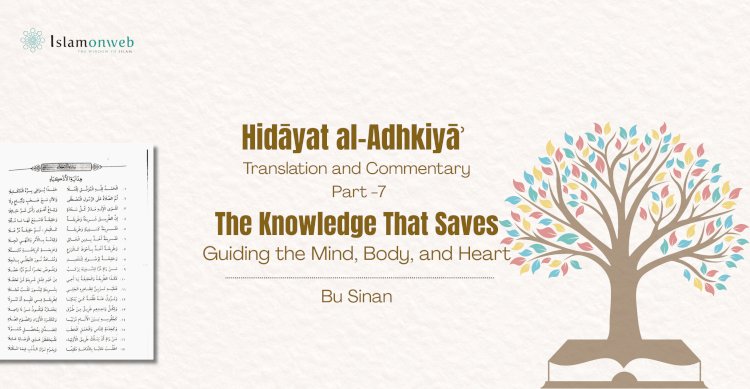
[This article is seventh part of a series presenting an English translation and brief explanation of Hidāyat al-Adhkiyāʾ ilā Ṭarīq al-Awliyāʾ by Shaykh Zayn al-Dīn ibn ʿAlī al-Malībārī]
٣١
وَتَعَلَّمَنْ عِلْمًا يُصَحِّحُ طَاعَةً
وَعَقِيدَةً وَمُزَكِّيَ الْقَلْبِ اصْقُلَا
٣٢
هَذِي الثَّلَاثَةُ فَرْضُ عَيْنٍ فَاعْرِفَنْ
وَاعْمَلْ بِهَا يَحْصُلْ نَجَاةٌ وَاعْتِلَا
Learn well the knowledge that makes worship sound,
That sets belief aright and polishes the heart.
These three are duties binding on every soul:
Know them well, live by them,
Through them come salvation and elevation.
The seeker must acquire the knowledge through which acts of obedience become correct and acceptable before Allah. This includes three essential areas: knowledge that validates worship, knowledge that establishes sound creed, and knowledge that purifies the heart from spiritual diseases.
These three sciences are not optional pursuits; rather, they are farḍ ʿayn, individual obligations upon every accountable believer. When a person understands them properly and lives according to their guidance, he attains salvation from destruction and elevation in rank in the sight of Allah.
The Three Sciences that Guide the Human Being
In the verses we discussed, the poet commands the seeker to learn the knowledge that rectifies worship, establishes sound belief, and purifies the heart. This brief instruction contains within it the entire structure of the sacred sciences. The scholars of the tradition explained that the essential knowledge required for every Muslim falls into three great disciplines, each addressing a different dimension of the human being.
These sciences correspond beautifully with the well-known structure of religion described in the Ḥadīth of Jibrīl: Islām, Īmān, and Iḥsān. Each represents a pillar in the architecture of human transformation.
- The Science of Fiqh
(Regulating the Human Body and Actions – Islām)
The first of these sciences is Fiqh, the knowledge that regulates the outward actions of a person. It teaches how a believer lives, worships, and interacts with the world in accordance with the divine law. Through this science, the limbs learn how to obey Allah correctly.
Fiqh governs the practical dimensions of life and is traditionally divided into several major areas:
- Acts of worship (ʿIbādāt) – the devotional system that structures a believer’s relationship with Allah through prayer, fasting, zakāh, pilgrimage, and other acts of worship.
- Transactions (Muʿāmalāt) – the economic system that regulates trade, contracts, finance, and lawful earnings.
- Marriage and inheritance (Munākaḥāt and Mawārīth) – the social framework governing family life, marriage, divorce, and inheritance rights.
- Criminal law (Jināyāt) – the penal system addressing crimes and their punishments.
- Jihād and governance – the political dimension regulating communal protection, authority, and public order.
Through these rulings, human actions become disciplined and purposeful. The body becomes an instrument of obedience, and society itself becomes structured around justice and harmony.
For this reason the scholars say that fiqh regulates the body and its actions, bringing about the proper cultivation of the earth. This dimension of religion is what the Prophet ﷺ described as Islām, the outward submission of the servant to the command of Allah.
- The Science of ʿAqīdah
(Regulating the Human Mind and Beliefs – Īmān)
The second discipline is ʿAqīdah, the science that regulates the intellect and protects the purity of belief. While fiqh guides the limbs, ʿaqīdah guides the mind, ensuring that the believer’s understanding of reality remains rooted in truth.
This science addresses the core foundations of faith and is commonly studied through three major themes:
- Divine realities (Ilāhiyyāt) – what must be affirmed for Allah, what is possible for Him, and what is impossible with respect to His perfect attributes.
- Prophethood (Nubuwwāt) – what must be affirmed for the prophets, what is possible for them, and what is impossible regarding their noble status and mission.
- Unseen realities (Ghaybiyyāt) – the matters of the unseen conveyed through revelation, such as the Day of Judgment, Paradise, Hell, angels, and the final hour.
Through this knowledge, the intellect becomes anchored in certainty. Doubts are removed, confusion disappears, and the believer learns to see the world through the lens of divine guidance.
Thus ʿaqīdah regulates the mind and its ideas, giving rise to true knowledge of Allah. This dimension of religion is what the Prophet ﷺ described as Īmān—the inner conviction that settles in the heart and shapes one’s worldview.
- The Science of Tazkiyah
(Regulating the Human Heart and Emotions – Iḥsān)
The third discipline is Tazkiyah, the science that purifies the heart and disciplines the emotional life of the believer. If fiqh governs the limbs and ʿaqīdah guides the intellect, tazkiyah refines the inner world of heart and soul.
This science focuses on transforming character and nurturing spiritual excellence. Its teachings address three fundamental relationships:
- The relationship of a person with himself – the process of removing blameworthy traits and adopting praiseworthy virtues.
- The relationship of a person with his Lord – the spiritual stations of the travelers toward Allah,
- The relationship of a person with others – the cultivation of noble character such as humility, compassion, patience, and sincerity.
Through this discipline, the heart is cleansed from destructive qualities such as pride, envy, and ostentation, and it becomes adorned with sincerity, gratitude, and trust in Allah.
Thus tazkiyah regulates the heart and its emotions, bringing about purification of the soul. This is the reality of Iḥsān, described by the Prophet ﷺ as “to worship Allah as though you see Him.”
These three sciences together correspond to the three essential dimensions of the human being:
- The body requires discipline through Fiqh.
- The mind requires clarity through ʿAqīdah.
- The heart requires purification through Tazkiyah.
When these three are balanced, the human being becomes whole. Actions become righteous, beliefs become sound, and the heart becomes illuminated.
The human being is composed of body, intellect, and heart. Beneath them lies the rūḥ, the divine secret that animates life, while the nafs—the personality of the individual—takes on beauty or ugliness depending on how these three faculties are governed.
Acting Upon Knowledge: The Path to Salvation
After commanding the seeker to learn the three essential sciences—fiqh, ʿaqīdah, and purification—the poet completes the instruction with a decisive condition: knowledge must be acted upon. It is not the mere possession of knowledge that brings success, but the transformation it produces in the believer’s life. When knowledge governs belief, action, and the heart, it becomes the path to najāt (salvation) from misguidance and punishment, and iʿtilāʾ (spiritual elevation) in rank before Allah.
The Qur’an repeatedly honours knowledge and its people, precisely because it leads to such guidance. Allah says:
“Say: Are those who know equal to those who do not know?”
(Qur’an 39:9)
Knowledge distinguishes people because it illuminates the path of obedience. Those who possess it are able to recognize truth from falsehood and lawful from unlawful. In another verse, Allah elevates the rank of those who carry knowledge by placing them among the greatest witnesses to His Oneness:
“Allah bears witness that there is no deity except Him—and so do the angels and those endowed with knowledge.”
(Qur’an 3:18)
Thus knowledge becomes a noble station, for it brings the human being into the company of angels in testifying to the truth.
At its highest level, knowledge produces khushūʿ and reverent awareness of Allah. The Qur’an declares:
“Indeed, only those among His servants who truly fear Allah are the scholars.”
(Qur’an 35:28)
This verse reveals the true measure of beneficial knowledge: it is the knowledge that awakens the heart to humility, awe, and obedience.
For this reason, the righteous predecessors regarded beneficial knowledge as the inheritance of the prophets. Through it the hearts are revived from the darkness of ignorance and the eyes are illuminated with insight. By knowledge Allah raises people in rank, making them guides whose footsteps are followed and whose actions become examples for others. Knowledge becomes the leader of action, and action follows behind it.
Yet the Qur’an also warns that knowledge alone is not enough. When knowledge is not accompanied by practice, it becomes a burden rather than a blessing. Allah gives the example:
“The likeness of those who were entrusted with the Torah but did not carry it is like a donkey carrying books.”
(Qur’an 62:5)
Such people possess knowledge outwardly but fail to benefit from it. The Prophet ﷺ therefore taught his community to seek beneficial knowledge, not merely knowledge in general. He said:
“Ask Allah for beneficial knowledge and seek refuge in Him from knowledge that does not benefit.”
(Ibn Mājah)
And among his regular supplications was:
“O Allah, benefit me with what You have taught me, teach me what benefits me, and increase me in knowledge.”
(Tirmidhī)
He also warned that revelation itself may testify either for or against a person:
“The Qur’an is a proof for you or against you.”
(Muslim)
Meaning: it becomes a proof for the one who acts upon its commands and avoids its prohibitions, and a proof against the one who neglects them. This principle extends to all sacred knowledge.
The Prophet ﷺ even described a severe consequence for those who possess knowledge but fail to live by it. He said that on the Day of Judgment a man will be brought and cast into the Fire, his entrails spilling out as he circles like a donkey around a millstone. The people of Hell will ask him: “Were you not the one who commanded us to do good and forbade us from evil?” He will reply: “I used to command you to do good but did not do it myself, and I forbade you from evil while committing it.” (Bukhārī)
This terrifying image reminds the seeker that knowledge without sincerity and action can become a cause of humiliation rather than honour.
For this reason the early sages constantly warned students of knowledge about their intentions. Wahb ibn Munabbih once wrote to the scholar Makḥūl:
“You have gained honour among people through the outward knowledge you possess. Seek through the inward knowledge a station with Allah. Know that one of these two stations may prevent the other.”
He was reminding him that outward knowledge—fatwā, preaching, and scholarship—may bring admiration from people, but the knowledge that truly elevates a person is the knowledge that transforms the heart, producing humility, reverence, and closeness to Allah.
Imām al-Ghazālī expressed this reality with striking clarity when addressing the student of knowledge:
“O seeker of knowledge! If your intention in seeking knowledge is competition, fame, and gaining people’s admiration, then your trade is ruined. But if your intention is guidance, then rejoice—for the angels spread their wings for the seeker of knowledge.”
Thus, the meaning of the poet’s line becomes fully illuminated. The three sciences mentioned earlier—fiqh, ʿaqīdah, and purification—must not remain theoretical disciplines. When they shape belief, regulate actions, and purify the heart, they produce the two results promised in the verse.
Najāt (salvation) is achieved when knowledge protects the believer from ignorance, innovation, and sin.
Iʿtilāʾ (elevation) is attained when knowledge is accompanied by sincerity and righteous action, raising the servant in rank in both this world and the Hereafter.
In this way, knowledge becomes not merely an intellectual possession but a living light—a light that guides the mind, disciplines the body, and polishes the heart until the servant walks steadily toward Allah.
Disclaimer
The views expressed in this article are the author’s own and do not necessarily mirror Islamonweb’s editorial stance.

Related Posts









Leave A Comment