We welcome the submission of original articles to the website.
Submitted articles should address one or more questions related to the following thematic sections:
Allah, Qur’an, Messenger (ﷺ), Sharīʿah, Iḥsān (Islamic Values and Ethics), Afterlife, Justice, Education, Living Islam, Gender Issues, Islamic History and Civilizations, Islamic Lifestyle, Know Islam, Mind Matters, and Emerging Issues Relevant to Islam and Muslims.
Submission Guidelines:
Language and Scope
• All submissions must be written in English (UK) and should be clearly relevant to at least one of the above-mentioned sections.
Use of AI Tools and Declaration Requirement
• Articles created entirely using AI tools will be rejected without any communication.
• Limited use of AI tools is permitted only for language refinement, grammar correction, or structural assistance.
• AI tools must not be used to generate original arguments, religious interpretations, Qur’anic verses, ḥadīths, legal rulings, or academic references.
Mandatory Declaration:
Authors are required to include an explicit declaration at the end of the article stating whether AI tools were used in the preparation of the manuscript. If used, the nature and extent of such use must be briefly specified.
Failure to disclose AI usage or misrepresentation of AI involvement will result in rejection.
Citations, Footnotes, and References
• All sources must be cited as endnotes, not merely listed as a general bibliography. References should be accurate, traceable, and based on recognised primary or scholarly sources.
• Each claim that relies on Qur’anic verses, ḥadīths, Scholarly opinions, and Historical data must be supported by a specific citation.
• A standalone list of references without corresponding endnotes is not acceptable.
• Fabricated, unverifiable, or AI-generated references, including misattributed works or incorrect citations, will lead to immediate rejection.
Style and Methodology
• Articles should be written in a semi-academic style, combining methodological seriousness with clarity and readability.
• Arguments must demonstrate coherence, intellectual honesty, and engagement with authentic Islamic sources.
Length and Format
• Word count: 1500–2500 words; lengthy articles can be split into two or more parts.
• File format: Microsoft Word (.doc or .docx)
• The article should be structured appropriately with clear headings and consistent formatting.
Transliteration Policy
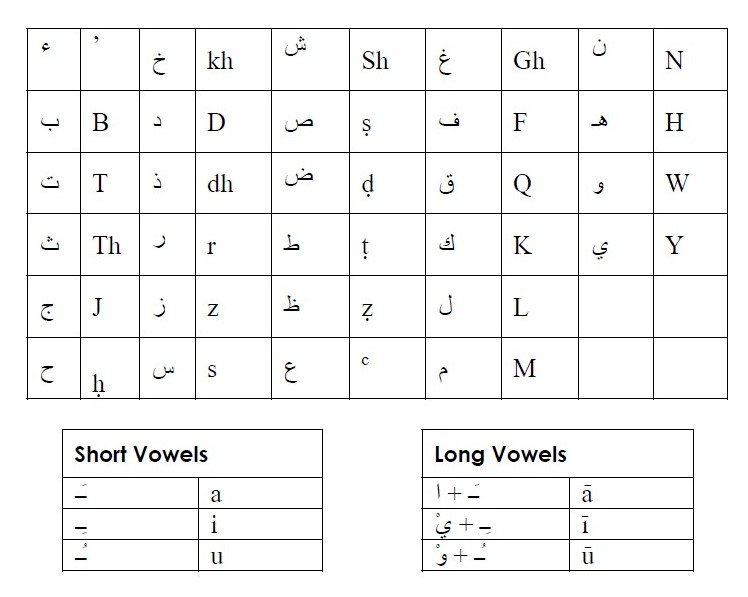
• All Arabic terms must be transliterated according to the prescribed transliteration table (provided below).
• Transliteration is mandatory at first occurrence and must remain consistent throughout the article.
Author Bio
• A brief author bio must be included at the end of the article, preferably not exceeding 100 words.
• The bio may include academic background, institutional affiliation, and areas of interest.
Ethical Responsibility
Islamic scholarship demands accuracy, sincerity, and accountability. In an age of rapid content generation, contributors are expected to uphold the highest standards of truthfulness, source verification, and intellectual trust (amānah).
Submissions that compromise scholarly integrity, whether through careless sourcing, hidden AI dependency, or fabricated evidence, will not be entertained.
Sending Your Articles
Please send your articles to editor.islamonweb@gmail.com, en.islamonweb@gmail.com,
Authors are requested to closely monitor their email for any communication from the editorial team, particularly revision requests, as a significant number of submissions are delayed due to non-responses.
As we receive a high volume of articles daily, we kindly request your patience during the review process. If your submission is time-sensitive, please send it well in advance and clearly state the deadline in the subject line of your email.
Arabic Transliteration Guideline
Transliteration refers to the representation of Arabic writing by using the Roman Alphabet.