
Indian Islamic Scholar Maulana Salman Hussaini Nadwi Passes Away at 73
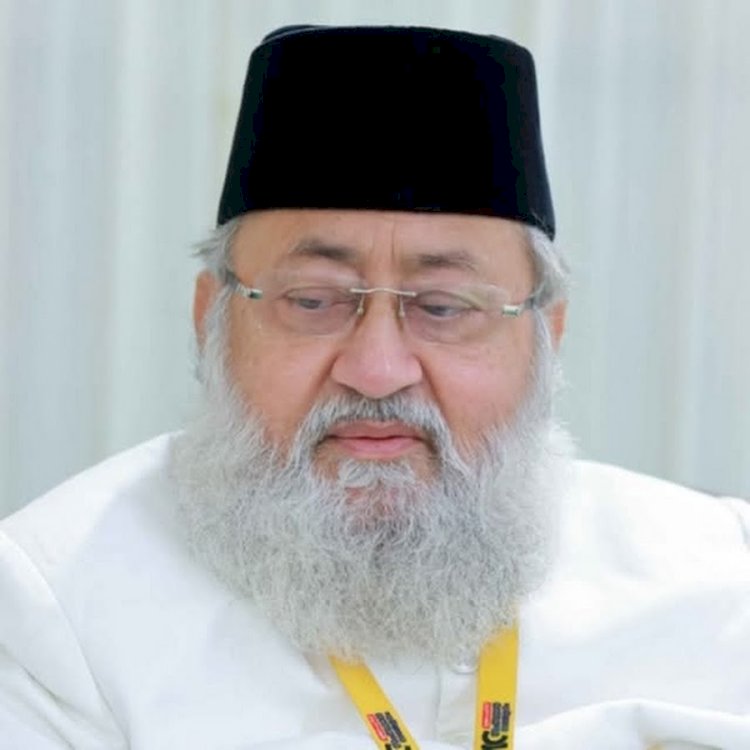
The Muslim scholarly community is mourning the passing of Maulana Salman Hussaini Nadwi, one of India's leading contemporary Islamic scholars, who passed away on 29 June 2026 in Lucknow, Uttar Pradesh, following a brief illness. He was 73. His death marks the conclusion of more than five decades of service to Islamic scholarship, Arabic literature, daʿwah, and higher education, during which he influenced generations of students and scholars across India and the wider Muslim world.
Born in 1952 into the distinguished scholarly tradition of Nadwat al-ʿUlamāʾ in Lucknow, Maulana Salman received his early Islamic education under eminent scholars before specialising in Qur'anic studies, ḥadīth, Arabic language and literature, Islamic history, and daʿwah. Growing up in one of South Asia's foremost centres of Islamic learning shaped his lifelong commitment to scholarship and religious education.
He later joined Darul Uloom Nadwatul Ulama, where he served as a teacher for several decades before becoming Dean of the Faculty of Daʿwah and Arabic Literature. Throughout his academic career, he taught thousands of students from India and abroad, combining classical Islamic scholarship with engagement in contemporary intellectual and social issues.
Beyond his teaching responsibilities, Maulana Salman played an active role in establishing educational and charitable institutions across India. He served as Chairman of Dr Abdul Ali Unani Medical College and Hospital, Chancellor of Darul Uloom Syed Ahmad Shaheed, Katoli, and President of Jamiat Shabaab ul Islam. He was also associated with the establishment of several institutions in medicine, engineering, and information technology, reflecting his broader vision of integrating religious and modern education.
Widely admired for his command of both Arabic and Urdu, he delivered lectures across India, the Gulf region, Southeast Asia, and other parts of the Muslim world. His writings and public lectures covered diverse subjects including Sīrah, Islamic civilisation, daʿwah, education, and contemporary Muslim affairs. He authored numerous books and scholarly articles in Arabic and Urdu and regularly participated in international conferences and academic forums.
Maulana Salman also maintained academic links with institutions in Saudi Arabia, Qatar, the United Arab Emirates, Malaysia, and elsewhere, serving on advisory bodies and contributing to discussions on Islamic education and community development.
Like that of many influential public scholars, his career was marked by several public controversies. In 2018, he attracted national attention when he advocated resolving the Ayodhya dispute through dialogue rather than prolonged litigation. As part of this initiative, he held discussions with spiritual leader Sri Sri Ravi Shankar, arguing that Islam permits relocating a mosque under exceptional circumstances if it serves the greater objective of preserving peace and communal harmony. He suggested that a Ram temple could be built at the disputed site while a mosque could be constructed elsewhere. The proposal generated intense debate, drawing both support and criticism from different sections of society.
The All India Muslim Personal Law Board (AIMPLB) subsequently clarified that his proposal reflected his personal opinion and not the organisation's official position. The differences eventually led to the termination of his membership of the Board.
In later years, some of his lectures and interpretations concerning episodes from early Islamic history also became the subject of debate among Sunni scholars, particularly in India and Pakistan. Critics argued that certain historical observations regarding some Companions of the Prophet ﷺ diverged from established Sunni understandings, prompting scholarly responses and public discussions in Arabic, Urdu, and regional languages. These debates remained part of broader theological and historical discourse, while his contributions to Islamic education, Arabic scholarship, and daʿwah continued to be recognised by many scholars, institutions, and former students.
Maulana Salman was also known for expressing forthright views on contemporary political developments affecting the Muslim world. He frequently urged greater unity among Muslim nations and was critical of what he regarded as the inadequate response of several Muslim governments to conflicts and humanitarian crises facing Muslim communities.
News of his passing has prompted tributes from scholars, students, educational institutions, and community leaders across India and abroad, many remembering him as a gifted teacher, prolific author, and influential voice in contemporary Islamic thought.
While opinions differed on some of his public positions, Maulana Salman Hussaini Nadwi's contributions to Islamic scholarship, Arabic learning, and higher education remain an important part of his enduring legacy, preserved through his writings, institutions, and the generations of students he mentored.
"Indeed, we belong to Allah, and indeed to Him we shall return." (Qur'an 2:156)
Disclaimer
The views expressed in this article are the author’s own and do not necessarily mirror Islamonweb’s editorial stance.

Related Posts







Leave A Comment