
Sporting Culture in Islamic Civilization - Part 1
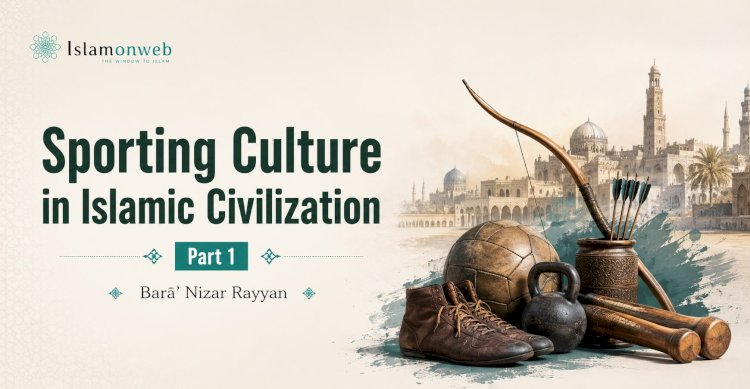
Life in Islamic civilisation had many faces beyond the familiar images usually repeated in popular history. Muslims were not only people of battlefields and cavalry, mosques and madrasahs, books and scholarship, or citizens of a vast state marked by revenue, power, and flourishing urban life. They also knew gentle humour, clean play, and many forms of physical and intellectual sport that brought together enjoyment, discipline, and benefit.
This is one of the neglected dimensions of Islamic history. It unsettles the narrow image in which Muslim civilisation is often reduced to selective and unfair scenes—an image that modern drama and imported history curricula have, unfortunately, helped to fix in people’s minds. In such portrayals, the details of joy, leisure, and play almost disappear, and the ordinary human rhythm of Muslim daily life fades from view.
Muslims played and entertained themselves according to rules that made recreation purposeful, disciplined, and refined. The Prophet ﷺ was among the notable wrestlers of the Arabs; his she-camel won most camel races and was defeated on one occasion. Some leading figures among the Tābiʿūn were counted among the most skilled chess players in history, while scholars, rulers, and princes showed interest in swimming, ball games, hunting, and athletic contests.
In this article, we enter the world of sport in Islamic civilisation to explore the level of skill, organisation, encouragement, and social spread these activities achieved across different classes of Muslim society.
An Earlier Legacy
The Arabs of the Jāhiliyyah knew many kinds of collective games, which they practised from early childhood through adulthood. Arabic lexicons preserve the names of dozens of these games. The Andalusian linguist Ibn Sīdah (d. 458 AH/1067 CE), in his work al-Mukhaṣṣaṣ, devoted a chapter to “the general names of amusement and recreational instruments.” Within it, he included a section on “play” and listed forty-two different games. Later, Ibn Manẓūr (d. 711 AH/1311 CE), in Lisān al-ʿArab, added several more and explained how some of them were played.
Speaking specifically about Makkan society, the historian al-Fākihī (d. 272 AH/885 CE), in Akhbār Makkah, included a chapter titled: “Games the People of Makkah Used to Play in the Jāhiliyyah and Islam, Which They Later Abandoned.” In it, he relates that ʿUmar ibn al-Khaṭṭāb (d. 23 AH/645 CE) once came to Makkah and saw the game of al-kurrak being played. He said: “Had the Messenger of Allah ﷺ not approved you, I would not have approved you.” The Makkans replied: “It is an ancient game that the people of Makkah used to play, and it continued until the year 210 AH/825 CE.”
Al-Fākihī then describes the nature of this game and its popularity among the people of Makkah. He says: “The people of Makkah used to play it on every Eid. Every quarter of Makkah had its own kurrak by which it was known. They would gather for it and play in one of the neighbourhoods, while people would go to watch it in those places. They continued in this manner, then abandoned it for a long period, until the year 252 AH/866 CE. Then they left it again, and it has remained abandoned until today.”
A close reading of the Arabic lexicons suggests that this game was likely the same as al-kurraj, an Arabised Persian term. According to Ibn Manẓūr in Lisān al-ʿArab, it referred to a wooden figure “made in the form of a young horse, upon which people would play.”
Among the intellectual games known to the Arabs was al-qirq, mentioned by Abū ʿUbayd al-Harawī (d. 401 AH/1011 CE) in Kitāb al-Gharībayn fī al-Qurʾān wa al-Ḥadīth. He states that it appears “in the ḥadīth of Abū Hurayrah: ‘He [the Prophet ﷺ] would sometimes see them playing al-qirq and would not forbid them.’” The game consisted of a square outline, with another square inside it, and a third square inside that. Lines were then drawn from each corner of the first square to the second, with a line between every two corners, making twenty-four lines altogether. It was played with pebbles or similar objects placed on these lines. People still play a version of it today, and in the lands of al-Shām it is known as drīs.
Wrestling was also among the common games of the Arabs. One of the most famous reports in this regard is the story of the Prophet ﷺ wrestling Ibn Rukānah al-Qurashī in Makkah. Imām Ibn Kathīr (d. 774 AH/1372 CE), in al-Bidāyah wa al-Nihāyah, narrated it “with a good chain from Ibn ʿAbbās (d. 68 AH/688 CE).” In summary, “Yazīd ibn Rukānah wrestled the Prophet ﷺ, and the Prophet ﷺ threw him down three times. On the third occasion, he said: ‘O Muḥammad, no one before you has ever put my back to the ground.’”
Prophetic Approval and Regulated Recreation
From this perspective, it is no exaggeration to say that organised sport in Islamic history is as old as the Islamic message itself. Its beginnings go back to the time of the Prophet ﷺ, who approved some of the games already known and practised among the people, many of which had rules, forms, and details marked by considerable order and complexity. When these practices are traced in the Prophetic city of Madinah, the first capital of the Islamic state, they appear in two broad forms: festive or carnival-like play and competitive athletic activity. At times, the two forms came together in a single public setting.
The festive form is famously illustrated in the ḥadīth of the Mother of the Believers, ʿĀʾishah, recorded by al-Bukhārī (d. 256 AH/870 CE) in his Ṣaḥīḥ. She said: “I saw the Messenger of Allah ﷺ one day at the door of my chamber while the Abyssinians were playing in the mosque, and the Messenger of Allah ﷺ was screening me with his cloak as I watched their play.” In some narrations, it is stated that they were “playing with their spears.”
This appears to have been a rooted custom among the Anṣār of Madinah. Abū Dāwūd (d. 273 AH/886 CE) narrated from Anas ibn Mālik (d. 93 AH/712 CE), in the report concerning their celebration of the Prophet’s ﷺ arrival as a migrant from Makkah, that “when the Messenger of Allah ﷺ arrived in Madinah, the Abyssinians played with their spears out of joy at his coming.” This meaning is further supported by what Imām Sibṭ Ibn al-Jawzī (d. 654 AH/1256 CE) mentions in Mirʾāt al-Zamān: when the Prophet ﷺ arrived in Madinah as a migrant, “there were Abyssinians in Madinah playing with spears, so they performed before him. The Anṣār had never rejoiced over anything as much as they rejoiced over his arrival.”
What first comes to mind is that playing with spears involved mock combat or simulated fighting. Ibn al-Munayyir (d. 683 AH/1284 CE), as quoted by al-Kirmānī (d. 786 AH/1384 CE) in his commentary on Ṣaḥīḥ al-Bukhārī, said: “He called it play, although its original purpose was training for war and preparation against the enemy. It belongs to seriousness, but because it resembles play—since the performer aims as though to thrust but does not actually do so, creating that impression before his opponent even if he were his father or son—it was described as play.” Al-Kirmānī himself, however, described the Abyssinians as “dancing,” and al-Dhahabī (d. 748 AH/1347 CE), in Tārīkh al-Islām, supports this through a narration stating: “The Abyssinians were in the mosque playing with their spears and performing dance-like movements.”
Commentators on this ḥadīth derived from it legal rulings and meanings that remained connected to the realities of people’s lives, including questions that continue into our own age, such as the ruling on watching sports. Ibn Baṭṭāl al-Qurṭubī (d. 449 AH/1058 CE), in his commentary on Ṣaḥīḥ al-Bukhārī, held that this ḥadīth indicates “the permissibility of watching lawful amusement.” He also considered spear-play to be “a Prophetic Sunnah, so that it may serve as preparation for meeting the enemy and so that people may train in it.” This may also be seen as an early basis for public military displays with weapons, as well as demanding athletic movements such as weightlifting and similar activities.
Professional Practice and Public Display
It appears that festive play eventually became a profession practised by certain people. Ibn Abī Shaybah (d. 235 AH/848 CE) narrated in al-Muṣannaf that when Ibn ʿAbbās “circumcised his sons, he invited the players [and in another narration: performers] and gave them four dirhams—or, he said, three.” Later historians mention that some caliphs and sultans brought such performers close to their courts, honoured them, and employed them in official celebrations alongside regular soldiers. This was the case in the military parade held by the Abbasid caliph in Baghdad before the envoy of the Tatars in the early seventh/thirteenth century. According to al-Dhahabī, “a great crowd came out playing with naphtha and throwing glass bunduq [small balls] filled with naphtha, until the open land was filled with flames.”
Among such festive games were those described with striking precision by the Andalusian traveller Ibn Jubayr (d. 614 AH/1217 CE) in his travelogue, while speaking about the celebrations of the people of Makkah during the season of the “Rajab ʿUmrah.” He says that they came out “in a celebration the like of which had never been heard of, for which all the people of Makkah gathered. They came out according to their ranks, tribe by tribe and quarter by quarter, armed with weapons, both horsemen and footmen, in a wondrous order. The horsemen came out on their horses and played with weapons upon them, while the footmen leapt and manoeuvred with weapons in their hands—spears, swords, and ḥajaf [leather shields]. They displayed mock thrusting at one another, striking with swords, and defending themselves with the ḥajaf behind which they took cover. They would throw spears into the air and rush to catch them with their hands as the spearheads came down above their heads while they were in a crowd. Some of them would even throw swords into the air and catch them by their handles, as though the swords had never left their hands.”
Games were also often included in official celebrations marking victory in battle. This occurred in 647 AH/1249 CE, when the Ayyubid princes of al-Shām defeated their cousins in Egypt and entered the land amid dazzling celebrations. According to the historian Ibn al-Dawādārī (d. after 736 AH/1435 CE) in Kanz al-Durar, they “crossed Cairo while playing with spears on their horses between the two palaces.”
A later example is recorded by al-Budayrī al-Ḥallāq (d. after 1175 AH/1762 CE) in Ḥawādith Dimashq al-Yawmiyyah. In 1156 AH/1744 CE, “the governor of Damascus, Sulaymān Pasha ibn al-ʿAẓm (d. 1156 AH/1744 CE), began holding a celebration for the circumcision of his son. He gathered in it all kinds of games, and the notables and dignitaries assembled there. He granted them freedom to play whatever games they wished. They remained in that state for seven days and nights. A procession was arranged, containing unusual entertainments, including the representation of the brave warriors of the Arabs and other displays.”
Some of the games played by Muslims in earlier times were purely recreational, and they were shared by people of all social ranks. Even jurists and leading figures did not regard them as beneath their dignity. Indeed, the attention given by rulers to games and players was considered one of the features of kingship recommended in works of political etiquette. In al-Tāj, attributed to al-Jāḥiẓ (d. 255 AH/869 CE), it is stated that “the companions and close courtiers of the king have certain qualities in which, by necessity, they are equal to the king, without this diminishing the king or lowering the dignity of kingship. Among these are playing ball, hunting, shooting at targets, playing chess, and similar activities.”
A Sporting Culture Across Society
As for scholars, biographical works preserve striking glimpses of their participation in games and recreation. Ibn Rajab al-Ḥanbalī (d. 795 AH/1392 CE), in Dhayl Ṭabaqāt al-Ḥanābilah, relates an incident involving one of the Ḥanbalī ascetics, Abū Manṣūr ʿAbd al-ʿAzīz ibn Thābit al-Baghdādī (d. 596 AH/1200 CE). He says: “He was pleasant in companionship. We went out to visit the grave of Imām Aḥmad ibn Ḥanbal (d. 241 AH/855 CE), then we turned toward the riverbank, and the jurists went down to swim in the river. They said to Shaykh Abū Manṣūr: ‘Come down with us.’ So he removed his garment and went down to swim with them. They played in the water, and he did as they did. One of the jurists said to him: ‘What if Shaykh Muḥammad al-Naʿʿāl (d. after 596 AH/1200 CE) sees you?’ He replied: ‘Poor man! The Lord Most High sees us.’ Some of the group were pleased by his words.”
Children, too, had their games, through which they found joy in open spaces and streets, by day and by night. Arabic dictionaries frequently explain certain words as “a game of boys.” In Ṣaḥīḥ Muslim, the incident of the opening of the Prophet’s ﷺ chest is reported to have occurred when he was a child “while he was playing with the boys.” Al-Dhahabī also mentions in Siyar Aʿlām al-Nubalāʾ that Abū Hurayrah (d. 59 AH/680 CE) was known for his playful kindness toward children in Madinah. Thus, “he would sometimes come to the boys while they were playing at night one of the games of the Bedouins; they would not notice him until he threw himself among them and kicked his legs, frightening the boys so that they ran away.”
Just as boys had their games, girls had their own forms of play, including dolls known to the Arabs as al-banāt. Ibn Sīdah explained these as “figures made of ivory,” while Ibn Manẓūr said: “Al-banāt are the figures with which young girls play.” In Ṣaḥīḥ al-Bukhārī, ʿĀʾishah رضي الله عنها said: “I used to play with dolls in the presence of the Prophet ﷺ, and I had young friends who played with me.”
Among the more curious girls’ toys known in major urban centres was the doll called al-dūbārakah, which resembled what is known today as a “Barbie” doll, though apparently larger in size. The judge al-Muḥassin al-Tanūkhī (d. 384 AH/995 CE) mentions it in Nishwār al-Muḥāḍarah, saying: “Al-dūbārakah is a foreign word, and it is the name of dolls the size of children. The people of Baghdad used to place them on their rooftops during the nights of the ‘Muʿtaḍidī Nawrūz’—the beginning of the fiscal calendar of the Buyid state. They would play with them, display them in fine clothing and jewellery, and present them as brides are presented, while drums and pipes sounded before them.”
From the Prophetic period onward, competitive sports received both popular attention and a form of official care. Although Islamic law closed the doors of gambling that wastes wealth without any benefit returning to society, it made an exception for competitions that strengthen skill, horsemanship, and the physical preparation of the community, such as archery and horse and camel racing. Abū Dāwūd, al-Tirmidhī (d. 279 AH/892 CE), al-Nasāʾī (d. 303 AH/915 CE), and others narrated from Abū Hurayrah that the Prophet ﷺ said: “There should be no prize except in an arrow, a camel, or a horse.”
The Prophet ﷺ himself supervised this type of competition, attended it, participated in it, and encouraged it. In Ṣaḥīḥ al-Bukhārī, Ibn ʿUmar narrated “that the Messenger of Allah ﷺ held a race between horses that had been made lean and prepared for racing and combat, from al-Ḥafyāʾ to Thaniyyat al-Wadāʿ”—a distance of approximately ten kilometres—“and he held a race between horses that had not been made lean, from the Thaniyyah to the mosque of Banū Zurayq. ʿAbdullāh ibn ʿUmar was among those who took part in that race.”
Archery was especially beloved to the Prophet ﷺ. Al-Bukhārī narrated from Salamah ibn al-Akwaʿ (d. 74 AH/693 CE) that he said: “The Prophet ﷺ passed by a group from Aslam who were competing in archery. The Prophet ﷺ said: ‘Shoot, O sons of Ismāʿīl, for your father was an archer.’”
As for camel racing, the Prophet’s ﷺ she-camel took part in it and was known to win—except on one occasion. Al-Bukhārī narrated in his Ṣaḥīḥ from Anas ibn Mālik that he said: “The Prophet ﷺ had a she-camel called al-ʿAḍbāʾ”—and in some narrations, al-Qaṣwāʾ—“which could not be beaten. Then a Bedouin came on a young camel and beat her. That was hard on the Muslims, and the Prophet ﷺ recognised it on their faces. He said: ‘It is a right upon Allah that nothing of this world rises except that He brings it down.’”
Fair Play Rules and Referees
From these Prophetic precedents, scholars came to recognise the permissibility of games and contests that sharpen the mind, teach the strategies of war, and train people in ways of protecting themselves from the schemes of enemies. Their ruling, therefore, was treated like that of other permissible forms of play, such as horse racing, archery, and similar activities. This is how the scholar Maḥmūd Shukrī al-Ālūsī (d. 1342 AH/1924 CE) summarised the matter in Mukhtaṣar al-Tuḥfah al-Ithnā ʿAshariyyah. For this reason, books of Islamic jurisprudence paid careful attention to the rulings of racing and archery, including the rules governing prizes, eligibility, and victory.
There is no doubt that the Prophet’s ﷺ supervision of such competitions established principles that may be regarded as an early foundation for what sportspeople today call “fair play.” Among these is the report narrated by Abū Dāwūd, al-Tirmidhī, and al-Nasāʾī, in which the Prophet ﷺ said: “No jalab and no janab.” In one narration, the addition appears: “in betting.” Imām Mālik ibn Anas (d. 179 AH/796 CE) explained this in al-Muwaṭṭaʾ, saying: “As for jalab, it is when a horse falls behind in a race, so something is moved behind it to urge it forward until it overtakes; this is jalab. As for janab, it is when another horse is led alongside the horse being raced, then when the race nears its end, the rider switches to the led horse and takes the prize.”
In the rules of competitive archery, Imām al-Shāfiʿī (d. 204 AH/820 CE) issued a clear ruling: “The prize is not permissible until each one of the competing archers knows whom he is shooting with and against, whether that person is present and seen, or absent but known to him.” Al-Shāfiʿī discussed these rules of fair play at length in his book al-Umm, where he recorded many related legal rulings.
The literary master al-Jāḥiẓ, in al-Tāj, also gives us clear and balanced rules for fair play, insisting that both ruler and subject must observe them. He writes that “it is a duty upon the king not to prevent the one who plays against him from what is due to him of seeking fairness.” He continues: “The one who plays against him has the right to insist, demand, seek equality, resist, refuse to overlook, and claim his right to its fullest extent; but this must not be accompanied by abuse, obscene speech, opposition that removes the king’s right, shouting that rises above his words, grunting, slander, or anything that falls outside the measure of justice” in play.
Closely connected to disciplined play is the question of arbitration in games and the role of referees who ensure that rules are applied faithfully among competitors. It appears that this was practised among earlier Muslims at least in certain games. They even assigned to it, at times, a formal function with a term close to what we today call “arbitration.” They called it al-ḥukūmah fī al-malāʿib—judging or arbitration in games—and gave the person who performed it the title al-ḥakam, the referee or judge.
Biographical works have preserved the name of one man who held this function: the poet Muḥammad ibn al-ʿAbbās ibn Abī al-Faḍl (d. after 610 AH/1212 CE), known as Abū ʿAbdillāh al-Mawṣilī al-Ḥakam. Kamāl al-Dīn Ibn al-Shaʿʿār al-Mawṣilī (d. 654 AH/1256 CE) states in his book in Qalāʾid al-Jumān, that this Abū ʿAbdillāh al-Mawṣilī “held the office of al-ḥukūmah fī al-malāʿib,” including games such as mock fencing and wrestling, “and to him belonged the judgement in such matters.”
This article is translated and adapted from the Arabic article “ʿĀlam al-Riyāḍah fī al-Ḥaḍārah al-Islāmiyyah” by Barāʾ Nizār Rayyān, originally published on IslamOnline. The present article covers the first part of the discussion, while the second part will follow in a subsequent publication. The original Arabic article can be accessed here -
Disclaimer
The views expressed in this article are the author’s own and do not necessarily mirror Islamonweb’s editorial stance.

Related Posts









Leave A Comment