
Global Leaders Converge in Uzbekistan: Crucial Global Issues Discussed at the First International Islamic Civilisation Forum
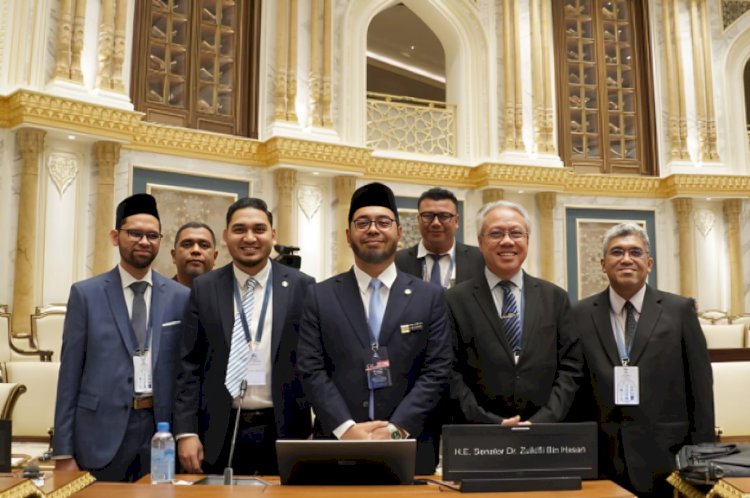
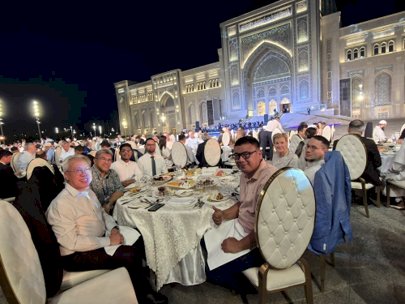
Scholars, leaders and representatives of esteemed international organizations, government officials, and public figures from more than forty countries have gathered in Uzbekistan from July 7–11, 2026, for the landmark 1st International Islamic Civilisation Forum, entitled "Islamic Civilization: The Path of Peace, Tolerance, and Enlightenment,". The Forum marks a remarkable moment for international dialogue. Hosted by the Centre of Islamic Civilisation (CIC) in Uzbekistan across the historic intellectual hubs of Tashkent, Samarkand, and Termez, the forum aims to promote contemporary Islamic civilization while celebrating its peaceful and enlightened ideas. This huge gathering serves as a practical manifestation of close, cross-border cooperation in both the religious and educational spheres. To understand the modern potential of this historic gathering, one must look to the profound historical landscape that anchors it.
A Historical Cradle of Intellectual Triumph
Uzbekistan’s strategic location at the crossroads of civilizations makes it an especially fitting venue for this dialogue. The forum pays tribute to the region’s First and Second Renaissances, two remarkable periods of intellectual flourishing that made enduring contributions to global civilization and the advancement of human knowledge. These eras produced some of history’s greatest scholars and thinkers, including Muhammad al-Khwarizmi, Ahmad al-Farghani, Abu Rayhan al-Biruni, Abu Ali ibn Sina (Avicenna), and Mirzo Ulugh Beg in the sciences; Alisher Navoi and Zahir al-Din Muhammad Babur (Babur Mirzo) in literature and the humanities; and Imam al-Bukhari, Imam al-Tirmidhi, Imam al-Maturidi, and Burhan al-Din al-Marghinani in Islamic scholarship, spirituality, and jurisprudence. Their intellectual legacy continues to inspire scholarly inquiry, ethical leadership, and intercultural dialogue across the world.
Today, as part of its state policy, Uzbekistan is actively collaborating with the international community to lay the groundwork for a Third Renaissance. This new era is envisioned as a development model grounded firmly in modern education, innovation, spiritual advancement, deep respect for historical heritage, and the realization of each individual's creative potential. A tangible manifestation of this state priority is the recent reconstruction of the majestic Imam al-Bukhari Memorial Complex in the Samarkand Region, which has quickly gained recognition as one of the largest spiritual, scientific, and educational centers in both Uzbekistan and the broader Muslim world.
The Competitive Advantages of Islamic Civilisation in Uzbekistan’s Historic Cities
The intellectual prominence of Mawara'unnahr (Transoxiana), or the historic region that encompasses much of present-day Uzbekistan, was not merely an accident of history. It emerged from a unique convergence of geographical location, institutional strength, cultural openness, and an enduring commitment to scholarship. Cities such as Tashkent, Samarkand, and Termez became globally renowned centres of learning because they cultivated distinctive conditions that attracted scholars, facilitated the exchange of ideas, and sustained the creation of new knowledge across generations. These enduring strengths gave the region a lasting intellectual edge that shaped the course of scientific, philosophical, and spiritual development. Today, the legacy, foundational heritage, and intellectual ecosystem established during these remarkable periods continue to provide an invisible yet powerful framework that underpins many of the world's modern scientific, educational, and cultural advancements.
1.Samarkand: The Confluence of Civilizations and the Cradle of the Exact Sciences
Samarkand epitomises the confluence of civilizations and stands as one of the great cradles of the exact sciences. Its historical prominence can be attributed to its strategic position as the crown jewel of the Silk Road, where trade routes became channels for the exchange of knowledge, ideas, and cultures. As an open and cosmopolitan intellectual centre, Samarkand possessed a remarkable capacity to absorb diverse intellectual traditions from both East and West while fostering an institutional environment in which scientific inquiry was actively supported by state patronage. This commitment to scholarship reached its pinnacle under Mirzo Ulugh Beg, whose observatory became one of the world's foremost centres for astronomical research and mathematical innovation.
The intellectual achievements associated with Samarkand and the wider region continue to shape the modern world. Advances in astronomy, trigonometry, and mathematical sciences laid essential foundations for contemporary scientific disciplines. The pioneering contributions of polymaths such as Muhammad al-Khwarizmi established the principles of algebra and algorithmic thinking. Indeed, the term algorithm is derived from the Latinised form of his name, reflecting his profound influence on computational mathematics. These foundational ideas underpin today's digital technologies, including computer science, artificial intelligence, data analytics, and global telecommunications.
2.Termez: The Synergy of Reason, Ethics, and Universal Values
Termez occupies a distinctive place in the intellectual history of Central Asia. Situated at a vital geographical and spiritual crossroads, it flourished as a centre where diverse intellectual traditions converged and where reason, ethics, and faith were harmoniously integrated. The city became renowned for its contributions to the development of Islamic scholarship, particularly in the fields of Hadith studies, jurisprudence, and spiritual thought. Eminent scholars such as Imam al-Tirmidhi advanced rigorous methodologies for the collection, authentication, and critical evaluation of Hadith, establishing enduring standards of scholarly integrity and intellectual discipline.
The broader intellectual tradition of the region, represented by scholars such as Imam al-Maturidi, further demonstrated how reason and revelation can be integrated in the pursuit of truth. Their emphasis on systematic inquiry, logical reasoning, and critical evaluation resonates strongly with the principles that underpin modern scientific investigation and scholarly peer review. Equally significant, the ethical and humanistic values articulated by these scholars continue to provide the contemporary world with a timeless framework for peaceful coexistence, respect for human dignity, responsible governance, and balanced societal development in addressing today's complex ethical challenges.
3. Tashkent: The Nexus of Preservation, Diplomacy, and Modern Renewal
Tashkent has long served as a resilient centre for the preservation and transmission of humanity's shared intellectual and spiritual heritage. Throughout history, it has functioned as a diplomatic gateway where scholarly traditions, religious values, and political governance intersected, enabling knowledge to be preserved, translated, and disseminated across civilizations while maintaining its authenticity through the centuries.
Today, Tashkent continues to build upon this enduring legacy by bridging ancient tradition with twenty-first-century innovation. As the home of the Centre of Islamic Civilization in Uzbekistan, it presents a compelling model of a "Renaissance of Tolerance", the one that demonstrates how a nation can preserve its rich religious and cultural heritage while embracing modernity, scientific advancement, and global engagement. This model illustrates that fidelity to enduring values is fully compatible with international diplomacy, technological innovation, and sustainable development, offering an inspiring paradigm for societies seeking to balance tradition with progress in an increasingly interconnected world.
Insights from Global Leaders and Thinkers
The Forum featured profound perspectives from distinguished international leaders and scholars, all of whom underscored the significance of Mawara'unnahr (Transoxiana) as a historic epicentre of human civilization that has long connected diverse regions, cultures, and intellectual traditions.
Dr. Muzaffar Kamilov, Head of the Department for Religious and Educational Affairs, Administration of the President of the Republic of Uzbekistan, stressed that the Centre of Islamic Civilization (CIC) should function as a living centre of civilization and modern scientific research rather than merely as a museum. In an increasingly complex global environment, the Centre is envisioned as a vibrant platform for dialogue, collaboration, and intellectual exchange. Guided by the Qur'anic principle, "Wa ta'āwanū 'alā al-birri wa al-taqwā" ("Cooperate in righteousness and piety"), the Centre aims not only to preserve the past but also to generate authentic Islamic knowledge, nurture young scholars, strengthen global collaboration, and contribute to the well-being of humanity.
Dr. Salim Al-Malik, Director-General of ISESCO, observed that humanity stands at a critical crossroads of development. He emphasised that Islamic civilization represents a model of genuine development firmly anchored in moral values and the collective interests of humanity. He commended Uzbekistan for offering renewed hope to the world through its significant contribution to contemporary civilization and noted that the Centre of Islamic Civilization could serve as a strategic platform for strengthening international cooperation, bringing together diverse communities to address global challenges, and recognising scholars whose work advances human knowledge.
Syeikh Nuriddin Kholiknazar, Chairman of the Muslim Board of Uzbekistan and Grand Mufti, emphasised that Uzbekistan remains a sacred land of scholars and scientists whose monumental intellectual legacy must be preserved and perpetuated. Under the vision of "New Uzbekistan," the nation continues to honour scholars from around the world while promoting humanistic values. He called for concerted efforts to mobilise scholars from within and beyond Uzbekistan to study, contextualise, and apply the knowledge of past masters to contemporary realities and future global needs.
Sheikh ul-Islam Allahshukur Pashazade, Chairman of the Caucasus Muslims Board, highlighted that international partnerships are indispensable for advancing human well-being. He noted that Islam serves as a driving force across all dimensions of life and acknowledged Uzbekistan's active contribution to humanity through its adoption of the wisdom-based approach embodied in the Qur'anic injunction, "Ud'u ilā sabīli rabbika bil-ḥikmah" ("Invite to the way of your Lord with wisdom").
Syeikh Dr. Mohammed bin Abdulkarim Al-Issa, Secretary-General of the Muslim World League, expressed deep admiration for the remarkable scientific and religious scholarship produced in Transoxiana. He noted that the scholars of this region made immense contributions to world civilization and commended Uzbekistan's initiatives to preserve, restore, and generously share this invaluable intellectual heritage with the international community.
Delegate from Al-Azhar al-Sharif reminded the Forum that Islam historically spread through mutual respect, tolerance, and peaceful dialogue rather than violence and hatred. He emphasised that Islamic civilization is measured not by material wealth but by the cultivation of harmonious and tolerant societies. While global realities continue to evolve across time and place, he observed that these moral principles remain enduring constants. He further stressed that addressing contemporary global challenges requires the harmonious integration of revelation (wahy) and human reason ('aql).
Prof. Dr. Farhan A. Nizami, Director of the Oxford Centre for Islamic Studies, observed that Central Asia had historically served as a global powerhouse of knowledge and innovation whose influence extended far beyond the region. He emphasised that the universal intellectual heritage preserved within Uzbekistan should continue to be safeguarded and nurtured, noting that the country provides a compelling contemporary model of renaissance, religious values, and peaceful coexistence.
Collectively, these perspectives reveal a remarkable convergence of thought regarding the future direction of Islamic civilization. They underscore the expectation that the Centre of Islamic Civilization should serve not merely as a guardian of the past but as a catalyst for intellectual renewal, international collaboration, and sustainable human development. The principal expectations emerging from the Forum are synthesised below.
Collective Expectations Emerging from the Forum
A Living Centre of Civilization and Scientific Research
The Centre of Islamic Civilization is envisaged as a living centre of civilization and modern scientific research rather than merely a repository of historical artefacts. In the face of increasingly complex global challenges, it is envisioned as a dynamic platform for international dialogue, scholarly collaboration, and knowledge exchange. Guided by the Qur'anic principle, "Wa ta'āwanū 'alā al-birri wa al-taqwā" ("Cooperate in righteousness and piety"), the Centre is expected to move beyond preserving the past by generating authentic Islamic knowledge, nurturing young scholars, strengthening global partnerships, and contributing to the holistic well-being of humanity.
Promoting Genuine Human Development
The Centre is envisaged to advance a model of development rooted in ethical values, shared human interests, and civilizational wisdom. It is expected to demonstrate how Islamic civilization can contribute meaningful solutions to contemporary global challenges by strengthening international cooperation, bringing together diverse communities of scholars, and recognising research that advances knowledge for the benefit of humanity.
Contextualising Classical Knowledge for Contemporary Needs
The Centre is expected to mobilise scholars from across the world to preserve, study, and contextualise the intellectual legacy of past scholars in ways that respond to contemporary realities and future challenges. The rich scholarly heritage of Uzbekistan is envisaged not merely as a historical achievement but as a living source of guidance for promoting humanistic values, intellectual renewal, and sustainable global development.
Strengthening the Integration of Science, Faith, and Global Partnerships
The Centre is envisaged as a global platform where international collaboration advances knowledge and human well-being. Drawing upon the Islamic tradition that integrates scientific inquiry, ethical values, and spiritual wisdom, it is positioned to foster partnerships that promote peaceful coexistence, mutual understanding, and collective solutions to the pressing challenges facing humanity.
Preserving and Sharing Humanity's Intellectual Heritage
The Centre is expected to continue safeguarding, restoring, and disseminating the invaluable scientific and intellectual heritage of Transoxiana (Mawara'unnahr) for the benefit of the global community. By making these enduring scholarly contributions more widely accessible, it is envisaged to strengthen appreciation of Islamic civilization's lasting contributions to world knowledge while inspiring future generations of researchers.
Advancing the Harmony of Revelation and Reason
The Centre is recognised as having the potential to champion a balanced intellectual tradition that harmonises revelation (wahy) and human reason ('aql). As societies confront increasingly complex social, ethical, and technological challenges, this integrated approach is envisaged to provide a principled framework for promoting tolerance, peaceful dialogue, and sustainable human progress while remaining firmly grounded in enduring moral values.
Positioning Uzbekistan as a Contemporary Renaissance Hub
The Centre is poised to reinforce Uzbekistan's position as a modern epicentre of intellectual renewal by demonstrating how historical civilizational strengths can be translated into contemporary relevance. By integrating scholarship, innovation, religious values, and international engagement, it is envisaged as a model of a new renaissance—one that bridges heritage and modernity while contributing to global peace, knowledge creation, and the flourishing of humanity.
Conclusion
The First International Islamic Civilisation Forum proved to be far more than a reflection on the achievements of the past; it established a dynamic platform for global intellectual renewal. Anchored in the timeless legacy of Tashkent, Samarkand, and Termez, the Centre of Islamic Civilization in Uzbekistan seeks to bridge centuries of scholarly excellence with contemporary scientific advancement.
Moving forward, the successful realisation of these aspirations will determine the Forum's enduring impact. Through sustained commitment to strengthening international collaboration, nurturing human talent, advancing knowledge, and influencing global discourse, the Forum's vision of "Enlightenment Against Ignorance" can be progressively realised. Participants are therefore encouraged to transform these shared aspirations into meaningful partnerships and collaborative action.
Sincere appreciation is extended to the Centre of Islamic Civilization for its visionary leadership, generous hospitality, and exemplary organisation of this landmark gathering. By bringing together distinguished scholars, policymakers, and thought leaders from across the world, the Forum has demonstrated that the path towards global peace, mutual understanding, and civilizational renewal is a shared journey that must continue through sustained cooperation and collective responsibility.
About the author:
Shukran Abd Rahman is a professor of Industrial and Organisational Psychology in the Department of Psychology, AbdulHamid AbuSulayman Kulliyyah of Islamic Revealed Knowledge and Human Sciences, International Islamic University Malaysia. His research areas include organization development, organizational behavior, and change and development in higher learning institutions.
Disclaimer
The views expressed in this article are the author’s own and do not necessarily mirror Islamonweb’s editorial stance.

Related Posts














Leave A Comment