
Dul Hijja 8 : Hajj Pilgrims at Mina on the Day of Tarwiya
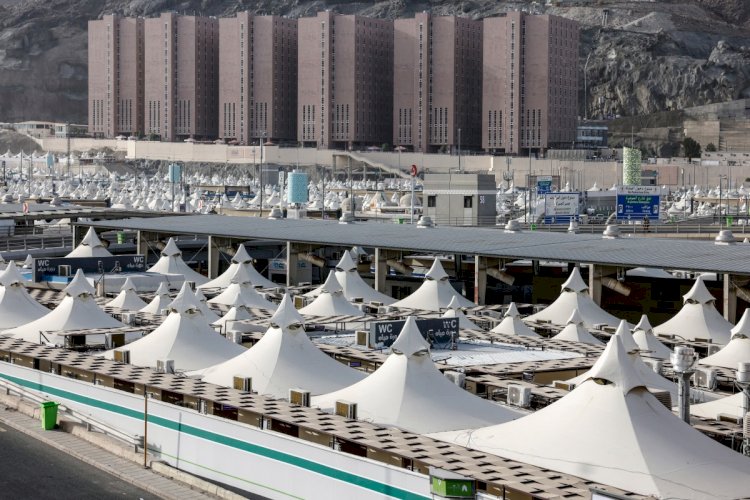
Millions of Muslim pilgrims have begun the core rituals of Hajj, streaming into Mina on Monday, the 8th of Dhū al-Ḥijjah, in a scene marking the formal start of the annual pilgrimage. The movement to Mina, known as the Day of Tarwiyah, opens one of Islam’s most spiritually significant journeys, with more than two million pilgrims expected to take part this year.
Pilgrims from across the world arrived in the vast tent city near Makkah, reciting the Talbiyah — “Labbayk Allāhumma labbayk” — and spending the day in prayer, reflection, and preparation before proceeding to ʿArafah. On the Day of Tarwiyah, pilgrims traditionally remain in Mina, perform the prayers shortened but not combined, and prepare for the central rite of Hajj: standing at ʿArafah on the 9th of Dhū al-Ḥijjah.
Mina, located about seven kilometres northeast of the Grand Mosque between Makkah and Muzdalifah, is known as the “City of Tents.” It is inhabited mainly during the Hajj season and reaches peak human density during these few sacred days before returning to calm once the rites are completed.
Saudi authorities have announced full operational readiness for the pilgrimage, with hundreds of thousands of domestic pilgrims joining more than 1.5 million foreign pilgrims who have already arrived in the Kingdom. Earlier reports also placed the number of arrivals at more than 1.6 million pilgrims ahead of Hajj, while Al Jazeera’s visual guide estimated that nearly two million Muslims would participate in this year’s pilgrimage.
The movement of pilgrims between Mina, ʿArafah and Muzdalifah is being managed through extensive crowd-control, security, health and transport arrangements. Saudi authorities have also intensified heat-protection measures as temperatures in Makkah and the surrounding holy sites are forecast to reach around 47°C. The Ministry of Health has urged pilgrims to use umbrellas regularly to reduce the risk of heat exhaustion, sunstroke and dehydration.
Cooling stations, misting systems, shaded pathways and water distribution points have been deployed across the holy sites, as pilgrims prepare for long hours of outdoor worship. Al Jazeera reported that Saudi Arabia has expanded shaded areas at the holy mosques fivefold since 2024, when extreme heat during Hajj was linked to more than 1,300 deaths.
Transportation systems, including services connecting Mina, ʿArafah and Muzdalifah, are operating to ease the movement of pilgrims during the most intense days of the pilgrimage. Security personnel, medical teams and emergency responders remain on high alert to ensure a safe and orderly Hajj season.
Following their stay in Mina, pilgrims will move at dawn to ʿArafah for Wuquf, the central rite of Hajj and the moment described by the Prophet Muhammad ﷺ as the essence of the pilgrimage. After sunset, they will proceed to Muzdalifah before returning to Mina for the rites of Eid al-Aḍḥā, including the symbolic stoning, sacrifice and other major rituals.
Disclaimer
The views expressed in this article are the author’s own and do not necessarily mirror Islamonweb’s editorial stance.

Related Posts




















Leave A Comment