
Imam Bukhari Complex: A Spiritual Symbol of New Uzbekistan
Today in the Muslim world, there is hardly anyone who has not heard the name Imam al-Bukhari. For more than twelve centuries, his work “Al-Jami‘ al-Sahih” has been recognized as the most authentic source in the science of Hadith. However, while the name of this great scholar is widely known, perceptions about the land that nurtured him, the scholarly environment in which he was raised, and the Uzbekistan that is now reviving this legacy are still not fully formed. The Imam al-Bukhari Complex, built near Samarkand, is a grand spiritual project that harmonizes this historical memory with contemporary significance.
The history of Islamic civilization is closely linked with the names of great scholars who made immense contributions to the spiritual and intellectual development of humanity. Among them is Abu Abdullah Muhammad ibn Ismail al-Bukhari, the Sultan of Hadith sciences, who presented humanity with the most authentic source after the Holy Qur’an. His scholarly legacy is not only the heritage of a single nation or region, but a shared treasure of the entire Muslim Ummah, and his work “Al-Jami‘ al-Sahih” is regarded as a foundational book of the Ummah. Therefore, whenever the name Imam al-Bukhari is mentioned, it evokes a sense of reverence for knowledge, devotion to the Sunnah, and spiritual refinement in the hearts of Muslims.
Today, Uzbekistan is carrying out large-scale reforms to preserve this invaluable heritage and further promote it to the global community. In recent years, the study of the lives and scholarly contributions of great ancestors, the restoration of their mausoleums, and the research and transmission of their intellectual legacy to future generations have been elevated to the level of state policy. This process is not only an expression of respect for national history but also serves to highlight Uzbekistan’s contribution to the development of Islamic civilization on an international scale.
A shining example of these noble efforts is the newly constructed Imam al-Bukhari Complex in Samarkand. Opened this year on the blessed day of Eid al-Fitr at the initiative of President Shavkat Mirziyoyev, this magnificent complex has quickly become the focus of attention not only in Uzbekistan but across the entire Islamic world. It is not merely a place of pilgrimage where the great muhaddith is buried, but a new spiritual center where knowledge, enlightenment, architecture, and modern development are harmoniously integrated.
From the land of Uzbekistan emerged not only Imam al-Bukhari, but also hundreds of great scholars such as Imam al-Tirmidhi, Imam al-Maturidi, Abu al-Mu'in al-Nasafi, Burhan al-din al-Marghinani, and Mahmud al-Zamakhshari, who made invaluable contributions to the development of global Islamic thought. Their scholarly heritage has played a vital role in shaping the intellectual tradition of the Muslim world for centuries.
Therefore, in the New Uzbekistan, through the study, translation, and research of rare manuscripts of great scholars, the restoration of historical monuments, and the organization of international conferences based on their scientific and spiritual legacy, the country is further demonstrating its role in the development of Islamic civilization.
An important aspect of this process is that the implemented projects are not limited to the national framework. They are aimed at preserving a common intellectual and spiritual heritage that holds universal significance for the entire Muslim world. In this sense, the establishment of the complex is not only a major event in the cultural life of Uzbekistan, but also an initiative of international importance in preserving the heritage of Islamic civilization and passing it on to future generations.
In today’s era of globalization, one of the most powerful forces that unites peoples is shared spiritual and moral values. The scholarly legacy of great figures such as Imam al-Bukhari represents one of these universal treasures of humanity. Therefore, modern scientific and educational complexes built in their names serve not only as pilgrimage sites but also as centers that strengthen knowledge, dialogue, and mutual understanding between civilizations.
The overall architectural composition of the complex harmoniously integrates Islamic architectural traditions with modern engineering solutions, where each element carries its own spiritual and aesthetic significance.
Upon approaching the complex, visitors and pilgrims are first struck by its vast and majestic territory, symmetrically arranged buildings, and facades adorned with Qur’anic inscriptions and national ornamental patterns. Here, architecture serves not merely as external decoration but also as a means of creating a spiritual atmosphere. The harmony of colors, the form of the domes, and the art of ornamentation reflect the spirit of Islamic tradition.
The central mosque within the complex stands out for its scale and architectural perfection. It is capable of accommodating up to ten thousand worshippers at a time, and its interior design showcases some of the finest examples of Islamic art. The presence of 14 domes and four 75-meter-high minarets further enhances the grandeur and majesty of the complex.
The tomb of Imam al-Bukhari is conveniently located within the complex for visitors, where the recitation of the Holy Qur’an is performed continuously. The innovative museum within the complex is an important component of its educational and scholarly mission. It exhibits the life of Imam al-Bukhari, his scholarly legacy, manuscripts of his works, and nine of the most authentic collections of Hadith. The library serves as an important academic center for researchers and students, making the complex not only a place of pilgrimage but also a center for learning and research.
Scientific centers and modern infrastructure elements have adapted the complex to the demands of the 21st century. Through information technologies, digital catalogs, and multimedia tools, visitors are given the opportunity to gain a deeper understanding of the scholar’s legacy.
The legacy of Imam al-Bukhari has, over centuries, profoundly influenced not only the development of Islamic sciences but also the spiritual and intellectual thought of humanity as a whole. It is precisely due to this immense scholarly heritage that the name Imam al-Bukhari has become not merely a historical figure but a symbol of knowledge, trust, and integrity. Therefore, any scientific or architectural initiative associated with his name attracts significant attention across the entire Islamic world.
Through this complex, the legacy of Imam al-Bukhari is entering a new stage: it is no longer confined to written texts but is becoming a living experience of pilgrimage, practical research, and spiritual engagement. This, in turn, expands its influence and strengthens its position within global Islamic civilization.
At the same time, the complex is emerging as one of the new centers of pilgrimage tourism in Uzbekistan. Every day, thousands of local and international visitors come here, not only to explore historical heritage but also to experience spiritual reflection and inner purification.
From the perspective of strengthening cultural and spiritual ties among Muslim countries, such complexes serve as important “civilizational bridges.” They unite different peoples around shared spiritual values.
In this sense, it would not be an exaggeration to say that the complex has become a new landmark on the spiritual map of not only Uzbekistan but the entire Islamic world.
In recent years, pilgrimage tourism in Uzbekistan has been rapidly developing as one of the country’s strategic directions. This process holds significant importance not only in terms of economic benefit, but also as a means of spiritual and educational dialogue as well as cultural diplomacy. In particular, historical cities associated with Islamic civilization—Tashkent, Samarkand, Bukhara, Termez, and Khiva—have today become important centers attracting the attention of the entire Muslim world.
The reforms being implemented in the field of pilgrimage tourism are closely linked to infrastructure development, improving service quality, and restoring historical sites in accordance with modern requirements. The Imam al-Bukhari Complex allows visitors to simultaneously experience pilgrimage, worship, scholarly and educational enrichment, and aesthetic appreciation, distinguishing it from many other pilgrimage sites.
At the same time, this complex also plays an important role in shaping Uzbekistan’s international image. The country presents itself not only as a historical state in Central Asia but also as one of the significant centers of Islamic civilization. This, in turn, broadens perceptions of Uzbekistan in the global media space and enhances its cultural prestige.
In particular, the Arab world’s media has shown great interest in the revival of Islamic heritage in Uzbekistan, the growing respect for the memory of great scholars, and the construction of new pilgrimage centers.
In history, some architectural monuments reflect not only the cultural level of their era but also the spiritual and aesthetic worldview of an entire civilization. Although the Taj Mahal and the Imam al-Bukhari Complex may appear similar in terms of external architectural grandeur, they belong to different historical and spiritual contexts, each carrying its own symbolic meaning in the cultural memory of humanity.
The Taj Mahal is often interpreted as a manifestation of love, loyalty, and human emotion in stone. It immortalizes the most delicate feelings of the human heart through architecture and is recognized as one of the greatest masterpieces of Eastern architecture.
The Imam al-Bukhari Complex, on the other hand, represents a different spiritual direction. Rather than symbolizing love, it reflects knowledge, Hadith sciences, enlightenment, and the intellectual heritage of Islamic civilization. Its central idea is the exaltation of knowledge and enlightenment that leads human beings toward spiritual perfection.
At the same time, it is more appropriate not to oppose these two monuments, but rather to view them as two distinct cultural phenomena expressing different civilizational values. If the Taj Mahal is an eternal symbol of human emotions, the Imam al-Bukhari Complex represents the intellectual and spiritual quest of humanity. This comparison is not a rivalry, but rather a cultural dialogue demonstrating the diversity of human civilization.
In today’s era of globalization, a country’s international reputation is determined not only by its economic or political indicators but also by its attitude toward spiritual heritage and its ability to present it to the world. In this regard, the Imam al-Bukhari Complex further strengthens Uzbekistan’s international image. The country presents itself not only as a land of historical monuments but also as an important center of Islamic scholarship and enlightenment. This, in turn, expands its cultural diplomacy and spiritual influence.
In conclusion, this complex serves as a spiritual bridge between the past and the future, a harmony between knowledge and faith, a space for cultural dialogue between peoples, and a symbol of Uzbekistan’s spiritual identity.
About the author:
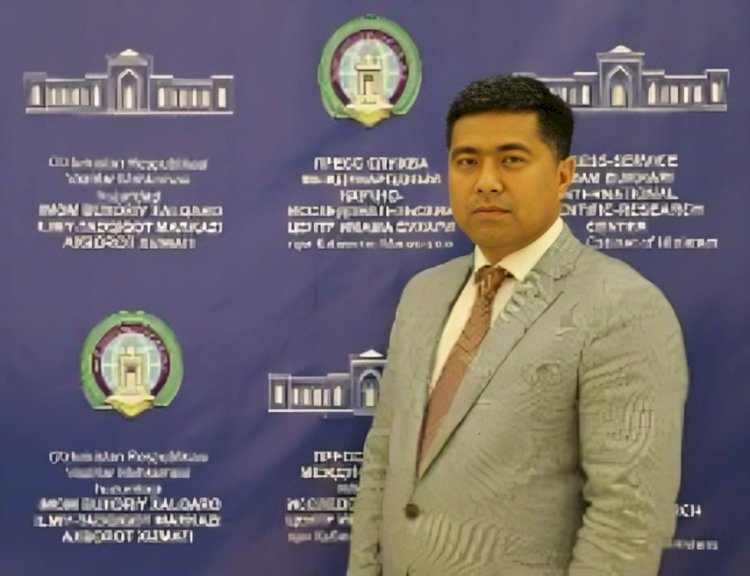
Tokhir Evadullaev
Scientific Researcher
Imam Bukhari International Scientific Research Center Samarkand, Republic of Uzbekistan
Disclaimer
The views expressed in this article are the author’s own and do not necessarily mirror Islamonweb’s editorial stance.


Related Posts















Leave A Comment