
A Principled Leader: Reflections on Prof. Dato’ Sri Dr. Syed Arabi’s Academic Leadership
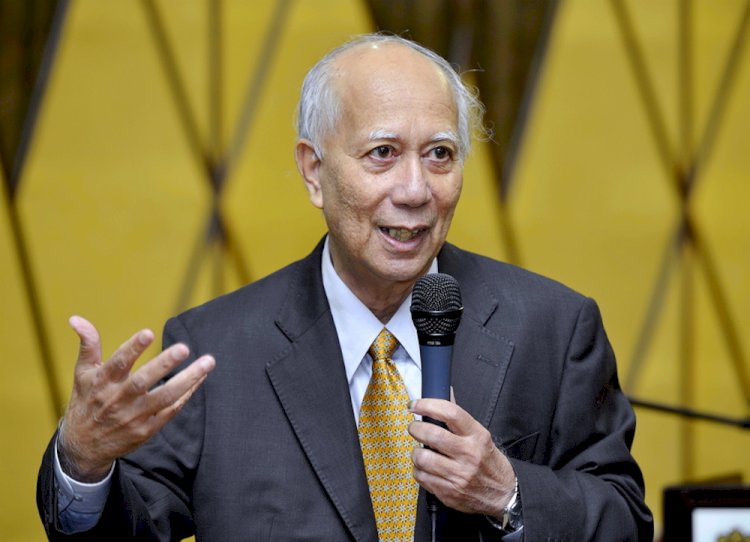
Some leaders are remembered for the positions they held while others are called to mind for the principles they upheld, Professor Dato’ Sri Dr Syed Arabi belonged to the latter category. His tenure as Rector of the International Islamic University Malaysia from 2006 to 2011 was significant, but his legacy extends beyond the position itself. He is remembered by many as an academic leader who combined knowledge with character, authority with humility and institutional responsibility with concern for people. His academic career also reflects this breadth: he has served as a professor, researcher, research administrator, supervisor and university leader.
The most distinctive quality associated with Professor Dato’ Sri Dr Syed Arabi is his commitment to deep-seated principles. He gives the impression of a leader who does not treat values as abstract ideas reserved for speeches alone, but they are expressed through decisions, relationships and daily conduct. For him, academic leadership is not simply the management of people, programmes and resources. It is a trust. A leader must be responsible for the direction of the institution, and for the development of the people entrusted to him as well. This understanding of leadership requires consistency, fairness, accountability and courage and he embodied it.
A principled leader does not change values according to convenience and is prepared to uphold standards even when doing so is difficult. At the same time, true principled leadership is never harsh, but possesses the ability to be firm without losing humanity and to exercise authority without diminishing others. This is one of the important lessons that Professor Dato’ Sri Dr Syed Arabi offers to the university community: leadership should be measured not only by what is achieved, but also by the integrity of the process by which those outcomes are attained.
Giving Others the Courage to Serve
In 2011, while Professor Dato’ Sri Dr Syed Arabi was serving as the IIUM Rector, students organised an International Conference on Islamic Solutions to Current Issues in the World based on the 1Malaysia Concept, held from 1 to 3 January at the Senate Hall, IIUM. It was a significant milestone because it marked the first-ever international conference organised by IIUM student leaders, an initiative directed by the author as programme manager, involving an international academic dimension. For the students involved, such an undertaking naturally required courage, as they had to approach senior academics, coordinate different responsibilities, and represent the university before a wider audience. Professor Dato’ Sri Dr Syed Arabi’s support provided crucial encouragement and direction at a critical stage. This kind of institutional trust is rare, and it shaped not just an event but a generation of young leaders who learned that their ideas mattered.
What is important to note in this experience is not merely that a Rector supported a student programme. It was that he recognised the educational value of allowing students to take responsibility by understanding that leadership cannot be learned only through lectures, but it must be practised through service, initiative, accountability and engagement with real challenges. His support demonstrated confidence in the potential of young people. He did not treat students merely as participants in university activities, rather he allowed them to become organisers, contributors and representatives of the institution. This remains an important lesson for academic leaders today. Universities that seek to cultivate capable leaders must create opportunities for students and junior staff to lead. They must be willing to trust them, guide them and allow them freedom to learn through experience.
An Academic of Integration
Professor Dato’ Sri Dr Syed Arabi also represents an integrated understanding of academic life. He exemplifies an academic who does not separate teaching from research, research from service, or administration from human development. His career includes teaching, postgraduate supervision, research management, and institutional leadership. He was appointed Dean of the Research Management Centre in 2001 and later served as Rector of IIUM. His research and academic interests include communication, public opinion, public relations, and media and society. This combination is important because a university cannot fulfil its mission through teaching alone. It must produce knowledge, engage society, and prepare students to address the challenges of their time. Likewise, research should not be detached from human concerns, but should instead contribute to understanding, improvement, and service. Professor Dato’ Sri Dr Syed Arabi’s exemplary role as an academic reminds us that an academic should strive for balance. The academic should teach with commitment, research with rigour, administer with responsibility, and serve with sincerity.
Nurturing People, Not Merely Managing Them
Institutions are often described through their buildings, policies, centres and programmes. Yet the lasting strength of an institution lies in the people it develops. Professor Dato’ Sri Dr Syed Arabi’s leadership reflects an awareness that people must be nurtured. A student requires more than information, a young academic requires more than instructions and a member of staff require more than performance targets. Each person thrives when guidance, trust, encouragement and opportunities for growth are offered. This approach is particularly visible in his understanding of research management. He underscores the importance of caring for research assistants, secretarial staff, supervisors and other members of research teams. He also emphasised training, trust, timely payment and the importance of completing research responsibilities properly.
These may appear to be practical matters, but they express a deeper principle: excellence must be built upon justice and respect. People should not be valued only for the results they produce, rather they should also be treated as human beings whose contributions deserve recognition and whose development matters. This is a valuable lesson for those entrusted with academic administration. Managing people is not the same as nurturing them, management may secure compliance, but nurturing develops commitment, confidence and future leadership.
Producing Successors
A leader’s influence is incomplete if it ends with his or her own tenure. The true test of leadership is whether others are prepared to continue the work with wisdom and integrity. Professor Dato’ Sri Dr Syed Arabi’s contribution may therefore be understood in terms of succession. Through teaching, supervision, research collaboration and institutional leadership, he has contributed to the development of people who can assume responsibility in the future. Succession planning is sometimes treated as an administrative exercise. In reality, it is an ethical responsibility. Institutions have a duty to prepare leaders who possess not only technical competence but also character, humility and social responsibility.
A university needs people who can lead without arrogance, make decisions without compromising integrity and pursue excellence without forgetting service. It needs leaders who understand that knowledge is an amanah and that authority is a responsibility rather than a privilege. This is perhaps one of the most important lessons from Professor Dato’ Sri Dr Syed Arabi’s example: a leader should not be threatened by the growth of others. Instead, the leader should find fulfilment in seeing others become capable, principled and independent.
Humility in Leadership
Professor Dato’ Sri Dr Syed Arabi’s leadership is also associated with humility. Humility does not mean the absence of confidence or authority. It means that authority is exercised without alienation. A humble leader listens, recognises that institutions are built through collective effort and does not claim every achievement as personal achievement. Rather, such a leader fosters an environment in which others are empowered to contribute and succeed.
This quality is particularly important in academic institutions, where knowledge and position can risk producing a rigid hierarchy. Academic leadership must ensure that expertise does not become arrogance and that seniority does not silence younger voices. The encouragement extended to the student organisers in 2011 reflects this principle. It showed that meaningful ideas may often originate from unexpected places and that the responsibility of leadership includes listening to those who are still developing their voices and granting them the opportunity to bring those ideas to action.
A Legacy of Empowering Future Generations
The significance of Professor Dato’ Sri Dr Syed Arabi’s example transcends his generation. It offers a vital lesson to academics, administrators, students, and young professionals alike. We learn that leadership must be firmly grounded in principles, that academic excellence must be integrated with service, that young minds should be entrusted with meaningful responsibility, and that research must be conducted with discipline and fairness. Ultimately, institutions endure when leaders actively nurture successors rather than merely protect their own legacy. Above all, we learn that true leadership is measured by its impact on people. The enduring influence of a leader is reflected in the courage others gain, the high standards they adopt, and the vital responsibilities they boldly assume.
Conclusion
Professor Dato’ Sri Dr Syed Arabi’s recognition with the Murabbi Award in the IIUM Takrim 2026 is a fitting acknowledgement of this broader legacy. The award may be understood not only as recognition of his academic and institutional achievements but also affirms the values he has embodied and transmitted to others. Although others may portray him as a Murabbi, his life perhaps can be captured in a more direct and simpler description: he is a man of principles. His contribution lies in showing that leadership can be firm yet approachable, scholarly yet engaged, ambitious yet selfless and authoritative yet humble.
For those who have had the privilege to learn from him, his example underscores that the highest form of academic leadership is not the accumulation of titles. It is defined by the formation of people, the strengthening of institutions and the faithful fulfilment of responsibility with integrity. That is the lesson Professor Dato’ Sri Dr Syed Arabi leaves for us: to lead with principles, to serve with humility and to equip others to continue the trust.
About the author:
Dr. Mohammad Mohiuddin is an academic at the Department of Qur’an and Sunnah Studies, AbdulHamid AbuSulayman Kulliyyah of Islamic Revealed Knowledge and Human Sciences, International Islamic University Malaysia (IIUM). He was privileged to be an undergraduate student and an active IIUM student leader during the rectorship of Prof. Dato’ Sri Dr. Syed Arabi Idid.
Disclaimer
The views expressed in this article are the author’s own and do not necessarily mirror Islamonweb’s editorial stance.


Related Posts












Leave A Comment