
Maqāṣid‑Based Screening: A New Frontier for Faith‑Driven, Impact‑Focused Investing
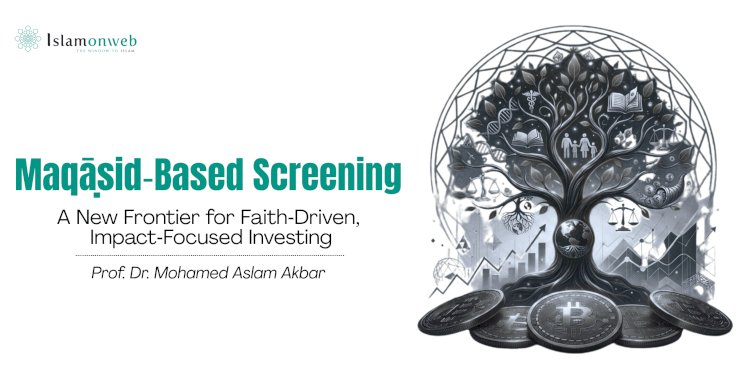
Maqāṣid‑based screening is emerging as the next step in Islamic investing. It keeps the familiar Sharīʿah filters that block ribā, gambling, pork, and companies that carry too much interest‑bearing debt, but then asks a second, deeper question: does this business advance—or at least avoid harming—the higher objectives of Islamic law? These objectives, or maqāṣid, include the protection of wealth (ḥifẓ al‑māl), life and health (ḥifẓ al‑nafs), intellect (ḥifẓ al‑ʿaql), future generations (ḥifẓ al‑nasl), faith (ḥifẓ al‑dīn) and, in many modern fatwās, care for the environment (ḥifẓ al‑biʾah). A company that satisfies both layers of screening is investable; one that fails either is ruled out.
The difference from a normal Sharīʿah screen lies in direction as much as depth. Conventional screens are essentially defensive: they tell us what to avoid. Maqāṣid screening stays defensive where it must, yet then turns proactive by judging the real‑world impact of whatever survives the first filter. Firms with high carbon footprints, exploitative labour practices or weak financial‑inclusion records may still be dropped even though their products look ḥalāl on paper. In practice the screen moves the question from Is it merely permissible? to Does it promote human and ecological well‑being?.[1]
This approach is no longer theoretical. In Malaysia the Securities Commission (SC) released its Principles‑Based Maqāṣid al‑Sharīʿah Guidance in 2023, requiring sukuk issuers and fund managers to map every ringgit they raise to six Maqāṣid aspirations and fifteen principles; offer documents now carry a dedicated “Maqāṣid alignment” statement.[2] The FTSE4 Good Bursa Malaysia Shariah Index follows a similar spirit by starting with Sharīʿah‑compliant stocks and then removing companies whose environmental, social or governance record falls short.[3] BIMB Investment markets what it calls the world’s first retail ESG sukuk fund, layering UN Global Compact metrics onto the Sharīʿah screen to capture social and ecological benefit.[4] In academia, Universiti Sains Islam Malaysia has piloted the MSRI Index, which rates listed companies against forty‑five Maqāṣid indicators before inclusion.[5]
Among the six classical objectives, three seem especially urgent for today’s investors. Protecting and growing wealth remains central, but now stretches to fair distribution and economic resilience. Environmental stewardship has leapt to the front line because climate change already imposes material losses on many Muslim‑majority regions. Justice and good governance—fair wages, anti‑corruption, data ethics—speak directly to the dignity of human life and the soundness of decision‑making. All three map neatly onto widely recognised Sustainable Development Goals (SDGs), making them intelligible to Muslim and non‑Muslim investors alike.
Early evidence points to tangible benefits. By forcing issuers to publish clear impact metrics—tonnes of carbon avoided, students financed, patients treated—Maqāṣid‑based structures give investors data they can verify. The SC reports that sukuk issued under its new guidance have been oversubscribed by both Islamic and conventional funds, suggesting that clearer social narratives reduce green‑washing risk and widen demand, which in turn can lower funding costs. In short, the Maqāṣid lens does not dilute Sharīʿah discipline; it intensifies it and, at the same time, positions Islamic finance at the forefront of genuinely responsible investment.
About the author:
Dr. Mohamed Aslam Akbar Hasani, an Associate Professor in Shariꜥah Sciences at the Department of Economics, Kulliyyah of Economics and Management Sciences at International Islamic University Malaysia (IIUM) currently teaches undergraduate and postgraduate courses in Islamic economics and commercial jurisprudence and conducts research on the classical works of Muslim scholarship in economic thought, Waqf creation for food security and Maqasid al-Shariah based developments.
References:
[1] See the policy note issued by INCEIF’s International Research Centre for Islamic Economics and Finance, ifhub.inceif.edu.my.
[2] See https://www.sc.com.my/resources/media/media-release/sc-unveils-principles-based-maqasid-al-shariah-guidance-for-islamic-capital-market.
[3] See https://www.bursamalaysia.com/trade/our_products_services/indices/ftse4good-bursa-malaysia-f4gbm-index
[4] See https://theedgemalaysia.com/article/responsible-business-bimb-launches-worlds-first-retail-esg-sukuk-fund
[5] See https://oarep.usim.edu.my/entities/publication/bdd0f8ba-7d81-4f8e-866d-7e5f6b0c3cd3
Disclaimer
The views expressed in this article are the author’s own and do not necessarily mirror Islamonweb’s editorial stance.


Related Posts













Leave A Comment