
The Prophetic Nūr in Qur’an, Shamāʾil Literature, and Ibn ʿArabī’s Mystical Tafsīr
The concept of Nūr (light) occupies a central place in Islamic spirituality and cosmology. Nūr Muḥammad—literally “the Light of Muhammad”—represents the archetypal Prophetic reality, linking scriptural, mystical, and devotional traditions across centuries. While the Qur’an frequently uses the metaphor of light to denote divine guidance, later Muslim scholars and mystics expanded this meaning to include the Prophet Muhammad ﷺ himself as the bearer of this nūr.
Among those who articulated this view with depth and precision is Shaykh Ibn ʿArabī. His commentary on the verse {يَا أَيُّهَا النَّاسُ قَدْ جَاءَكُم بُرْهَانٌ مِّن رَّبِّكُمْ وَأَنزَلْنَا إِلَيْكُمْ نُورًا مُّبِينًا} (4:174), “O mankind, there has come to you a conclusive proof from your Lord, and We have sent down to you a clear light,” presents a sophisticated, symbolic reading. He stands out as one of the most systematic and influential interpreters of the concept, elaborating the doctrine of al-Nūr al-Muḥammadī as the pre-existent source of creation—the first created entity and the primordial divine light from which all existence emerges.
Ibn ʿArabī explains that the verse is not merely announcing a revelation to humanity; it points to the nature of existence itself as a manifestation of divine light.
Nūr Muḥammadiyya
For Muslims, this nūr is not merely a metaphor. Ibn Isḥāq, born only seventy years after the Prophet’s passing, narrates that the Prophet’s father, ʿAbdullāh, shortly before his marriage to Āmina, met a woman who attempted to seduce him. When he saw her again the day after his wedding—after the Prophet ﷺ had already been conceived—she turned away from him. When asked why, she replied, “The light that was upon you yesterday has left you.” Ibn Isḥāq explains that his own father told him that this woman had seen between ʿAbdullāh’s eyes a radiant white mark, which disappeared once the Prophet ﷺ was conceived (Chodkiewicz 1993).
The concept of Nūr Muḥammadiyya holds that the Prophet Muhammad ﷺ is not only the final messenger in human history but also the first creation of Allah, the primordial light from which all existence originates. As the Prophet ﷺ is reported to have said:
“أَوَّلُ مَا خَلَقَ اللَّهُ نُورِي”
“The first thing Allah created was my light.”
According to this understanding, the first emanation from the divine command was a pre-eternal column of light, described as nūr Muḥammadiyya—the Muhammadan Light—from which the rest of creation unfolded.
Nūr in the Qur’ān
In the Qur’ān, nūr is used in both literal and metaphorical senses.
Literally, it denotes physical light, such as the moon’s reflected light in Sūrat Yūnus:
“It is He who made the sun a shining light and the moon a derived light, and determined its phases so that you may know the number of years and calculation. Allah has not created this except in truth. He details the signs for people who know.” (10:5)
Metaphorically, it refers to divine guidance, revelation, and faith, as in Sūrat al-Nūr (24:35). Much of Qur’anic mysticism is drawn from two chapters:
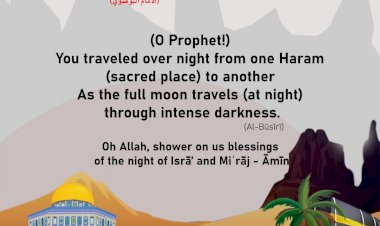
- Sūrat al-Isrā’ (17:1) – the Night Journey
Sūrat al-Nūr (24:35) – the Verse of Light
Muhammad ﷺ is regarded in the mystical tradition as the perfect manifestation of this pre-eternal light—the first cause of creation and the locus of divine perfection.
The most significant verse on nūr in the Qur’ān is the famous Verse of Light (24:35), which many see as containing the deepest allusion to the essence of Nūr Muḥammadiyya:
“Allah is the Light of the heavens and the earth. His light is like a niche within which is a lamp; the lamp is in a crystal; the crystal is like a shining star lit from the oil of a blessed olive tree, neither of the east nor the west, whose oil would almost glow even if untouched by fire. Light upon light. Allah guides whom He wills to His light. Allah sets forth parables for humanity, and Allah has full knowledge of all things.”
Classical exegetes such as al-Ṭabarī and al-Qurṭubī understood this parable as a description of divine guidance and revelation. The niche represents the believer’s heart, the lamp signifies faith or the Qur’an, and “light upon light” denotes layers of guidance. Allah as Light thus means He is the ultimate source of illumination—both physical and spiritual.
Later mystics, especially Ibn ʿArabī, read this verse cosmologically. For him, the Light of Muhammad ﷺ was the first tajallī (self-disclosure) of Allah—the metaphysical principle through which all creation came to be. Thus, while the Qur’an uses nūr primarily as a metaphor for guidance, mystical exegesis expanded these metaphors into a cosmological and prophetic doctrine: the Prophet Muhammad ﷺ is both the bearer of divine light through revelation and the primordial light from which creation itself unfolds.
Ibn al-ʿArabī
Muḥyiddīn Ibn ʿArabī (1165–1240), one of the greatest Sufi masters, known as Shaykh al-Akbar (“the Greatest Shaykh”), is among the most profound interpreters of the doctrine of the Prophetic Light. For Ibn ʿArabī, the Prophet Muhammad ﷺ is not only the final messenger in history but the first-created reality—the primordial light through which Allah brought the universe into being.
In the Futūḥāt al-Makkiyya, Ibn ʿArabī states:
“The first thing that God created was the Muhammadan Reality (al-ḥaqīqa al-muḥammadiyya), which is His Light (nūruhu). From this Light, all things came into existence.”
Here, Nūr Muḥammadī is not a symbolic expression but the very principle of creation: a pre-eternal light that functions as the blueprint of existence and the locus where the divine names and attributes first manifest. For Ibn ʿArabī, this primordial light is the medium of God’s tajallī (self-disclosure) and the channel through which creation unfolds.
Ibn ʿArabī thus presents the Prophet Muhammad ﷺ as both the first-created reality and the historical embodiment of the Muhammadan Light—Nūr Muḥammadī: the primordial source of creation, the medium of divine manifestation, and the foundational pattern of existence.
Shamāʾil Literature
The physical attributes, personality, and devotional life of the Prophet Muhammad ﷺ are conveyed through Shamāʾil literature. By observing his manners, gestures, and ethical perfection, devotees perceive traces of the pre-eternal light—al-ḥaqīqa al-muḥammadiyya—manifested in human form. The Shamāʾil reveal how the cosmic and metaphysical reality of Muhammad ﷺ as the first-created light is reflected in the earthly figure of the Perfect Human (al-insān al-kāmil).
The Perfect Man, in this understanding, is the human embodiment of the Muhammadan Reality. He is the most complete and balanced reflection of the divine Names, and serves as the supreme mediator between Allah and the cosmos. Al-insān al-kāmil is therefore the ideal spiritual aspiration for every seeker.
The Muhammadan Reality (al-ḥaqīqa al-muḥammadiyya) represents the primordial, pre-existent essence of the Prophet Muhammad ﷺ as the archetype and source of all creation. While Nūr Muḥammadī is cosmic, pre-eternal, and metaphysical, al-insān al-kāmil is its temporal and historical manifestation. Ibn ʿArabī stresses that although all creation reflects the Muhammadan Light, only Muhammad ﷺ embodies it in its fullest form in the earthly realm.
Conclusion
The doctrine of Nūr Muḥammadiyya reveals the spiritual and metaphysical stature of the Prophet Muhammad ﷺ within Islamic thought. From Qur’anic allusions to mystical interpretations—and culminating in the systematic exposition of Ibn ʿArabī—the Muhammadan Light is described as the primordial, pre-existent reality through which all creation emerges.
The Shamāʾil literature and the concept of al-insān al-kāmil further show how this divine light manifests in the Prophet’s earthly life and is reflected, to lesser degrees, in the saints.
In essence, Nūr Muḥammadiyya connects God and creation, showing that the Prophet Muhammad ﷺ is not only a historical messenger but the eternal source of guidance, knowledge, and divine presence for all beings.
About the author:
Muhammed Sinan C is a research scholar at Noorul Hidaya Islamic Academy Pattambi, affiliated to Darul Huda Islamic University, Chemmad. His academic interests include relevant and deep Quranic studies.
Citations:
Al-Arabi, Muhyi Din Ibn. Ibn al-‘Arabi on the Mysteries of the Purifying Alms (Futuhat al-Makkiyya / Meccan Revelations). Kazi Publications, 2009.
Chodkiewicz, Michel. Seal of the Saints: Prophethood and Sainthood in the Doctrine of Ibn ʿArabi. Cambridge: The Islamic Texts Society, 1993.
Ghazani, Rahbari. “Ibn Arabi: Mohammadān Reality and the Perfect Man Explained.” 2025, https://www.youtube.com/watch?v=tWQe7s_jMDs
Tariq, Tariq Mehmood. “The Prophetic Light: Nūr Muḥammadiyya.” 2011. https://www.scribd.com/doc/49648504/Noor-Al-Muhammadi-Ibn-Al-Arabi
Disclaimer
The views expressed in this article are the author’s own and do not necessarily mirror Islamonweb’s editorial stance.
3 Comments

Related Posts





Leave A Comment