
The Essentials of Iḥrām for Ḥajj and ʿUmrah
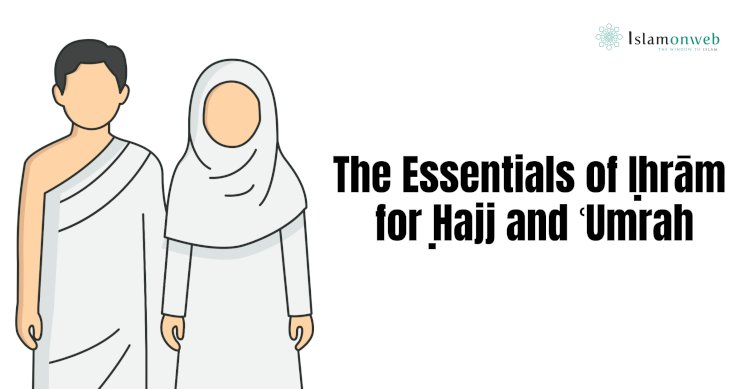
Among the greatest rites connected to Ḥajj and ʿUmrah is iḥrām, the sacred state through which a Muslim enters the journey of pilgrimage. It is not merely a change of clothing or a formal announcement before travelling to Makkah; rather, it marks a profound spiritual transition in which the believer leaves behind ordinary worldly habits and enters a state of devotion, humility, and obedience before Allah ﷻ.
The scholars unanimously agree that iḥrām is a pillar (rukn) of Ḥajj, without which the pilgrimage is not valid. Given its importance, Islamic jurisprudence addresses numerous rulings, etiquettes, and spiritual dimensions related to this sacred state.
The Meaning of Iḥrām
Linguistically, the word iḥrām derives from an Arabic root associated with sanctity and prohibition. It signifies entering a sacred or inviolable state.
In Islamic law, iḥrām refers to the intention to perform the rites of Ḥajj or ʿUmrah. Since Ḥajj is a pure act of worship, it cannot be valid without intention, and Muslim scholars agree upon this. The intention begins from the designated mīqāt, the appointed boundary from which pilgrims formally enter into iḥrām.
The place of intention is the heart. Therefore, merely verbalising the intention is not a formal requirement. However, it is recommended for the pilgrim to verbally specify the type of pilgrimage intended, following the practice of the Prophet ﷺ. Thus:
- If intending ʿUmrah, one says:
“Labbayka ʿUmrah.”
- If intending Ḥajj, one says:
“Labbayka Ḥajjan.”
- If intending both together, one says:
“Labbayka ʿUmratan wa Ḥajjan.”
This verbal declaration is not considered the intention itself, but rather a specification of the rite being undertaken.
The state is called iḥrām because the pilgrim voluntarily makes certain ordinarily permissible things temporarily forbidden upon entering the sacred rites. Actions such as applying perfume, cutting nails, shaving hair, hunting, and marital relations become prohibited during this state.
A similar concept appears in prayer with the opening takbīr, known as takbīrat al-iḥrām, because through it certain permissible actions become prohibited during ṣalāh.
The Spiritual Wisdom Behind Iḥrām
The wisdom behind legislating iḥrām is deeply spiritual. It cultivates within the believer a sense of reverence for Allah ﷻ and consciousness of entering a sacred act of worship solely for His sake. By entering into iḥrām, the pilgrim publicly declares complete readiness to obey Allah and fulfil His command.
The repeated recitation of the talbiyah:
“Labbayka Allāhumma labbayk…”
(“Here I am, O Allah, here I am…”)
becomes a continuous proclamation of servitude, surrender, and response to the divine call first proclaimed by Prophet Ibrāhīm (ʿalayhi al-Salām).
Iḥrām also carries profound lessons in humility and detachment from worldly status. The human soul naturally inclines towards prestige, adornment, and worldly distinctions. Yet the pilgrim in iḥrām abandons luxurious clothing, outward displays, and many ordinary comforts. Millions of people stand dressed in simple garments with no visible distinction between rich and poor, ruler and subject, Arab and non-Arab.
This sacred simplicity nurtures humility, softens the heart, and reminds the believer of humanity's equality before Allah. It also serves as a powerful reminder of death and the Hereafter, as the white garments of iḥrām resemble the burial shroud in which every person will eventually meet his Lord.
The Obligations Related to Iḥrām
The obligations (wājibāt) of iḥrām refer to actions which, if intentionally omitted, require compensation. According to the jurists, a person who leaves out one of these obligations must offer a sacrificial animal (dam). If unable to do so, he must fast for ten days instead.
Among the most important obligations connected to iḥrām is entering into iḥrām from the designated mīqāt.
Entering into Iḥrām from the Mīqāt
The word mawāqīt is the plural of mīqāt, which linguistically refers to a fixed limit, appointed boundary, or designated time and place for an action.
In Islamic terminology, the mawāqīt refer to the specific times and places designated for particular acts of worship.
Allah ﷻ has assigned fixed times and designated locations for Ḥajj and ʿUmrah from which iḥrām must begin. A person intending Ḥajj or ʿUmrah is not permitted to pass beyond these boundaries without entering into iḥrām. Whoever deliberately crosses them without iḥrām is considered to have violated an obligation and must offer compensation according to the jurists.
The mawāqīt related to Ḥajj and ʿUmrah are of two types:
- Temporal boundaries (mawāqīt zamāniyyah)
- Spatial boundaries (mawāqīt makāniyyah)
The Temporal Boundaries of Ḥajj and ʿUmrah
The Temporal Boundary of ʿUmrah
The time for entering into iḥrām for ʿUmrah extends throughout the entire year. A Muslim may perform ʿUmrah at any time unless he is already engaged in the rites of Ḥajj, in which case he cannot initiate a separate ʿUmrah while remaining occupied with the pilgrimage rites.
This flexibility reflects the mercy and ease present within Islamic worship, allowing believers throughout the year to visit the Sacred House and renew their spiritual connection with Allah.
The Temporal Boundary of Ḥajj
The temporal boundaries of Ḥajj refer to the specific period during which the rites of Ḥajj are valid. The months of Ḥajj begin from the start of Shawwāl and continue until the dawn (Fajr) of the 10th of Dhū al-Ḥijjah.
Allah ﷻ says:
“Ḥajj is during well-known months.”
— Sūrah al-Baqarah, 2:197
These “well-known months” were recognised among the Arabs even before Islam and were later affirmed and regulated by Islamic law.
According to the stronger scholarly opinion, if a person enters into iḥrām for Ḥajj before the months of Ḥajj begin — such as before the month of Shawwāl — the iḥrām is not considered valid for Ḥajj.
The Spatial Boundaries (Mawāqīt Makāniyyah)
The spatial boundaries of iḥrām refer to the specific locations designated by the Prophet ﷺ from which those intending Ḥajj or ʿUmrah must enter into iḥrām. It is not permissible for a pilgrim intending to perform the rites to pass beyond these boundaries without entering the sacred state of iḥrām.
These mawāqīt apply to everyone who passes through them intending pilgrimage, whether they belong to those regions or are merely travelling through them. The Prophet ﷺ designated five principal mawāqīt:
- Dhū al-Ḥulayfah
Dhū al-Ḥulayfah is a small village presently known as Ābyār ʿAlī. It is the mīqāt for the people of Madinah and those travelling through that route.
It is the farthest of all the mawāqīt from Makkah, located approximately 410 kilometres away from the Sacred City and around 10 kilometres from al-Masjid al-Nabawī.
Many pilgrims travelling from Madinah begin their journey of iḥrām from this blessed location, following the path once taken by the Prophet ﷺ during his Farewell Pilgrimage.
- Al-Juḥfah
Al-Juḥfah is a place located near present-day Rābigh along the coastal route. It was originally known as Mahyaʿah, but later became known as al-Juḥfah after floods swept through the area.
It lies to the northwest of Makkah at a distance of approximately 200 kilometres and is considered the second farthest mīqāt from Makkah.
Today, pilgrims usually enter iḥrām from Rābigh rather than al-Juḥfah itself because it is nearby and more accessible. It serves as the mīqāt for the people of al-Shām (Greater Syria), Egypt, North Africa, and those travelling along their route.
- Yalamlam
Yalamlam, presently known as al-Saʿdiyyah, is a well-known mountain area in Tihāmah. It serves as the mīqāt for the people of Yemen and those travelling from that direction.
It is located approximately 92 kilometres from Makkah.
Many pilgrims arriving by sea or air from southern regions align themselves with the vicinity of Yalamlam before entering into iḥrām.
- Qarn al-Manāzil
Qarn al-Manāzil, now commonly called al-Sayl al-Kabīr, is the mīqāt for the people of Najd and those coming from that route.
It connects to the valleys leading towards the Ḥaram area, and today two major roads between Makkah and Ṭāʾif pass through this region — one through al-Sayl and another through the Karā route. Both are approximately 75 kilometres from Makkah, and entering iḥrām from either fulfils the requirement of the mīqāt.
Historically, the term Najd referred to the elevated central lands stretching between Iraq and the Ḥijāz from east to west, and between Yemen and al-Shām from south to north.
- Dhāt ʿIrq
Dhāt ʿIrq is located near the region of ʿAqīq al-Ṭāʾif. It was named after a small mountain or elevated ridge found there.
It serves as the mīqāt for the people of Iraq and the eastern regions, as well as those travelling through their route. It lies approximately 100 kilometres from Makkah.
In earlier times, pilgrims would commonly enter iḥrām from a nearby location known as al-Ḍarībah, also called al-Khuraybāt. Today, however, most pilgrims travelling from those directions enter iḥrām from al-Sayl or the valley route near Karā because the direct road to Dhāt ʿIrq is more difficult.
The Establishment of the Mawāqīt
These mawāqīt are established through authentic narrations from the Prophet ﷺ. Some scholars mentioned that four of them were explicitly designated by the Prophet ﷺ — namely Dhū al-Ḥulayfah, al-Juḥfah, Yalamlam, and Qarn al-Manāzil — while Dhāt ʿIrq for the people of Iraq was identified through the ijtihād of ʿUmar ibn al-Khaṭṭāb رضي الله عنه.
However, the stronger scholarly opinion is that the designation of Dhāt ʿIrq was also originally established by the Prophet ﷺ, though the narration may not have reached ʿUmar رضي الله عنه directly. Thus, his independent judgement happened to coincide with the Prophetic guidance.
Categories of People in Relation to the Spatial Mawāqīt
People with regard to the spatial mawāqīt are generally divided by the jurists into three categories:
1. The People of the Ḥaram
This category includes those residing within Makkah, whether they are native Makkans or non-Makkans living there temporarily or permanently. It also includes anyone already present within Makkah at the time of intending Ḥajj.
Such individuals enter into iḥrām for Ḥajj from their residences within Makkah itself and are not required to travel outside to the designated mawāqīt.
As for ʿUmrah, they must go outside the boundaries of the Ḥaram into the nearest area of ḥill before entering into iḥrām. Common locations for this include al-Tanʿīm, ʿArafāt, or al-Jiʿrānah, with the easier and more accessible option generally preferred.
The Wisdom Behind This Distinction
The scholars explained the wisdom behind allowing the people of Makkah to begin Ḥajj from within the city while requiring them to leave the Ḥaram for ʿUmrah.
The rites of Ḥajj naturally involve movement between the areas of ḥill and ḥaram, such as travelling to ʿArafah and Muzdalifah before returning to Minā and Makkah. Thus, the journey itself already includes movement beyond the sacred boundary.
In contrast, the rites of ʿUmrah are performed entirely within the Ḥaram area. Therefore, the pilgrim must first leave the sacred boundary and then re-enter it in a state of iḥrām so that both the ḥill and the ḥaram become part of the devotional journey.
2. The People of the Ḥill
This category refers to those whose homes are located inside the five mawāqīt but outside the boundaries of the Ḥaram — meaning they reside in the area between the mawāqīt and Makkah.
These individuals enter into iḥrām for both Ḥajj and ʿUmrah directly from their homes or locations without needing to travel to the distant designated mawāqīt.
This ruling demonstrates the ease and practicality present within Islamic law, as people are not burdened with unnecessary hardship beyond what Allah has prescribed.
3. The Āfāqiyyūn (Those Coming from Distant Lands)
The Āfāqiyyūn are those coming from distant regions and countries beyond the boundaries of the mawāqīt designated by the Prophet ﷺ. This includes the vast majority of pilgrims arriving from across the Muslim world today.
Such pilgrims must enter into iḥrām from the designated mīqāt corresponding to their route of travel. If their journey passes through another recognised mīqāt before reaching Makkah, they must enter into iḥrām from whichever mīqāt they actually pass, even if it is not the one originally assigned to their homeland.
Thus, the determining factor is not nationality or origin alone, but the actual route taken towards Makkah.
Ruling on Passing the Mīqāt Without Entering into Iḥrām
Whoever passes the designated mīqāt without entering into iḥrām while intending Ḥajj or ʿUmrah must return to the mīqāt and enter into iḥrām from there if returning is possible. This is because entering iḥrām from the mīqāt is an obligation that can still be corrected, and therefore it is not permissible to neglect it deliberately.
If the pilgrim returns to the mīqāt and enters into iḥrām from there, then no penalty is due according to scholarly consensus, since the obligation of entering iḥrām from the appointed boundary has been properly fulfilled.
However, if the person does not return — or is genuinely unable to return — and instead enters into iḥrām only after passing the mīqāt, then he has violated an obligation of the pilgrimage. In such a case, compensation (fidyah) becomes necessary. This compensation consists of sacrificing one sheep, or one-seventh of a camel or cow, to be distributed among the poor and needy of the Ḥaram. The person offering the sacrifice is not permitted to eat from it.
If the violation was committed knowingly and deliberately, the person also bears sin in addition to the required compensation.
However, if returning to the mīqāt was abandoned due to a legitimate excuse, then the person is not sinful for failing to return, although the fidyah remains due according to the jurists. Examples of valid excuses include:
- Fear of missing the standing at ʿArafah due to lack of time
- Severe illness or hardship
- Fear of losing one’s travel group or companions
This ruling reflects the balance in Islamic law between preserving the sanctity of the rites and recognising genuine hardship faced by pilgrims.
Preparing for Iḥrām Before Reaching the Mīqāt
It is permissible for a pilgrim or person intending ʿUmrah to prepare for iḥrām before reaching the mīqāt by wearing the garments of iḥrām at home, in the airport, or before boarding the journey.
Merely wearing the garments of iḥrām does not place a person into the actual state of iḥrām, nor do the restrictions of iḥrām begin simply by putting on the clothing. The clothing itself is not iḥrām; rather, iḥrām begins only when the person forms the intention to enter the rites and verbally specifies the intended nusuk by saying:
“Labbayka ʿUmrah”
or
“Labbayka Ḥajjan.”
Thus, a person may wear the garments hours before reaching the mīqāt while remaining outside the actual state of iḥrām until the intention is formally made.
This clarification is especially important today, as many travellers wear iḥrām garments before boarding flights for convenience and practical ease.
Entering into Iḥrām Before Reaching the Mīqāt
The scholars unanimously agree that it is permissible for a pilgrim or person intending ʿUmrah to enter into iḥrām before reaching the mīqāt.
Therefore, if someone enters into iḥrām at home, in the airport, or on the airplane before reaching the designated boundary, there is no problem with doing so, provided the person does not pass the mīqāt without already being in iḥrām.
This issue is particularly relevant in modern air travel. For example, a traveller departing from Egypt would normally pass the mīqāt of al-Juḥfah or Rābigh before reaching Makkah. Since airline pilots may not always clearly announce the exact moment of crossing the mīqāt, many scholars advise travellers to exercise caution by entering into iḥrām before boarding or during the flight prior to reaching the mīqāt.
Accordingly:
- Entering into iḥrām before the mīqāt is permissible and carries no penalty.
- Delaying iḥrām until after passing the mīqāt obligates compensation (fidyah), although the Ḥajj or ʿUmrah itself remains valid.
This demonstrates the care Islam places upon observing the sacred boundaries established for pilgrimage while also accommodating the practical realities faced by travellers.
Ihram Dressing for Men
Among the obligations associated with iḥrām for men is removing stitched or tailored clothing before entering into the sacred state of pilgrimage.
What is meant by “stitched clothing” in the terminology of the jurists is not merely clothing joined together by stitching, but rather garments tailored or fitted according to the shape of the body or a specific limb. This includes items such as:
- Shirts
- Undershirts
- Trousers
- Turbans
- Gloves
- Socks
- Leather footwear covering the ankles (khuffayn)
Instead, the male pilgrim wears the well-known two unstitched garments of iḥrām: the izār wrapped around the lower body and the ridāʾ covering the upper body.
However, if a person cannot find sandals, he is permitted to wear leather footwear (khuffayn), provided they are cut below the ankles, as mentioned in the Prophetic guidance.
This outward simplicity is one of the most striking features of iḥrām. It strips away symbols of status, wealth, profession, and social distinction, placing all pilgrims in a state of visible equality before Allah ﷻ.
The Dress of Women in Iḥrām
Unlike men, women are not required to wear specific unstitched garments during iḥrām. A woman may wear whatever modest clothing she wishes, provided it fulfils the conditions of Islamic dress and avoids adornment or unnecessary display.
However, there are certain restrictions specific to women in iḥrām. A woman should not wear:
- The niqāb (face veil tailored specifically for the face)
- The burquʿ or similar face coverings
- Gloves
Some scholars say she may cover her head and lower a khimār, or a loose covering, over her face in the presence of non-maḥram men without wearing a fitted face veil. Likewise, although gloves are not worn, she may conceal her hands beneath her clothing if needed.
The scholars also emphasised that women in iḥrām should keep their feet covered.
The Restrictions of Iḥrām
Upon entering iḥrām, certain actions become prohibited until the pilgrim exits this sacred state. Among the most well-known prohibitions are:
- Applying perfume after entering iḥrām
- Cutting hair or nails
- Hunting land animals
- Marital relations and related intimacy
- Men covering the head with fitted coverings
- Men wearing stitched garments tailored to the body
These temporary restrictions train the believer in discipline, self-control, and conscious obedience to Allah. Even actions that are ordinarily permissible become restricted purely because Allah commanded it, strengthening the servant’s submission and mindfulness.
Etiquettes and Sunnahs of Iḥrām
The etiquettes and sunnahs of iḥrām refer to recommended acts which bring reward and spiritual completeness to the pilgrim, though no penalty is due if they are omitted. These practices prepare the believer physically, spiritually, and emotionally before entering the sacred state of pilgrimage.
Among the most important etiquettes and sunnahs connected to iḥrām are the following:
- Personal Grooming and Cleanliness
Before entering into iḥrām, it is recommended to trim the nails, shorten the moustache, remove underarm and pubic hair, and comb or tidy the hair of the head and beard.
These actions are not specific sunnahs of iḥrām itself, but rather part of the general sunnahs of fiṭrah and personal cleanliness encouraged in Islam.
The wisdom behind performing these acts before iḥrām is practical as well as spiritual. Since many of these actions become prohibited after entering into iḥrām, the pilgrim is encouraged to attend to them beforehand if needed, so that he does not later experience discomfort or require something he is unable to do during the sacred state.
However, if there is no genuine need for trimming or grooming, then there is no recommendation to do so unnecessarily.
- Performing Ghusl Before Iḥrām
It is sunnah for the person intending Ḥajj or ʿUmrah to perform ghusl before putting on the garments of iḥrām.
This recommendation applies to everyone entering iḥrām:
- Men and women
- Young and old
- Even women experiencing menstruation or postnatal bleeding
The Prophet ﷺ instructed Sayyidah ʿĀʾishah رضي الله عنها to bathe and enter into iḥrām for Ḥajj when she began menstruating, and he similarly instructed Asmāʾ bint ʿUmays رضي الله عنها after childbirth at Dhū al-Ḥulayfah.
If a person performs ghusl at home before travelling to the airport or beginning the journey, the sunnah is fulfilled and there is no problem in doing so.
The wisdom behind this ghusl includes purification, cleanliness, removal of unpleasant odours, and preparation for entering one of the most sacred acts of worship in Islam.
- Wearing Clean White Garments for Men
It is sunnah for men to enter iḥrām wearing two clean white garments: the izār and the ridāʾ, following the practice of the Prophet ﷺ.
The izār is wrapped around the lower body from the navel downward to cover the ʿawrah, while the ridāʾ is draped over the shoulders and upper body.
White garments are recommended because white is among the most virtuous and pure colours in Islamic tradition, symbolising cleanliness, simplicity, and humility.
As for women, there is no specific colour designated for iḥrām clothing. A woman may wear any modest and appropriate clothing provided it fulfils the requirements of Islamic dress and does not imitate men’s clothing or attract unnecessary attention.
- Applying Perfume Before Iḥrām
It is sunnah for men to apply perfume to the body before entering into iḥrām, particularly on the head and beard, following the practice of the Prophet ﷺ.
However, perfume should not be applied directly to the garments of iḥrām before entering the sacred state. Likewise, garments scented with perfume should not be worn during iḥrām, since the Prophet ﷺ prohibited wearing perfumed clothing while in iḥrām.
As for perfume already applied to the body before entering iḥrām, there is no problem with its remaining scent after the state of iḥrām begins.
This preparation reflects Islam’s balance between spiritual devotion and personal cleanliness and dignity.
- Entering into Iḥrām After Prayer
It is recommended that iḥrām be entered after performing an obligatory prayer if the prayer time coincides with the journey.
The Prophet ﷺ entered into iḥrām after praying Ẓuhr at Dhū al-Ḥulayfah during the Farewell Pilgrimage.
If there is no obligatory prayer at that time, the pilgrim may pray two rakʿahs with the intention of sunnah wuḍūʾ or another general voluntary prayer before entering into iḥrām.
However, the scholars clarified that there is no specific independent prayer legislated exclusively for iḥrām itself, since no authentic evidence establishes a special two-rakʿah prayer solely for entering into iḥrām.
Rather, the Prophet’s ﷺ iḥrām happened to coincide with the obligatory prayer.
- The Talbiyah
The talbiyah is among the greatest symbols of iḥrām and pilgrimage.
Linguistically, talbiyah refers to answering the call of the caller. In the context of pilgrimage, it refers to the pilgrim repeatedly saying:
“Labbayka Allāhumma labbayk, labbayka lā sharīka laka labbayk, innal-ḥamda wa al-niʿmata laka wa al-mulk, lā sharīka lak.”
“Here I am, O Allah, here I am. Here I am, You have no partner, here I am. Indeed, all praise, blessings, and sovereignty belong to You. You have no partner.”
The pilgrim begins reciting the talbiyah upon entering into iḥrām at the mīqāt.
- The pilgrim performing ʿUmrah continues the talbiyah until beginning ṭawāf around the Kaʿbah.
- The pilgrim performing Ḥajj continues it until stoning Jamrat al-ʿAqabah on the Day of Sacrifice.
It is recommended to repeat the talbiyah frequently and raise the voice moderately according to one’s ability, without causing disturbance or harm to others nearby.
The talbiyah is especially encouraged during transitions and changes in circumstance, such as:
- Boarding or dismounting transportation
- Ascending elevated places
- Descending valleys
- Meeting fellow travellers
- After obligatory prayers
As for women, they should recite the talbiyah softly enough for themselves to hear, especially in the presence of non-maḥram men. However, if only maḥrams are nearby, there is no harm in raising the voice slightly.
The talbiyah remains legislated whether the pilgrim is travelling, resting, walking, or waiting.
The Universal Message of Iḥrām
One of the most remarkable aspects of iḥrām is its universal symbolism. Regardless of nationality, language, race, wealth, or social status, pilgrims enter the same sacred state and proclaim the same talbiyah.
In a world deeply divided by materialism, class, and identity, iḥrām reminds humanity that true honour lies not in outward appearance, but in taqwā and obedience to Allah.
Allah ﷻ says:
“Indeed, the most noble of you in the sight of Allah is the most righteous among you.”
— Sūrah al-Ḥujurāt, 49:13
Thus, iḥrām becomes not merely the beginning of a journey to Makkah, but the beginning of a spiritual transformation. It strips away distractions, humbles the soul, and prepares the believer to stand before Allah with sincerity, devotion, and complete submission.
Disclaimer
The views expressed in this article are the author’s own and do not necessarily mirror Islamonweb’s editorial stance.
1 Comments
-

For men, Ihram is the sacred state entered before Hajj or Umrah, signifying purity and devotion. It requires wearing two seamless, unstitched white cloths: the izar wrapped around the waist from navel to ankles, and the rida’ draped over the shoulders. The head must remain uncovered, and sewn clothing, underwear, socks, perfume, and footwear covering the ankles are forbidden. This simple, uniform dress strips away worldly distinctions, fostering equality and humility as pilgrims focus entirely on their devotion to Allah. https://sweetneedle.co.uk/product-category/bath-towels/ihram/
Related Posts














Leave A Comment