
Part 1: When the Soul Departs: Death, Ascent and the Beginning of Barzakh
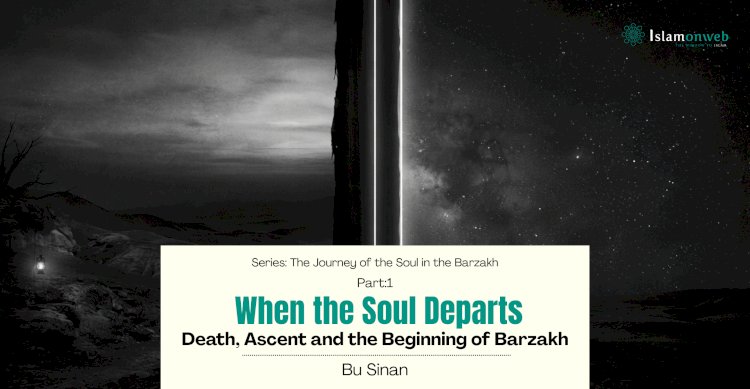
Death is one of the few certainties of human life, yet what follows it remains hidden from ordinary human perception. When someone close to us dies, questions naturally arise: Where has the soul gone? Does it remain near the body or ascend elsewhere? Does the deceased recognise those who died before them? Can the souls of the dead meet and speak to one another? Do they know anything about the family and friends they left behind? Can the souls of the living and the dead ever encounter one another?
Islamic revelation does not leave us entirely without answers. The Qurʾān and the Sunnah describe death not as the extinction of human existence, but as the beginning of another stage before the final resurrection. The Qurʾān calls this intermediate realm barzakh: “and behind them is a barrier until the Day they are resurrected” (al-Muʾminūn 23:100). The conditions of this realm, however, do not follow the familiar laws of earthly existence. The relationship between the rūḥ (soul) and the body changes, and we cannot always understand questions of place, movement, perception, and time through our experience of the physical world.
The Qurʾān also draws a remarkable connection between death and sleep: “Allah takes the souls at the time of their death, and those that do not die [He takes] during their sleep. Then He keeps those for which He has decreed death and releases the others for a specified term” (al-Zumar 39:42). Together with the Prophetic traditions concerning the departure and ascent of the soul, the questioning in the grave, the condition of the martyrs, and the meeting of believing souls, this verse provides an important foundation for understanding life between death and resurrection.
At the same time, few subjects have attracted as much speculation as the world of souls. Stories of the dead returning home, observing their families, appearing in dreams with messages, or gathering at particular times are widespread across cultures and Muslim societies. Some such ideas have been linked to reports transmitted by earlier scholars, while others have little basis in reliable revelation. Since the barzakh belongs to the realm of al-ghayb (the unseen), certainty cannot be built upon imagination, personal experiences or popular tradition. What is affirmed must ultimately rest upon the Qurʾān, authentic Sunnah, or careful conclusions drawn by recognised scholars from those sources.
This article therefore follows the journey of the rūḥ from the moment of death until resurrection: its departure from the body, its ascent and return, its condition in the barzakh, the different stations of souls, their meetings with one another, and the extent to which the dead may hear, recognise or receive information about the living. It will also examine the intriguing question of encounters between living and deceased souls in dreams.
- What Happens to the Soul at the Moment of Death?
Death marks the separation of the rūḥ from the body and the beginning of its journey into the barzakh. Although the physical signs of death are visible to those present, the Qurʾān describes another reality unfolding beyond human sight: angels arrive, the soul is taken, and the deceased begins to encounter the consequences of the life just completed.
The Qurʾān attributes the taking of the soul to the Angel of Death appointed by Allah:
“The angel of death who has been entrusted with you will take you. Then to your Lord you will be returned.”
(al-Sajdah 32:11)[1]
Elsewhere, the Qurʾān speaks of angels collectively taking souls, indicating that the Angel of Death carries out this task together with angels assigned to assist in it. The nature of their arrival and the reception given to the departing soul differ according to the condition in which a person meets Allah.
The Departure of the Believing Soul
For the believer who remained steadfast in faith, death begins with reassurance rather than abandonment. Allah says:
“Surely those who say, ‘Our Lord is Allah,’ and then remain steadfast, the angels descend upon them...”
(Fuṣṣilat 41:30)[2]
The angels tell them not to fear or grieve and give them the good news of the Paradise they had been promised. Early exegetes, including Mujāhid and al-Suddī, understood this descent of the angels as occurring at the time of death. Al-Ṭabarī adopts this interpretation, while Ibn Kathīr also cites it and notes that the glad tidings may accompany the believer through death, the grave and resurrection.[3]
Another verse describes those
“whom the angels take in death, [being] good and pure,” and records the angels greeting them with peace and giving them the good news of Paradise (al-Naḥl 16:32).[4]
The most detailed description comes in the well-known ḥadīth of al-Barāʾ ibn ʿĀzib رضي الله عنه. He relates that the Prophet ﷺ was sitting with his Companions beside the grave of a man from the Anṣār when he described what takes place as a believer reaches the end of worldly life and approaches the Hereafter.
Angels descend from heaven with radiant faces, carrying a shroud and perfume from Paradise. They remain within sight of the dying person while the Angel of Death comes and sits near his head. He calls upon the believing soul to leave the body for the forgiveness and pleasure of Allah. The Prophet ﷺ described its departure as gentle, like a drop of water flowing from the mouth of a water-skin. Once the Angel of Death receives it, the other angels take it immediately, place it in the heavenly shroud and perfume it. A fragrance more pleasant than the finest musk then emanates from it.[5]
The image is striking. Death may involve physical suffering—the Prophet ﷺ himself experienced the agonies of death—but the departure of the righteous soul is nevertheless accompanied by divine reassurance, honour and welcome.
A separate ḥadīth narrated by Abū Hurayrah رضي الله عنه gives a similar picture. When the believer is close to death, angels of mercy come and call the soul to depart while pleased and pleasing to Allah, towards mercy, provision and a Lord who is not angry with it. The soul emerges with the fragrance of musk and is passed among the angels until they take it toward heaven.[6]
The Ascent of the Believing Soul
The account of al-Barāʾ continues beyond the actual moment of separation. The angels ascend with the believing soul. Whenever they pass a gathering of angels, they ask about the identity of this good soul, and it is identified by the best names by which the person had been known in the world.
When they reach the lowest heaven, they seek permission to enter. The gates open, and angels from each heaven accompany it to the next until it reaches the seventh heaven. Allah then commands that the record of His servant be written in ʿIlliyyīn and that the servant be returned to the earth.[7]
Thus, the first movement of the believing soul after death is one of ascent and honour. Yet this ascent should not be understood as its final and permanent location. The same ḥadīth states that the soul is subsequently returned in connection with the body for the questioning of the grave. The different relationships of the soul to the heavens, the grave and the barzakh will become clearer in the sections that follow.
The Departure of the Wicked Soul
The Qurʾān presents a starkly different scene for those who meet death in unbelief and persistent wrongdoing:
“If you could but see when the wrongdoers are in the overwhelming pangs of death while the angels extend their hands, [saying], ‘Discharge your souls!’”
(al-Anʿām 6:93)[8]
The same contrast appears in the ḥadīth of al-Barāʾ. When the unbelieving or wicked servant reaches the end of worldly life, angels descend bearing coarse coverings. The Angel of Death calls the impure soul to come out towards the anger and displeasure of Allah. Unlike the believing soul, which departs with ease, this soul recoils within the body. The Prophet ﷺ likened its extraction to pulling a many-pronged iron skewer through wet wool—a description conveying resistance and severity.[9]
Once extracted, the angels take it, and it gives off an offensive odour. As they ascend, the angels they encounter ask about the identity of this foul soul, and it is mentioned by the worst names by which the person was known. When they reach the lowest heaven and seek admission, the gates are not opened for it. The Prophet ﷺ then recited the Qurʾānic verse:
“The gates of heaven will not be opened for them...”
(al-Aʿrāf 7:40)
Its record is written in Sijjīn, and the soul is returned towards the earth.[10]
The report of Abū Hurayrah reinforces this contrast. At the death of the unbeliever, angels of punishment arrive and command the soul to leave while under divine displeasure and proceeding towards punishment. Its condition after departure is described in terms entirely opposite to the fragrance and welcome accorded to the believing soul.[11]
- The Soul Returns: Questioning and the Beginning of Barzakh
The ascent of the soul described in the ḥadīth of al-Barāʾ ibn ʿĀzib رضي الله عنه is not the end of its immediate journey. After the believing soul is received through the heavens and its record is written in ʿIlliyyīn, Allah commands that it be returned to the earth. The Prophet ﷺ then says that the soul is returned to the body, after which two angels come to question the deceased.[12]
The same occurs to the unbelieving soul after its record is placed in Sijjīn: it is returned to the body and faces the questioning that follows.[13]
This return should not be understood as a restoration of ordinary earthly life. Death has already occurred, and the deceased has entered a new mode of existence. The connection between the rūḥ and the body in the barzakh is real, but it is unlike their relationship during worldly life.
The Questioning of the Grave
The questioning begins after burial. Anas ibn Mālik رضي الله عنه reported that the Prophet ﷺ said:
“When a servant is placed in his grave and his companions depart from him, he hears the sound of their sandals. Then two angels come to him, make him sit up, and ask him, ‘What did you used to say about this man, Muḥammad ﷺ?’”[14]
The believer answers that Muḥammad ﷺ is Allah's servant and Messenger. He is then shown the place in the Fire from which Allah has saved him and the place in Paradise prepared for him.
The unbeliever or hypocrite, however, cannot answer. He says he does not know and that he merely repeated what others used to say.[15]
The longer narration of al-Barāʾ gives the questioning in greater detail. The deceased is asked:
“Who is your Lord?”
The believer replies:
“My Lord is Allah.”
He is asked:
“What is your religion?”
He replies:
“My religion is Islam.”
He is then asked about the man who was sent among them, and he responds:
“He is the Messenger of Allah ﷺ.”
When asked how he knew this, he answers that he read the Book of Allah, believed in it and affirmed it.[16]
“Allah Keeps Firm Those Who Believe”
The Prophet ﷺ explicitly connected this moment with the Qurʾānic verse:
“Allah keeps firm those who believe, with the firm word, in worldly life and in the Hereafter. And Allah sends astray the wrongdoers. And Allah does what He wills.”
(Ibrāhīm 14:27)[17]
Al-Barāʾ ibn ʿĀzib رضي الله عنه narrated that the Prophet ﷺ said this verse refers to the questioning in the grave. The believer is powered to affirm his Lord and his Prophet when questioned.[18]
This gives the questioning a deeper significance. What a person truly lived by in this world becomes decisive in the barzakh. Faith that was rooted in conviction and reflected in one's life becomes a source of firmness, whereas borrowed words and outward conformity provide no security when worldly appearances have fallen away.
The Beginning of Blessing or Punishment
Once the believer answers correctly, a caller from heaven declares that the servant has spoken truthfully. The grave is furnished for him from Paradise, a door towards Paradise is opened, and its fragrance and comfort reach him. His grave is expanded, and he is given glad tidings of what awaits him.[19] That is what we mean when we pray for the deceased to have their graves expanded.
For the unbeliever, the opposite occurs. After his failure to answer, a caller declares that he has spoken falsely. A door to the Fire opens, and its heat reaches him. The traditions then describe the distress and constriction that follow.[20]
These experiences belong to what the scholars call the blessing and punishment of the barzakh (naʿīm al-barzakh and ʿadhāb al-barzakh). They begin before the resurrection and the final judgement.
The Qurʾān itself points to this intermediate stage when it describes the dying person asking to be returned to earthly life so that he might perform righteous deeds. The request is rejected:
“No! It is only a word he is saying; and behind them is a barrier until the Day they are resurrected.”
(al-Muʾminūn 23:100)[21]
The term barzakh literally denotes a barrier or separation. In this context, classical exegetes explained it as the state separating earthly life from resurrection. Al-Baghawī cites al-Ḍaḥḥāk as saying it is “what lies between death and resurrection,” while Mujāhid understood it as the barrier preventing the dead from returning to worldly life.[22]
Thus, the barzakh begins with death, not merely with burial. Burial is where the Prophetic traditions commonly describe the questioning, but the intermediate existence encompasses every person who dies, whether the body is buried, lost at sea, consumed, or otherwise no longer preserved in its earthly form.
How Can the Soul Be Returned to the Body?
This question occupied classical scholars because the same texts describe the soul ascending through the heavens, experiencing blessing or punishment, and also being connected with the body in the grave.
Ibn Taymiyyah cautions against understanding this return according to the rules of earthly existence:
“The return of the soul to the body of the deceased in the grave is not like its return to it in this worldly life.”[23]
Each stage of human existence, he explains, has its own conditions: worldly life has one kind of soul-body relationship, the barzakh another, and resurrection yet another. He further states that after death the soul remains capable of blessing or punishment and may be connected with the body so that both participate in the experience of the grave.[24]
Ibn al-Qayyim develops the same principle in Kitāb al-Rūḥ. He distinguishes several forms of the soul's attachment to the body: while the human being is in the womb, during earthly life, during sleep, during the barzakh, and finally after resurrection. Regarding the barzakh, he explains that although the soul has separated from the body at death, the separation is not so absolute that every connection between them ceases.[25]
This distinction helps reconcile the different Prophetic descriptions. The soul may have a station and experience beyond the physical grave while still maintaining a connection with the body appropriate to the barzakh. There is therefore no need to imagine the deceased as returning to ordinary biological life inside the grave.
Indeed, the ḥadīth itself points to a form of perception different from normal worldly experience. The deceased hears the footsteps of those leaving after the burial, even though to those standing above the grave the body appears lifeless.[26] Revelation therefore informs us of realities that cannot be measured solely by what the living can observe.
The questioning of the grave consequently marks the first major encounter of the human being with the realities of the barzakh. The world of action has ended; the world in which the consequences of faith and deeds begin to unfold has commenced. Yet even here the soul's journey is not uniform. The Qurʾān and Sunnah describe different stations and conditions for the prophets, martyrs, righteous believers, sinners and unbelievers. This raises the next question: where do souls remain during the long interval between death and resurrection?
Reference:
[1] Qurʾān, al-Sajdah 32:11
[2] Qurʾān, Fuṣṣilat 41:30–32
[3] Al-Ṭabarī, Jāmiʿ al-Bayān, commentary on Qurʾān 41:30; Ibn Kathīr, Tafsīr al-Qurʾān al-ʿAẓīm, commentary on Qurʾān 41:30
[4] Qurʾān, al-Naḥl 16:32. See also Ibn Kathīr, Tafsīr al-Qurʾān al-ʿAẓīm, commentary on the verse.
[5] Abū Dāwūd, Sunan, no. 4753; also transmitted by al-Nasāʾī, no. 2001; Ibn Mājah, no. 1549, in abbreviated form; and Aḥmad, Musnad, no. 18557, with slight variations. The narration is graded ṣaḥīḥ.
[6] Al-Nasāʾī, Sunan, no. 1833, from Abū Hurayrah رضي الله عنه. The report has been graded ṣaḥīḥ.
[7] Abū Dāwūd, Sunan, no. 4753. On ʿIlliyyīn, see Qurʾān, al-Muṭaffifīn 83:18–21
[8] Qurʾān, al-Anʿām 6:93.
[9] Abū Dāwūd, Sunan, no. 4753.
[10] Ibid.; Qurʾān, al-Aʿrāf 7:40. On Sijjīn, see al-Muṭaffifīn 83:7–9.
[11] Al-Nasāʾī, Sunan, no. 1833.
[12] Aḥmad ibn Ḥanbal, Musnad, ḥadīth of al-Barāʾ ibn ʿĀzib; Abū Dāwūd, Sunan, no. 4753. In the extended narration: “Then his soul is returned to his body, and two angels come to him.”
[13] Ibid. The narration similarly describes the return of the unbelieving soul before the questioning.
[14] Al-Bukhārī, Ṣaḥīḥ, no. 1338; Muslim, Ṣaḥīḥ, no. 2870, from Anas ibn Mālik رضي الله عنه.
[15] Ibid
[16] Abū Dāwūd, Sunan, no. 4753; Aḥmad, Musnad, ḥadīth of al-Barāʾ ibn ʿĀzib. See also al-Tirmidhī, no. 3120, for the questions concerning one's Lord, religion and Prophet.
[17] Qurʾān, Ibrāhīm 14:27, translation based on Saheeh International.
[18] Al-Bukhārī, Ṣaḥīḥ, no. 1369; Muslim, Ṣaḥīḥ, no. 2871, from al-Barāʾ ibn ʿĀzib رضي الله عنه.
[19] Abū Dāwūd, Sunan, no. 4753; Aḥmad, Musnad, ḥadīth of al-Barāʾ ibn ʿĀzib
[20] Ibid.; see also al-Bukhārī, no. 1338; Muslim, no. 2870.
[21] Qurʾān, al-Muʾminūn 23:100, translation based on Saheeh International.
[22] Al-Baghawī, Maʿālim al-Tanzīl, commentary on Qurʾān 23:100. See also al-Ṭabarī and Ibn Kathīr on the same verse.
[23] Ibn Taymiyyah, Majmūʿ al-Fatāwā, discussion on the return of the soul and questioning in the grave.
[24] Ibn Taymiyyah, Majmūʿ al-Fatāwā, 4:282–284.
[25] Ibn al-Qayyim, Kitāb al-Rūḥ, discussion of the different forms of attachment of the soul to the body.
[26] Al-Bukhārī, Ṣaḥīḥ, no. 1338; Muslim, Ṣaḥīḥ, no. 2870.
Disclaimer
The views expressed in this article are the author’s own and do not necessarily mirror Islamonweb’s editorial stance.


Related Posts












Leave A Comment