
The Legacy of the Murabbi: Reflections on a Half-Century of Academic Stewardship with Professor Dato’ Sri Dr. Syed Arabi Idid
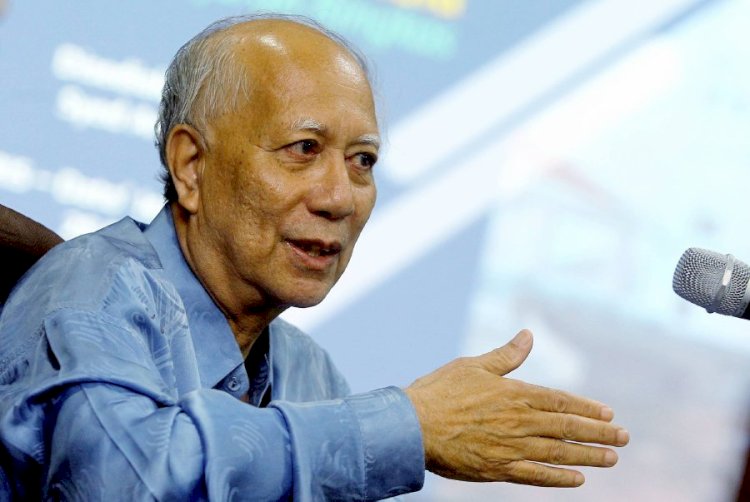
On the 6th of August 2026, Prof. Dato' Sri Dr. Syed Arabi bin Syed Abdullah Idid was conferred the prestigious Murabbi Award at the IIUM Takrim 2026. In conjunction with the ceremony, he engaged in a reflective dialogue with Prof. Dr. Shukran Abdul Rahman, the Principal Director of the Office of Strategic Institution Transformation (OSIT) IIUM. This interview offered a unique retrospective on his fifty-year academic journey, providing the context for his philosophy on the Murabbi: a role that transcends traditional teaching to encompass stewardship, mentorship, and the nurturing of character within the higher education landscape.
A Half-Century of Service
In 1976, Professor Dato’ Sri Dr Syed Arabi reported for duty at Universiti Kebangsaan Malaysia (UKM), embarking on a vocation that has now entered its 50th year. This milestone is not merely a measure of time, but a testament to a life-long Amanah, a sacred trust, dedicated to the stewardship of Malaysian higher education. Initiating his scholarly vocation during the transformative post-independence era, Professor Dato’ Sri Dr Syed Arabi was part of a seminal cohort articulating the fundamentals and academic identity of the Malaysian tertiary landscape. He recalls this inaugural period as a formative juncture for the nation: "when I was at UKM we were the first batch of Malaysian lecturers…". This early stewardship required him and his peers to look beyond the delivery of curricula, engaging instead in the vital task of constructing the administrative and intellectual framework of the university ecosystem from its very inception.
Across his tenure at both UKM and the International Islamic University Malaysia (IIUM), his journey has transcended the typical boundaries of a lecturer, maturing into the calling of the Murabbi: one who nurtures the intellect, the spirit, and the character of the next generation. Despite a legacy that has shaped two of the nation's premier institutions, Professor Dato’ Sri Dr Syed Arabi approaches his recognition with the intellectual humility characterised by a true scholar. Upon being selected for the Murabbi award, he reflected: "I'm sure the committee must have vetted and there are so many other candidates. Maybe I'm at the bottom of the list but nevertheless I appreciate this award."
The Architecture of Leadership: Humans Over Bricks
The evolution of Professor Dato’ Sri Dr Syed Arabi’s leadership began at the foundational level, serving as the first Head of the Department of Communication at UKM before ascending through nearly every tier of academic administration, including Deputy Dean, Dean, Registrar, Director, and Rector within these two universities. Through these diverse lenses, he developed a philosophy regarding the essence of the university. To him, an institution of higher learning is not a collection of facilities, but a repository of human potential and Hikmah (wisdom). "The bricks and the walls do not matter, it is the humans, the lecturers that count a lot to the students." He posits that the true enduring architecture of a university is the relationship between the educator and the pupil. While the physical campus provides the setting, it is the academic who leaves an indelible mark on the student's mind. He highlights that "every minute that you give to them (the students) is very important," especially as they are in their formative years. Leadership, therefore, must be an exercise in prioritising human development over infrastructure alone.
Mentorship Through Vulnerability and Intellectual Generosity
In the Murabbi tradition, mentorship is viewed as a transformational rather than a transactional process. Professor Dato’ Sri Dr Syed Arabi’s ethos is rooted in a "natural nurturing" akin to parenthood, where the senior scholar gives without the immediate expectation of a return. Central to this is his belief that an academic must never be "stingy" with knowledge but should instead practice a radical intellectual generosity. Mentorship should be an unconscious, automatic part of one’s life, performed as a natural service to the community. His approach is also uniquely defined by the "sharing of defects", which we can understand as a form of professional vulnerability where he presents his own past errors as cautionary guidance for junior scholars. In his words he noted that "I've committed certain errors; I do not like my new lecturers to commit those errors themselves."
Professor Dato’ Sri Dr Syed Arabi describes the university as a collaborative ecosystem where each role is valuable. Administrators provide stability and integrity, while academics act as exemplary guardians of knowledge, aiming for high standards. They each cannot succeed alone; they must work together for the sake of the students, who are the ultimate focus of everything the university does.
The Unity of Research and Teaching: Bringing the Future to the Classroom
Drawing on his experience at his alma mater, the University of Wisconsin, Professor Dato’ Sri Dr Syed Arabi advocates for a "research-first" mindset, arguing that research and teaching are inseparable. He views research as a vital tool for staying relevant, as it provides insights that may not appear in textbooks for years. In his words, "The moment we separate teaching from research we are missing a lot." Without primary research, teaching can become stagnant, relying on outdated secondary findings. By deriving lessons directly from primary research, the Murabbi ensures the information shared is current and authentic. This approach transforms the lecturer from a simple transmitter of information into a generator of knowledge, ensuring that the guidance provided to students is firmly grounded in the primary sources of truth.
The Archival Generator: Preserving the Voices of History
Further, in the conversation, Professor Dato’ Sri Dr Syed Arabi emphasises that a vital part of his commitment to research is the role of the "archival generator." He believes that preserving first-hand accounts is essential to finding the truth. Without these records, future scholars lack the solid foundation they need for their own work. Over several decades, he has interviewed key figures in Malaysian history, such as Tun Dr. Mahathir Mohamad, Tun Musa Hitam, Tun Ghafar Baba, and Tan Sri Muhyiddin Yassin, alongside academic leaders like Prof. Dato Dr. Ariffin Suhaimi and Prof Emeritus Tan Sr. Dr Mohd Kamal Hassan. By saving these voices in the archives, he ensures that future scholars have a clear record to study. This act reflects the selfless heart of a Murabbi. He conducted these interviews as personal initiatives, feeling a simple duty to capture history that might otherwise be lost. Though he recorded many hours of these conversations, he chose not to write about them himself, preferring to keep the records safe for others. By putting this work into the archive rather than seeking personal credit, he provides a quiet service for the future. He hopes that others will eventually discover and learn from these records, an investment in the success of future generations he may never meet.
IIUM as a Wholesome Global Experiment
Professor Dato’ Sri Dr Syed Arabi views IIUM as a bold "experimental" institution that challenged the global status quo of Islamic education. He recalls a historical tension with rectors of universities in some countries who questioned IIUM’s Islamic credentials because the university taught sciences, nursing, and engineering alongside theology. His defense of the IIUM model is rooted in the concept of "wholesome" education. By becoming the first university to teach Islamic education in English and integrating faith with modern science, IIUM proved that the two are not in conflict but are mutually reinforcing. He envisions the university’s future as one that continues to place these integrated values and achievements in a global setting, asserting its relevance on the world stage.
Conclusion: Nurturing the Climate of the Murabbi
In conclusion, Professor Dato’ Sri Dr Syed Arabi humbly emphasises that a Murabbi does not bloom in isolation, as his or her growth is inextricably linked to the university's administrative architecture and intellectual culture. Reflecting on this symbiotic relationship, he observes that "if you have that climate... of Islamization... this spirit of Murabbi will come in... consciously or unconsciously." From this perspective, the fundamental mandate of higher education transcends the mere dissemination of curriculum, focusing instead on the deliberate nurturing of a wholesome environment where values animate every interaction, every minute of interaction to be meaningfully spent. At IIUM, this commitment embodies the ‘Garden of Knowledge and Virtue’, bridging the divide between policy and Amanah to ensure an enduring scholarly legacy.
To honour individuals who uphold the character of Murabbi is not to look backward with static admiration, but to carry their vibrant, hopeful torch forward into a brighter future. For today’s educational institutions and young academics, this legacy offers a joyful call to action: to protect, celebrate, and continually deepen the interconnected relationship binding academics, administrators, and students in shared growth. This vision also extends to a call for meaningful engagement with the wealth of primary historical sources he has meticulously gathered in his archives. It invites us to enthusiastically embrace Professor Dato’ Sri Dr Syed Arabi’s vision to "accept the challenges" of our rapidly changing world with open hearts rather than fear, projecting a wholesome, value-driven hope onto the global stage. Ultimately, the spirit of the Murabbi thrives in every selfless act of mentorship, every open door, and every quiet kindness ensuring that the compassionate environment we build together today will illuminate the path for all who follow tomorrow.
About the author:
Dr. Sharifah Fatimah AlZahrah binti Syed Hussien Al-Attas is an academic at Department of Sociology and Anthropology, AbdulHamid AbuSulayman Kulliyyah of Islamic Revealed Knowledge and Human Sciences. She also serve as Deputy Dean (Academic and Internalisation) at ISTAC-IIUM. She benefitted as an undergraduate student under Prof Dato' Sri Dr Syed Arabi Idid’s rectorship.
Disclaimer
The views expressed in this article are the author’s own and do not necessarily mirror Islamonweb’s editorial stance.


Related Posts




Leave A Comment