
Sheikh Ṭāyis al-Jumaylī: Remembered for A Friday Sermon That Paved the Way for 11 Million People to Islam
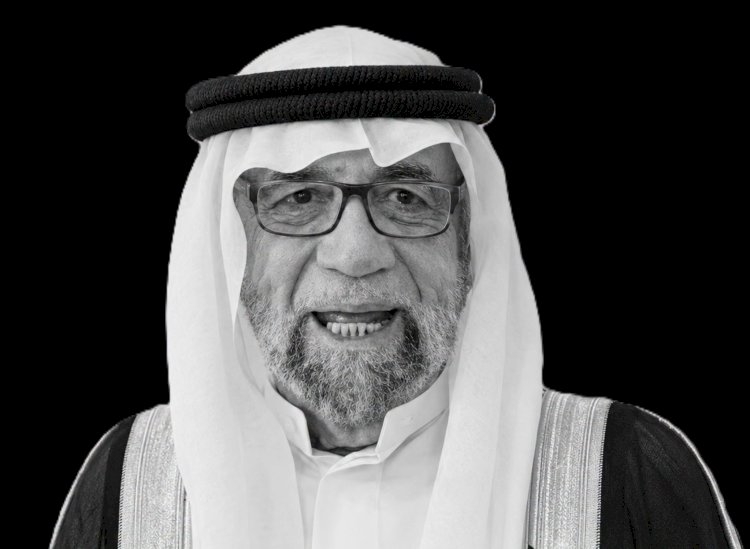
Doha, 13 November 2026 — Sheikh Ṭāyis ʿAbd Allāh al-Jumaylī, the Iraqi preacher whose Friday sermon in Kuwait inspired a donation to build a mosque in Malawi, passed away in Doha on Tuesday, 10 November. He served as an imam and preacher with Qatar’s Ministry of Endowments and Islamic Affairs and was a member of the International Union of Muslim Scholars. Mourners gathered that evening at Mesaimeer Cemetery to bid him farewell.
The story for which he is remembered began in a mosque in Kuwait’s Kaifan district in the early 1980s. That Friday, Sheikh al-Jumaylī spoke about ṣadaqah jāriyah, charity whose benefit continues after the giver’s death. Among those listening was the Kuwaiti benefactor Moudhi al-Sour, known as Umm ʿAlī. Moved by the sermon, she placed a donation in the sheikh’s hands and left him to decide where it could do the most good. After consulting others, he approached Dr ʿAbd al-Raḥmān al-Sumayṭ, a Kuwaiti physician. In an interview with Al Jazeera earlier this year, the physician’s son, Dr ʿAbd Allāh al-Sumayṭ, put the gift at 20,000 Kuwaiti dinars and identified that Friday sermon as the starting point of his father’s organised work in Africa.
What the physician saw in Malawi
Al-Sumayṭ had studied medicine in Baghdad, earned a diploma in tropical medicine in Liverpool and trained in internal medicine and gastroenterology in Montreal. He went on to work as a consultant at Kuwait’s Al-Sabah Hospital. When the question arose of where to build the mosque, he and his companions proposed a place where the congregation could not afford to build one. In 1981, they travelled to Malawi.
In his own account of that first visit, al-Sumayṭ remembered the cost of three things a family might need. He reckoned that ten Kuwaiti fils could pay for a course of malaria treatment, fifteen could provide a meal, and five hundred could cover a poor student’s tuition for a year. Yet even these sums lay beyond the reach of many families he encountered. The visitors had come to build a mosque. What drew them back was the knowledge that children in the same communities were going hungry, missing school and living without treatment for preventable illness.
Al-Sumayṭ and his colleagues founded the Malawi Muslims Committee that year. Sponsorship for orphaned children was among its early undertakings. As requests came from neighbouring countries, the committee widened its work and became the Africa Muslims Agency in 1984. By 1999, its schools, clinics and development programmes were serving Muslims and people of other faiths. The organisation chose the name by which it is known today, Direct Aid.
Schools, wells and a generation of teachers
For al-Sumayṭ, opening a school carried a responsibility to the children who would turn up for lessons the following year. The agency paid teachers’ salaries and supported students through their studies. It also funded local preachers and made introductory works on Islam available in African languages. Its scholarships extended beyond religious studies. The King Faisal Prize’s published profile records that 200 African students received scholarships for higher studies in medicine, engineering and technology.
In Zanzibar, one can trace what that commitment meant for an individual classroom. In 1998, the agency established a college to train teachers of Arabic and Islamic studies for secondary schools in Zanzibar and elsewhere in East Africa. Its first 32 graduates received bachelor’s degrees in education in 2001. The college later developed into Abdulrahman Al-Sumait University, and its teaching programmes grew to include subjects such as Kiswahili, English, history and biology. In Kenya, Umma University in Kajiado also identifies al-Sumayṭ as its founder. Its 2025 institutional profile records more than 7,000 alumni and describes a network that includes a campus in Garissa and an institute for technical and vocational education.
Clean water and medical care were equally central to his work. The King Faisal Prize’s biographical record credits the society with 4,250 artesian wells, 840 schools, and 124 hospitals and dispensaries. It also records support for irrigation and farming, alongside the distribution of food and medicine during famines. At the 1996 ceremony awarding al-Sumayṭ the King Faisal International Prize for Service to Islam, the organisers noted that the agency was already supporting nearly 10,000 orphans. Al-Sumayṭ personally directed its field operations.
The reach of a Friday sermon
Alongside this humanitarian work, al-Sumayṭ devoted more than three decades to daʿwah, the invitation to Islam. African teachers and preachers carried that work into their own communities, with salaries, books and places of learning supported by the agency. In its tribute to Sheikh al-Jumaylī, Qatar’s Al-Sharq reported that more than eleven million people embraced Islam over the course of the wider mission. Published accounts give differing totals. The founder’s family and Direct Aid both trace that Friday in Kaifan to the sequence that made the work possible. A woman heard a sermon, entrusted the preacher with her gift, and a physician agreed to carry it to Malawi.
Al-Sumayṭ passed away in 2013. Sheikh al-Jumaylī continued teaching in Doha, where his weekly majlis welcomed students, visiting scholars and neighbours. More than four decades after he preached on ṣadaqah jāriyah, students still learn in institutions that grew from the gift made by one of his listeners.
May Allah have mercy on Sheikh Ṭāyis al-Jumaylī, Umm ʿAlī, and Dr ʿAbd al-Raḥmān al-Sumayṭ. May He reward them, and all who carried this work forward, for every person who found faith, drew water from a well or learned to read through their efforts. Āmīn.
Disclaimer
The views expressed in this article are the author’s own and do not necessarily mirror Islamonweb’s editorial stance.
Related Posts







Leave A Comment