
Remembering Dr Muhammad Umer Chapra: The Scholar Who Gave Islamic Economics Its Moral Voice (1933–2026)
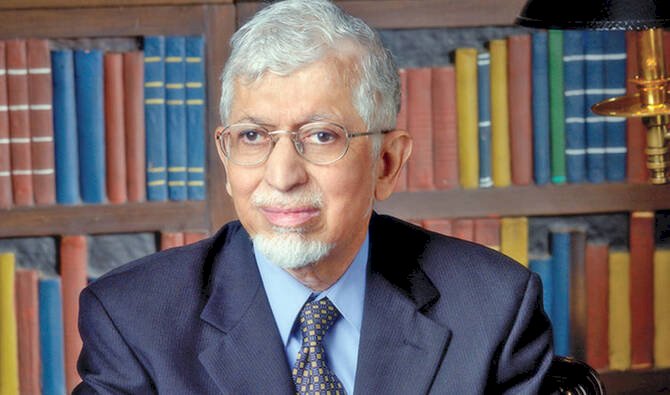
The global Muslim intellectual community is mourning the passing of Muhammad Umer Chapra, one of the most influential architects of modern Islamic economics and finance. Dr. Chapra passed away in Saudi Arabia on 13 June 2026 at the age of 93, leaving behind a rich legacy of scholarship dedicated to linking economics with ethics, justice, and human welfare.
Born in Bombay in 1933 and later raised in Karachi, Dr. Chapra excelled academically from an early age. He completed his Bachelor's and Master's degrees at the University of Karachi and went on to earn a PhD in Economics and Sociology from the University of Minnesota in 1961. After a brief academic career in the United States and Pakistan, he moved to Saudi Arabia in 1965, where he began what would become a historic contribution to the Kingdom's financial and monetary development.
For nearly 35 years, Dr. Chapra served at the Saudi Arabian Monetary Agency (now the Saudi Central Bank) as Economic Adviser and later Senior Economic Adviser. He played an important role during the formative years of Saudi Arabia's economic institutions and contributed to the development of monetary and fiscal policies under the reign of King Faisal. In recognition of his exceptional services, he was granted Saudi citizenship.
After retiring from SAMA, he joined the Islamic Research and Training Institute, an affiliate of the Islamic Development Bank, where he continued to shape the intellectual foundations of Islamic economics and finance through research, policy advice, and academic engagement.
Dr. Chapra's scholarship transformed the discourse on Islamic economics. At a time when economics was often viewed solely through the lens of material growth, he argued that economic systems must be rooted in morality, social justice, and human dignity. His influential works, including Towards a Just Monetary System, Islam and the Economic Challenge, The Future of Economics: An Islamic Perspective, and The Islamic Vision of Development in the Light of Maqāṣid al-Sharīʿah, have been translated into numerous languages and continue to be taught at universities across the world.
His groundbreaking book Towards a Just Monetary System was described by scholars as one of the clearest expositions of Islamic monetary theory. Through his writings, Dr. Chapra sought to revive the classical Islamic understanding that economic prosperity cannot be separated from ethical responsibility and social equity.
Throughout his distinguished career, he received numerous honours, including the King Faisal International Prize, the Islamic Development Bank Award in Islamic Economics, the Institute of Overseas Pakistanis Gold Medal, and the COMCEC Academic Award from Türkiye for his outstanding contributions to Islamic economics and finance.
Tributes have poured in from scholars, economists, and leaders across the Muslim world. Malaysian Prime Minister Anwar Ibrahim described him as "one of the finest sons of Islamic scholarship," adding that his life was devoted to justice, the empowerment of thought, and the elevation of human dignity through knowledge.
Dr. Chapra's funeral prayer was held at Masjid al-Haram, and he was laid to rest in Al-Ma'la Cemetery, a resting place of many prominent figures in Islamic history.
Disclaimer
The views expressed in this article are the author’s own and do not necessarily mirror Islamonweb’s editorial stance.


Related Posts













Leave A Comment