
IIUM's SISCO Concludes Visionary Leadership Programme with Focus on Crisis-Responsive Islamic Leadership
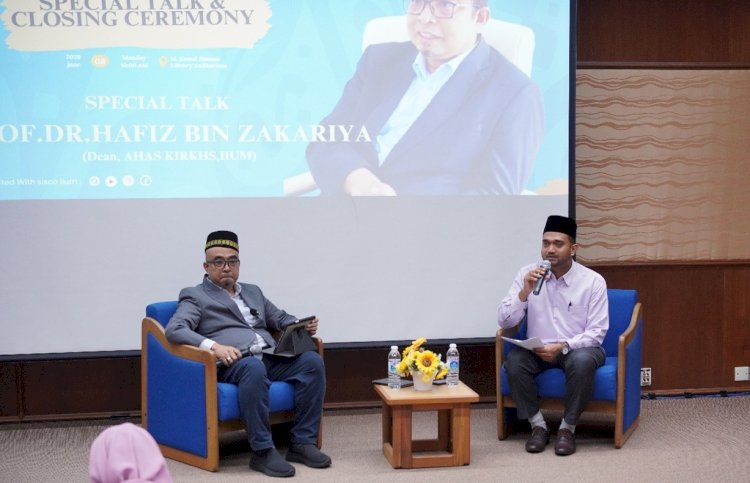
GOMBAK, 8 June 2026 – The Sayed Ismail Shihabuddeen Council for Visionary Leadership (SISCO), a Kulliyyah Centre of Excellence under the AbdulHamid AbuSulayman Kulliyyah of Islamic Revealed Knowledge and Human Sciences (AHAS KIRKHS) at the International Islamic University Malaysia (IIUM), has concluded its flagship Certified Course on Visionary Leadership and Community Engagement with a closing ceremony honouring the achievements of its participants.
A major highlight of the ceremony was a keynote address by Prof. Dr. Hafiz Bin Zakariya, Dean of AHAS KIRKHS, titled “Navigating the Uncharted: Lessons from a University’s Response to Crisis.” Drawing on institutional experiences during global challenges such as the COVID-19 pandemic, he emphasised the importance of adaptive governance, strategic restructuring, and crisis-responsive leadership in ensuring organisational resilience and continuity.
In his address, Prof. Hafiz reflected on the nature of crises in higher education and the way unexpected challenges expose both the strengths and vulnerabilities of institutions. Referring to his own experience of crisis management during the pandemic, he described how university leadership had to respond from the earliest stages of uncertainty, make difficult decisions, and communicate them with clarity while maintaining trust among faculty members, students, and external stakeholders.
He further noted that leading a faculty or university during normal times differs significantly from leading during moments of disruption. Crises, he observed, require collaboration, flexibility, and moral courage, but they can also give rise to innovative initiatives that may not have emerged under ordinary circumstances. He underlined the need to balance institutional continuity, academic quality, and the well-being of both students and staff.
The session was moderated by Assoc. Prof. Dr. Sayed Mohamed Muhsin, Director of the SISCO Certified Course on Visionary Leadership and Community Engagement. An engaging question-and-answer session followed, allowing participants to further explore the strategic and ethical dimensions of leadership in challenging times.
Established in 2023 and inspired by the legacy of the late scholar Sayed Ismail Shihabuddeen of Kerala, India, SISCO is committed to nurturing ethically grounded leaders through the integration of Islamic values and contemporary societal engagement.
The five-month programme was designed to move beyond conventional leadership models by introducing a tawḥīd-centred framework that presents leadership as a moral, ethical, and spiritual responsibility. Through 12 comprehensive sessions facilitated by 12 experts, the course equipped 60 postgraduate participants with a deeper understanding of leadership rooted in accountability, service, and stewardship.
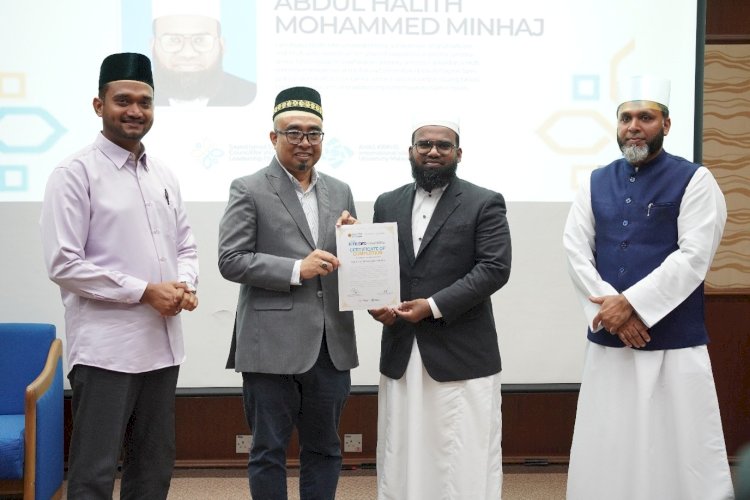
The event also featured a certificate presentation ceremony recognising the dedication of the participants and the SISCO organising committee. Certificates were presented by Prof. Dr. Hafiz Bin Zakariya, accompanied by Assoc. Prof. Dr. Sayed Mohamed Muhsin and SISCO Chairman Syed Makhdhum.
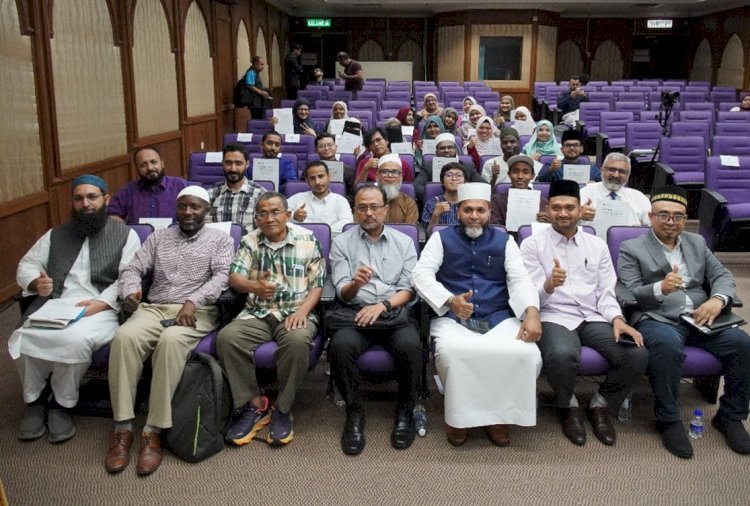
The ceremony was attended by several academic leaders and faculty members, including Dr. Tunku Mohar bin Tunku Mohd Mokhtar, Datuk Prof. Dr. Abdelaziz Berghout, Assoc. Prof. Dr. Rabiah Tul Adawiyah Mohamed Salleh, Dr. Majdan Bin Alias, and Assoc. Prof. Dr. Saheed Abdullahi Busari.
The programme was moderated by Sr. Haadiya Mehjabeen, a final-year student from the Department of Sociology and Anthropology, AHAS KIRKHS, and concluded with a duʿā led by Syed Makhdhum.
The successful completion of the programme reflects SISCO's ongoing commitment to developing visionary leaders who combine academic excellence with spiritual consciousness, ethical responsibility, and meaningful community engagement.
Reported by:
Fida Asari Pulparambil
PhD Candidate, Department of Psychology
AHAS KIRKHS, IIUM
Disclaimer
The views expressed in this article are the author’s own and do not necessarily mirror Islamonweb’s editorial stance.

Related Posts












Leave A Comment