
Muharram 10 and the Qur’anic Promise to the Oppressed
Among the greatest spiritual duties of believers is to remember the “days of Allah” — those moments in history when divine power broke through the arrogance of tyrants, protected the vulnerable, and turned the course of events in favour of truth. These days are not remembered as dates alone, but as living signs. They remind every generation that Allah is never absent from history, that oppression is never beyond His reach, and that the cries of the weak are never lost before Him.
The tenth day of Muharram is one such day.
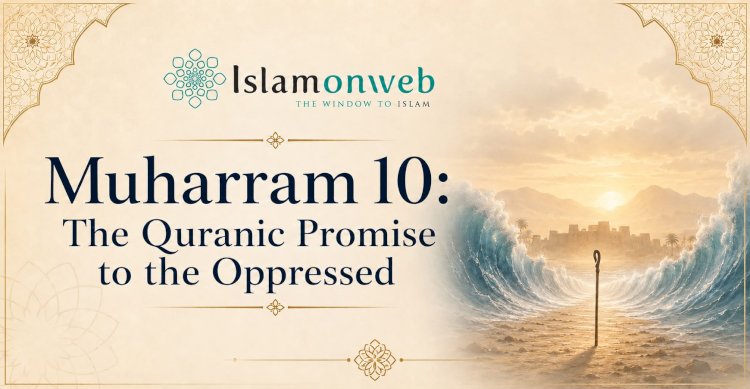
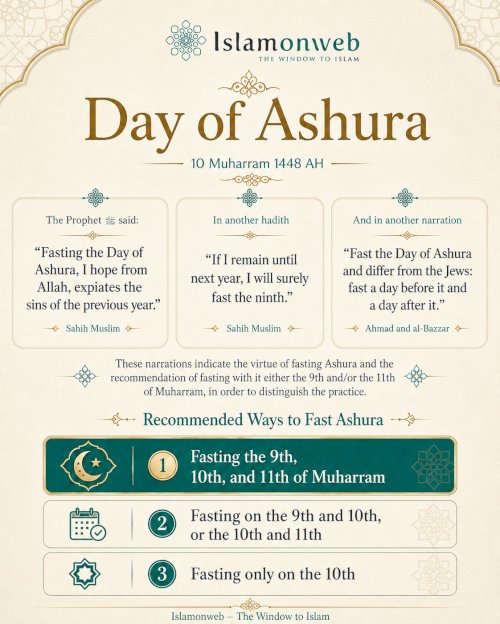
On this day, Allah saved Prophet Mūsā عليه السلام and his people from Pharaoh and his armies. It was a day when the oppressed were delivered, the arrogant were humiliated, and the sea itself became a witness to the victory of faith over tyranny. For this reason, ʿĀshūrāʾ is not only a day of fasting; it is a day of gratitude, memory, and renewed hope.
The victory of Allah’s friends in any age is a victory for truth itself. When Allah grants relief to the oppressed, it is not merely a local event belonging to one people or one period. It becomes a blessing for all believers until the Day of Judgment, because the hearts of the faithful rejoice whenever justice is restored, whenever falsehood is exposed, and whenever the divine promise unfolds before human eyes.
The story of Prophet Mūsā عليه السلام is among the greatest stories of the prophets. No prophetic story is repeated in the Qur’an with such breadth, detail, and variety as the story of Mūsā عليه السلام. It appears across many chapters, sometimes briefly and sometimes in great detail, each time revealing a different dimension of faith, struggle, patience, leadership, oppression, and divine rescue.
The story of Mūsā عليه السلام is not a simple tale of one prophet confronting one king. It is the story of truth facing organized power. It is the story of revelation confronting propaganda. It is the story of a vulnerable community living under fear, humiliation, and systematic oppression. It is also the story of how Allah’s plan moves quietly, patiently, and perfectly until the moment arrives when every hidden thread becomes visible.
Pharaoh and the Illusion of Absolute Power
The Qur’an presents Pharaoh not only as a ruler of the past, but as a symbol of tyranny. He divided society, humiliated Banū Isrāʾīl, killed their sons, spared their women, and built his authority upon fear. Allah says that Pharaoh “exalted himself in the land” and oppressed a group among its people, slaughtering their sons and keeping their women alive. Yet immediately after this description of oppression, the Qur’an opens the door of hope: Allah intended to favour those who had been oppressed, to make them leaders and inheritors.
Allah says:
“Indeed, Pharaoh exalted himself in the land and made its people into factions, oppressing a group among them, slaughtering their sons and keeping their women alive. Indeed, he was among the corrupters.” — Sūrat al-Qaṣaṣ 28:4
This verse is one of the most powerful Qur’anic descriptions of oppression. It shows that tyranny usually follows a pattern: arrogance, division, dehumanization, violence, and control. Pharaoh’s crime was not only that he ruled unjustly, but that he tried to redesign society around his own ego.
Yet immediately after mentioning Pharaoh’s oppression, the Qur’an opens the door of hope:
“And we wanted to favour those who were oppressed in the land, and make them leaders, and make them inheritors.” — Sūrat al-Qaṣaṣ 28:5
This is one of the great glad tidings of the Qur’an. At the very moment when Pharaoh was planning the destruction of the oppressed, Allah was planning their elevation. Pharaoh saw weak slaves; Allah saw future inheritors. Pharaoh saw children to be killed; Allah had already chosen from among them a prophet who would bring down his kingdom.
The Birth of Mūsā: Divine Planning in the House of Fear
Mūsā عليه السلام was born at a time when fear had entered every home of Banū Isrāʾīl. Pharaoh had ordered the killing of their newborn sons, imagining that by controlling birth and death he could escape the destiny awaiting him. But the decree of Allah cannot be stopped by royal orders.
Allah inspired the mother of Mūsā عليه السلام to nurse him and, when she feared for him, to place him in the river, assuring her: “Do not fear and do not grieve. Indeed, We shall return him to you and make him one of the messengers” (Sūrat al-Qaṣaṣ 28:7).
This moment is one of the most moving examples of divine planning in the Qur’an. What looked like a loss was actually protection. What looked like a separation was the beginning of a return. What looked like a helpless infant floating in danger was, in reality, the opening scene of Pharaoh’s downfall.
The river did not carry Mūsā away from safety; it carried him toward destiny. By Allah’s will, he reached the household of Pharaoh. The palace from which the order of killing had come became the place where the child destined to challenge Pharaoh would be raised. The tyrant who wanted to destroy him ended up sheltering him.
The Qur’an says that the family of Pharaoh picked him up “so that he would become for them an enemy and a source of grief” (Sūrat al-Qaṣaṣ 28:8). They thought they had found a child; in reality, they had received the beginning of their own defeat.
This is how Allah’s plan often works: quietly, subtly, and beyond the perception of those who think they control events. The Qur’an adds after Āsiyah pleaded for the child’s life: “And they did not perceive” (Sūrat al-Qaṣaṣ 28:9). They did not perceive what Allah was arranging through their own decisions.
For the oppressed, this is a profound source of hope. The present moment may look dark, but believers do not judge the whole story by one scene. Allah sees the end from the beginning.
Between Mūsā and Pharaoh
Mūsā عليه السلام grew up in Pharaoh’s palace, surrounded by the symbols of the very tyranny he would later confront. Yet the palace did not corrupt him. Power did not absorb him. The environment did not define him. Allah later reminded him that he had been brought up “under My eye” (Sūrat Ṭāhā 20:39).
When Mūsā عليه السلام reached maturity, Allah chose him for the mission and commanded him to go to Pharaoh, “for he has transgressed” (Sūrat Ṭāhā 20:24). Pharaoh’s transgression was not ordinary arrogance. He claimed lordship, enslaved people, killed children, humiliated families, and mocked the messenger sent to him.
His language was the language of tyranny in every age. He boasted of Egypt, its rivers, and his visible power, as though ownership and domination were proof of truth. Tyrants often confuse control with legitimacy. They imagine that because people fear them, they are secure; because people obey them, they are right; because they possess wealth and armies, they are permanent.
But the Qur’an exposes this illusion. Pharaoh’s people obeyed him because he “fooled his people” and they followed him. The problem was not only Pharaoh’s arrogance, but society’s surrender of moral judgment to power. When people stop asking what is true and only ask who is stronger, tyranny becomes possible.
Yet Allah commanded Mūsā and Hārūn عليهما السلام to speak to Pharaoh with gentle speech. This is one of the great ethical lessons of the story. Confronting oppression does not require abandoning prophetic character. Truth must be clear, firm, and courageous, but it must not become crude, vengeful, or unjust.
Mūsā عليه السلام did not come to imitate Pharaoh’s arrogance. He came to call him to Allah and to demand the freedom of an oppressed people. This is the Qur’anic model of resistance: principled, dignified, patient, and rooted in tawḥīd.
When Mūsā عليه السلام came with clear signs, Pharaoh did not respond with sincerity. Instead, he accused him of magic and political conspiracy. This too is the old language of tyranny: when oppressors cannot answer truth, they criminalise it. Pharaoh reduced revelation to magic and liberation to rebellion because tawḥīd threatened his false claim to absolute authority.
But Allah supported Mūsā عليه السلام with signs that exposed the limits of Pharaoh’s power. Even those brought to defend Pharaoh’s system recognised the truth and submitted to the Lord of Mūsā and Hārūn.
This was Pharaoh’s first real defeat — not yet in the sea, but in the human heart. His authority was broken when people who had stood before him in fear became willing to defy him for the sake of Allah. Tyranny can command bodies, but it cannot rule hearts once faith has entered them.
This matters deeply for oppressed communities. The collapse of oppression does not begin only when armies fall or palaces crumble. It begins when fear loses its throne inside the heart.
The Sea Opens and Pharaoh Falls
Pharaoh continued to reject the call until his arrogance led him and his people to destruction. Allah commanded Mūsā عليه السلام to leave Egypt by night with Banū Isrāʾīl. Pharaoh gathered his forces and pursued them, intending to end Mūsā and his followers. But without realizing it, he was marching toward the very moment Allah had decreed as the end of his tyranny.
When Mūsā عليه السلام and his people reached the sea, Pharaoh’s army was behind them. Every visible path seemed closed. The oppressed stood between water and weapons, between drowning and capture. Their fear was real. They said, “Indeed, we are overtaken” (Sūrat al-Shuʿarāʾ 26:61).
But Mūsā عليه السلام saw the moment through faith, not fear. He replied:
“No. Indeed, my Lord is with me; He will guide me.”
— Sūrat al-Shuʿarāʾ 26:62
Then Allah commanded him to strike the sea with his staff. The sea split, and the obstacle became the road. Mūsā عليه السلام and his people crossed safely. When Pharaoh followed in arrogance, the same sea that had become mercy for the believers became destruction for the oppressor.
This is one of the greatest glad tidings of ʿĀshūrāʾ: when Allah wills deliverance, He does not need existing roads. He creates the road.
The End of Arrogance
At the moment of drowning, Pharaoh declared belief, but it was not the faith of humility; it was the cry of desperation after a lifetime of rebellion. The Qur’an records the divine rebuke: “Now? While you had disobeyed before and were among the corrupters?” (Sūrat Yūnus 10:91).
The one who once boasted of Egypt and its rivers was drowned by water itself. His kingdom, armies, wealth, and pride could not save him when the command of Allah arrived. His body was preserved as a sign for those after him — not as an honour, but as a warning.
The Qur’an also shows that Pharaoh’s fall was not only destruction; it was the overturning of an unjust order. The wealth, gardens, springs, and structures of the oppressors did not remain with them. Allah caused the oppressed to inherit, and His promise was fulfilled because of their patience.
“How many gardens and springs they left behind, and crops and noble places, and comfort wherein they were enjoying themselves. Thus it was. And We caused another people to inherit it.”
— Sūrat al-Dukhān 44:25–28
And Allah says:
“And We caused the people who had been oppressed to inherit the eastern regions of the land and the western ones, which We had blessed. And the good word of your Lord was fulfilled for the Children of Israel because of their patience, and We destroyed what Pharaoh and his people had produced and what they had built.”
— Sūrat al-Aʿrāf 7:137
Muharram 10 is therefore not only a memory of the past. It is a message of hope for every oppressed people and every heart waiting for relief. It reminds us that Allah sees what tyrants do, hears the cries of the weak, and plans with perfect wisdom even when the present moment appears dark.
The story of Mūsā عليه السلام teaches that Allah’s plan often unfolds quietly before it appears openly: in a mother’s fear, in a child placed in a river, in a believer raised inside the palace of the enemy, in a night journey out of bondage, and finally in a sea that opens by the command of Allah.
The oppressed may reach a moment when every visible road is closed — the sea before them and Pharaoh behind them. But the believer does not measure the future only by what the eyes can see. He measures it by Allah's promise.
Disclaimer
The views expressed in this article are the author’s own and do not necessarily mirror Islamonweb’s editorial stance.

Related Posts








Leave A Comment