
Kerala’s ‘Mosque Man’ G. Gopalakrishnan Passes Away at 90
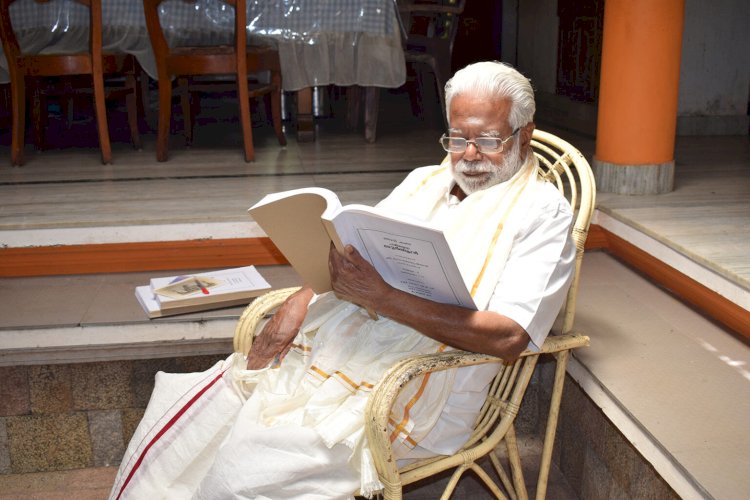
Thiruvananthapuram: G. Govindan Gopalakrishnan, the self-taught architect popularly known as Kerala’s “Mosque Man” for designing and constructing more than a hundred mosques, has passed away at the age of 90.
Over a career spanning more than six decades, Gopalakrishnan left his architectural imprint on mosques across Kerala and neighbouring Tamil Nadu. Independent profiles have credited him with work on at least 114 mosques, four churches and a Hindu temple. Among the better-known mosques associated with him are Beemapally Mosque, Palayam Juma Masjid, Kaduvayil Juma Masjid, Erumeli Vavar Mosque, and several mosques in Kollam and Thiruvananthapuram.
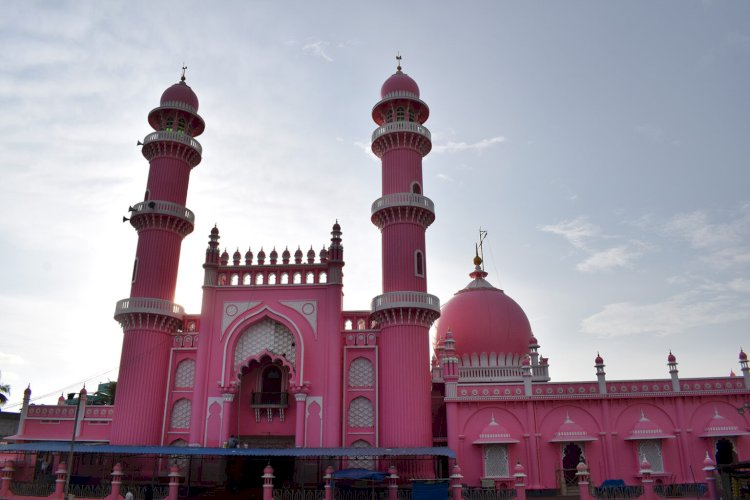
Beemapally Mosque
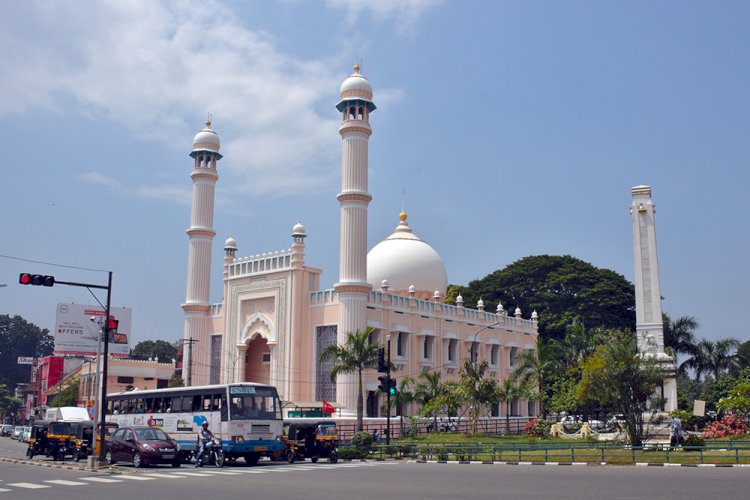
Palayam Juma Masjid
What made his career particularly remarkable was that Gopalakrishnan had no formal degree in architecture. He first encountered building design through his father Govindan, a contractor, and later learned drawing and drafting with the help of an Anglo-Indian draughtsman and through an apprenticeship with Kerala’s Public Works Department.
His close association with mosque architecture began when his father secured the contract for the reconstruction of Palayam Juma Masjid in the early 1960s. Working on the project introduced the young Gopalakrishnan to the structural and functional requirements of a mosque. The mosque was later inaugurated by India’s then President Dr Zakir Hussain.
A major turning point came with Beemapally Mosque in Thiruvananthapuram. Gopalakrishnan was entrusted with its design and construction while still in his early thirties. The massive project, developed in an Indo-Saracenic idiom, took around 17–18 years to complete as funds were raised gradually from the local community. In developing his understanding of Islamic architecture, he relied heavily on books, especially Percy Brown’s works on Indian architecture.
Gopalakrishnan was known for giving each mosque a distinct visual identity rather than repeating a standard template. His designs experimented with domes, minarets, colour schemes and regional architectural influences. He was also interested in making mosque inscriptions accessible to ordinary Malayalam readers and incorporated Malayalam translations of Qurʾānic passages alongside Arabic inscriptions in some of his projects.
His decades-long engagement with Muslim communities eventually led him to a deeper personal study of Islam and the Qurʾān. At his Thiruvananthapuram home, he kept copies of the Qurʾān, Bible and Bhagavad Gītā, and spent years preparing a substantial work titled Njan Kanda Quran (“The Qurʾān as I Saw It”), in which he reflected on Qurʾānic teachings and compared them with passages from other religious traditions.
Gopalakrishnan also founded Manavamaithri, an initiative promoting friendship and dialogue among religious communities. He frequently spoke of the “oneness of humanity” as the principle underlying both his architectural work and his engagement with different faith traditions.
His career became an unusual example of Kerala’s long tradition of inter-community cooperation: a Hindu architect entrusted by Muslim communities with the design of their places of worship for more than half a century.
With his passing, Kerala has lost not only a distinctive self-taught architect, but also a figure whose work physically embodied decades of interaction and trust across religious communities.
The mosques he helped shape across Kerala remain the most visible monuments to that legacy.
Disclaimer
The views expressed in this article are the author’s own and do not necessarily mirror Islamonweb’s editorial stance.


Related Posts














Leave A Comment