
The Scholarly Methodology of the Khurāsānī Shāfiʿī School
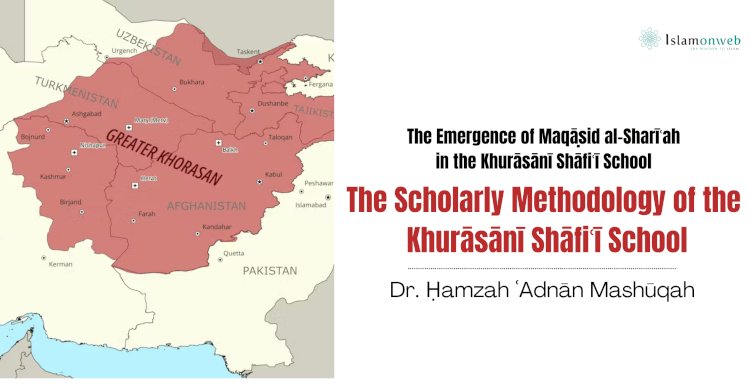
This article is second part of the The Emergence of Maqāṣid al-Sharīʿah in the Khurāsānī Shāfiʿī School. To read the first part, please visit this link
The Emergence of Maqāṣid al-Sharīʿah in the Khurāsānī Shāfiʿī School (Part 1)
The Distinctive Method of the Khurāsānī School
The Khurāsānī school within the Shāfiʿī madhhab was distinguished by its extensive elaboration of legal branches (tafrīʿ), depth of inquiry, and its refined organisation of juristic chapters and issues. Imām al-Nawawī states:
“Know that the transmission of the Iraqi scholars of our school regarding al-Shāfiʿī’s texts, the principles of his madhhab, and the views of the early authorities is generally more precise and reliable than that of the Khurāsāniyyūn. However, the Khurāsāniyyūn are generally superior in analytical engagement, investigation, derivation of branches, and systematic arrangement.”[1]
Shaykh Muḥammad Abū Zahrah comments on this statement:
“If we were to study and analyse the views of the jurists of Khurāsān and Naysābūr alongside those of the Iraqi jurists, we would observe the influence of environment and differing intellectual tendencies behind them. It appears that the ijtihād of the Iraqi scholars was closer to what is transmitted from al-Shāfiʿī than that of the Khurāsānī and Naysābūrī scholars.From this, it becomes clear that al-Nawawī preferred the Iraqis in transmission, while preferring the Khurāsāniyyūn in analytical reasoning, research, and derivation. This is because the Shāfiʿī madhhab, both its earlier and later formulations, developed in Iraq and Egypt, where there was less need for extensive derivation, as the environment itself had shaped the madhhab. As for Khurāsān and regions beyond, they represented a new environment in which the madhhab had not originally developed, necessitating further analytical effort and elaboration to meet its needs.”[2]
However, Shaykh Abū Zahrah's explanation of environmental influence is not explicitly supported by the authoritative texts of the Shāfiʿī school. Rather, it represents a personal attempt to interpret Imām al-Nawawī’s statement. This is particularly so because al-Nawawī himself did not address the issue of takhrīj (derivation), nor do the madhhab's sources indicate that the Khurāsāniyyūn introduced more legal branches than the Iraqis did.
Thus, a more accurate understanding of al-Nawawī’s statement is that the Khurāsānī school excelled in structuring and organising juristic discussions, demonstrated deeper engagement with underlying meanings and legal reasoning (ʿilal), and showed greater skill in deriving rulings based on the established positions of Imām al-Shāfiʿī and the juristic analyses of his qualified followers.
The Faculty of Takhrīj and Ijtihād Among the Khurāsānī Jurists
During this period, a group of jurists known as aṣḥāb al-wujūh (the proponents of independent juristic reasoning within the madhhab) emerged. These were scholars who attained the level of ijtihād within the framework of the madhhab, enabling them to derive rulings for new cases and circumstances based on the texts and principles of Imām al-Shāfiʿī. Their contributions played a significant role in enriching and expanding the madhhab, and their opinions were recognised as valid juristic positions (wujūh) within it.
Among the most prominent of these scholars were: al-Anmāṭī, Abū Zurʿah al-Dimashqī, Ibn Surayj, al-Qaffāl al-Shāshī, al-Qaffāl al-Ṣaghīr, Abū Ḥāmid al-Isfarāyinī, al-Qāḍī Ḥusayn, Abū Muḥammad al-Juwaynī, Abū ʿAlī al-Sinjī, Imām al-Ḥaramayn al-Juwaynī, and al-Ghazālī, among others. Imām al-Nawawī compiled many of these figures in his work, Tahdhīb al-Asmāʾ wa al-Lughāt.
Among those who attained a distinguished level of madhhab-based ijtihād was al-Qaffāl al-Ṣaghīr, who developed a recognised methodological approach in tafrīʿ and takhrīj, earning him the title “the leading authority of the Khurāsānī method.” Al-Samʿānī states:
“Abū Bakr al-Qaffāl was unrivalled in his time in fiqh, memorisation, piety, and asceticism. His contributions to the madhhab surpass those of his contemporaries. His refined methodological approach in the Shāfiʿī madhhab, which his students transmitted, is among the most robust and rigorously grounded.”[3]
Ibn Ḥajar al-Haytamī similarly remarks:
“Do you not see that the students of al-Qaffāl or Shaykh Abū Ḥāmid, despite their great number, generally derive and systematise rulings based on his method?”[4]
Although the detailed features of the methodologies of al-Qaffāl and Abū Ḥāmid al-Isfarāyinī have not been fully preserved[5]. Both scholars remained firmly committed to the established principles of the madhhab in their derivations. Al-Subkī notes:
“Any derivation presented in general terms by a scholar, if that scholar is known for adherence to the madhhab, such as Shaykh Abū Ḥāmid and al-Qaffāl, is considered part of the madhhab. However, if it comes from those who frequently departed from strict adherence, such as the four Muḥammads (al-Ṭabarī, Muḥammad ibn Naṣr al-Marwazī, Ibn Khuzaymah, and Ibn al-Mundhir), it is not regarded as part of the madhhab. As for al-Muzanī and Ibn Surayj, they occupy an intermediate position, they did not diverge to the extent of the former, nor were they as strictly bound as the Iraqi and Khurāsānī scholars.”[6]
One of the works that clearly reflects the strength of takhrīj and juristic reasoning within the Khurāsānī school is al-Ghiyāthī by Imām al-Ḥaramayn. In this work, he developed discussions on siyāsah sharʿiyyah (governance) based on the principle of public interest (maṣlaḥah), employing it as a valid proof when supported by recognised legal foundations[7].
He addressed numerous issues of governance in detail, and later scholars such as al-Ghazālī, al-Shāṭibī, and Ibn Taymiyyah drew upon his contributions[8]. Another distinctive feature of al-Ghiyāthī is its engagement with hypothetical scenarios. Imām al-Ḥaramayn considered situations such as the absence of political authority or the absence of qualified jurists and provided reasoned responses to the legal questions that might arise under such circumstances.
The era of aṣḥāb al-wujūh came to an end with the conclusion of the Khurāsānī and Iraqi schools. Thereafter, Shāfiʿī jurists devoted their efforts to refining and systematising the madhhab. Although a few scholars later attained levels of ijtihad, such as al-ʿIzz ibn ʿAbd al-Salām, Ibn Daqīq al-ʿĪd, and Ibn al-Rifʿah, this was no longer the prevailing characteristic of the scholarly community.
The Spread of the Method of the Mutakallimūn in Uṣūl al-Fiqh
Characteristics of the Method of the Mutakallimūn
The method of the mutakallimūn in uṣūl al-fiqh is an approach that adopts a theoretical framework for formulating legal principles, independent of subsidiary rulings (furūʿ). It is based on abstract reasoning from universal evidence to derive foundational principles, without binding itself to any particular madhhab or specific juristic opinion.
This approach came to be known as the method of the mutakallimūn because it resembles their style of writing, which establishes principles and supports them through logical and theological argumentation. In this regard, al-Bāqillānī states:
“A chapter on the principle that it is not obligatory to support the foundations of uṣūl al-fiqh based on the position of a particular jurist or in conformity with a specific madhhab. Know - may Allah grant you success - that adherence to a madhhab is only required because the evidence supports it, not because a particular scholar held that view. Thus, madhāhib must be built upon evidences, not evidences upon madhāhib.”[9]
This method is also referred to as the method of the majority (ṭarīqat al-jumhūr), since those who adopted it largely belonged to the Mālikī, Shāfiʿī, and Ḥanbalī schools. It is likewise called the Shāfiʿī method, as many of its leading contributors were Shāfiʿī scholars. Moreover, if this method is defined as the abstraction of legal principles from universal evidences without adherence to a specific school, then Imām al-Shāfiʿī may be regarded as its earliest pioneer[10].
The method of the mutakallimūn is characterised by several key features, among the most notable of which are[11]:
- Precision in establishing principles: Great care is taken in refining and verifying legal principles through rational analysis and evidence-based reasoning. This approach allows space for intellectual reflection and disciplined inquiry, while remaining within the bounds of sound reasoning. The principles established are supported by strong logical and rational proofs.
- Freedom from madhhab-based partisanship: This stems from the uṣūlī focus on establishing principles themselves, irrespective of whether they serve a particular juristic school. As a result, scholars from different legal and theological traditions adopted this method—including Ḥanafīs, Mālikīs, Shāfiʿīs, and Ḥanbalīs, as well as Ashʿarīs, Muʿtazilah, and others.
- Extensive argumentation and discussion: Scholars employing this method gather as many evidences as possible in support of a given principle, while also addressing objections and counterarguments in detail.
- Emphasis on definitions and terminology: Influenced by kalām and logic, scholars give significant attention to defining terms with precision, analysing and critiquing these definitions in a systematic and logical manner.
- Relative detachment from subsidiary rulings: This method focuses on abstracting legal principles independently of their application in detailed juristic branches, avoiding extensive engagement with the practical legal implications derived from those principles.
Major Works of the Mutakallimūn Method Among the Khurāsānī Scholars
Among the most important works representing the method of the mutakallimūn in uṣūl al-fiqh are al-Burhān by Imām al-Ḥaramayn al-Juwaynī and al-Mustaṣfā by al-Ghazālī. Ibn Khaldūn states:
“Among the finest works composed by the theologians in uṣūl al-fiqh are al-Burhān by Imām al-Ḥaramayn and al-Mustaṣfā by al-Ghazālī, both from the Ashʿarīs, as well as al-ʿAhd by ʿAbd al-Jabbār and its commentary al-Muʿtamad by Abū al-Ḥusayn al-Baṣrī from the Muʿtazilah. These four works constitute the foundational pillars of this discipline.”[12]
As for al-Burhān, Imām al-Ḥaramayn introduced new discussions that had not been previously addressed, including the foundational premises of uṣūl al-fiqh and the sciences upon which it depends, namely kalām, the Arabic language, and fiqh[13]. He also addressed aspects of maqāṣid al-sharīʿah[14].
After al-Juwaynī, uṣūl scholars widely relied on al-Burhān. Ibn Khaldūn described it as one of the essential pillars of the discipline. Scholars engaged with it in various ways:
- al-Ghazālī summarised it in al-Mankhūl, reorganising its structure, refining certain discussions, and removing unnecessary length without compromising meaning;
- others, such as al-Abīyārī and al-Māzarī, wrote commentaries upon it;
- still others built their own works upon its foundations, such as al-Rāzī in al-Maḥṣūl and al-Āmidī in al-Iḥkām.
Thus, no serious student of uṣūl al-fiqh could dispense with this work[15].
As for al-Mustaṣfā, al-Ghazālī introduced a logical introduction that had no precedent in earlier uṣūl works, noting that it serves as a general prolegomenon applicable to all sciences. He also developed an innovative structural framework for uṣūl al-fiqh, organising the subject into four central axes:
- al-Ḥukm (legal ruling) – addressing its nature, categories, and the conditions of the one who issues and receives it;
- al-Muthmir (the sources of law) – i.e., the evidences of uṣūl al-fiqh;
- Ṭuruq al-Istithmār (methods of derivation) – focusing on linguistic indications and interpretive principles;
- al-Mustathmir (the jurist) – concerning the mujtahid and those who follow him.
Scholars gave al-Mustaṣfā significant attention through commentary, abridgement, and reliance—just as they had with al-Burhān. Ibn Rushd al-Ḥafīd summarised it in al-Ḍarūrī fī Uṣūl al-Fiqh, and Ibn Qudāmah drew upon it in Rawḍat al-Nāẓir. Likewise, al-Rāzī in al-Maḥṣūl and al-Āmidī in al-Iḥkām relied heavily upon it.
Subsequent uṣūl scholars followed al-Ghazālī’s structural arrangement, with minor adjustments such as reordering topics or expanding divisions into chapters and sections[16].
About the author:
Dr. Ḥamzah ʿAdnān Mashūqah, Directorate of Research and Studies / General Iftāʾ Department, Jordan
This research study was published in Arabic in Namāʾ Journal, Egypt, Vol. 9, Issue 2, June 2025 and reproduced by Jordan Dar al ifta on this link: https://www.aliftaa.jo/Research/273
The translation was verified and edited by Faisal Niyaz Hudawi
References:
[1] Al-Nawawī, al-Majmūʿ Sharḥ al-Muhadhdhab, vol. 1, p. 69
[2] Muḥammad Abū Zahrah, Al-Shāfiʿī: His Life and Era, Dār al-Fikr al-ʿArabī, 1978, p. 385
[3] Ibn Qāḍī Shuhbah, Ṭabaqāt al-Shāfiʿiyyah, ʿĀlam al-Kutub, Beirut, 1407 AH, vol. 1, p. 183
[4] Ibn Ḥajar al-Haytamī, Tuḥfat al-Muḥtāj bi-Sharḥ al-Minhāj, al-Maktabah al-Tijāriyyah, Egypt, 1983, vol. 1, p. 39
[5] Introduction by Dr. ʿAbd al-ʿAẓīm al-Dīb to Nihāyat al-Maṭlab, p. 140
[6] Tāj al-Dīn al-Subkī, Ṭabaqāt al-Shāfiʿiyyah al-Kubrā, vol. 2, p. 104
[7] ʿAbd al-ʿAẓīm al-Dīb, Fiqh of Imām al-Ḥaramayn, Dār al-Wafāʾ, Egypt, 1988, p. 265
[8] Al-Juwaynī, al-Ghiyāthī, ed. ʿAbd al-ʿAẓīm al-Dīb, Dār al-Minhāj, Jeddah, 2011, p. 176
[9] Abū Bakr al-Bāqillānī, al-Taqrīb wa al-Irshād, Muʾassasat al-Risālah, Beirut, 1993, vol. 1, p. 305
[10] Aḥmad al-Ḥasanāt, The Development of Uṣūl Thought among the Mutakallimūn, Dār al-Nūr al-Mubīn, Jordan, 2012, pp. 72–75
[11] Aḥmad al-Ḥasanāt, The Development of Uṣūl Thought among the Mutakallimūn, pp. 85–90
[12] Ibn Khaldūn, Tārīkh Ibn Khaldūn, Dār al-Fikr, Beirut, 1976, vol. 1, p. 576
[13] Al-Juwaynī, al-Burhān fī Uṣūl al-Fiqh, Dār al-Kutub al-ʿIlmiyyah, Lebanon, 1997, vol. 1, p. 7
[14] Aḥmad al-Ḥasanāt, The Development of Uṣūl Thought among the Mutakallimūn, p. 242
[15] Aḥmad al-Ḥasanāt, The Development of Uṣūl Thought among the Mutakallimūn, pp. 249–255
[16] Aḥmad al-Ḥasanāt, The Development of Uṣūl Thought among the Mutakallimūn, pp. 260–270
Disclaimer
The views expressed in this article are the author’s own and do not necessarily mirror Islamonweb’s editorial stance.


Related Posts



















Leave A Comment