
Saudi Arabia Uncovers Rock Inscription Bearing the Name of ʿUmar ibn al-Khaṭṭāb in Al-Mahd, Madinah
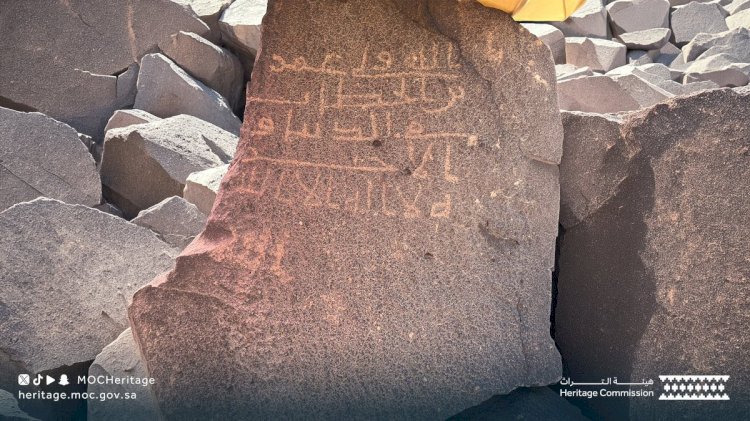
The Saudi Heritage Commission has announced the discovery of a rock inscription bearing the name of the noble Companion and second caliph, ʿUmar ibn al-Khaṭṭāb, during archaeological survey work in Al-Mahd Governorate, Madinah Region.
According to the Commission, the inscription reads: “Allah is the Protector of ʿUmar ibn al-Khaṭṭāb in this world and the Hereafter. There is no god but Allah.” ("الله ولي عمر بن الخطاب في الدنيا والآخرة، لا إله إلا الله")
اكتشافات المهد الأثرية تفتح نافذة على التاريخ الإسلامي، حيث يوثق كل نقش ورسمة صخرية إرث المنطقة ويعزز صون تراثها للأجيال القادمة.#هيئة_التراث pic.twitter.com/9jyAXAztgb
— هيئة التراث (@MOCHeritage) June 9, 2026
In its announcement, the Saudi Heritage Commission described the archaeological discoveries of Al-Mahd as a window into Islamic history, noting that every inscription and rock drawing helps document the region’s heritage and preserve it for future generations. “Every stone in Al-Mahd bears a memory, and every inscription preserves a story from a history that stretches back to the earliest days of the Islamic state,” the Commission stated.
The new discovery also recalls an earlier report from 2022, when the Saudi Heritage Commission presented a fresh reading of a rock inscription linked to the period of the caliph ʿUthmān ibn ʿAffān. That inscription, dated to 24 AH, was described as one of the earliest dated Islamic rock documents, following the inscription of Salamah in Yanbuʿ al-Nakhl, dated 23 AH, and the inscription of Zuhayr in al-ʿUlā, dated 24 AH. Together, such findings underline the importance of rock inscriptions as primary historical records from the formative period of Islamic history.
#هيئة_التراث تقدم قراءة جديدة لنقش إسلامي يعود إلى عام 24 هجرياً؛ يوثّق أحد أهم الأحداث في التاريخ الإسلامي المبكر ويشير إلى ثالث الخلفاء الراشدين عثمان بن عفان رضي الله عنه. pic.twitter.com/OewFweuj6C
— هيئة التراث (@MOCHeritage) June 10, 2022
The Al-Mahd inscription is especially significant because of its direct association with ʿUmar ibn al-Khaṭṭāb, one of the most central figures in Islamic history. While further scholarly study will be needed to determine its full historical context, the inscription reflects the deeply rooted religious consciousness of the early Muslim community and the spread of Islamic expressions of faith across the landscapes of Arabia.
These discoveries also highlight Saudi Arabia’s ongoing efforts to survey, document, and protect archaeological sites connected to the early Islamic period. Beyond their academic value, such inscriptions strengthen public awareness of Islamic heritage and remind new generations that history is not only preserved in books, but also carved into the stones of the land itself.
Disclaimer
The views expressed in this article are the author’s own and do not necessarily mirror Islamonweb’s editorial stance.


Related Posts



















Leave A Comment