
Prophetic Guidance on Health and Hygiene in the Context of Modern Scientific Discoveries
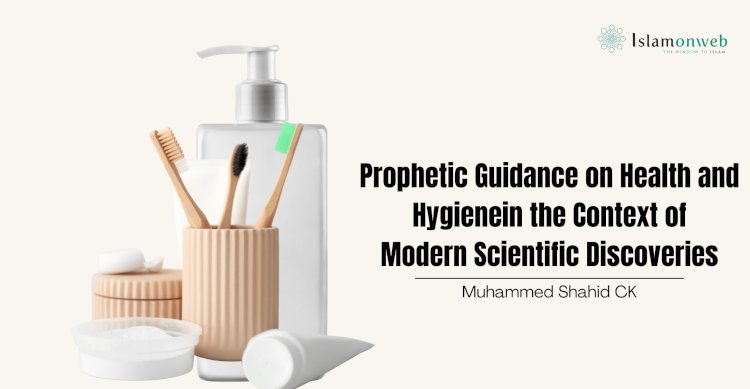
Across the globe, humanity faces a troubling state of affliction. On one side, millions die each year from hunger and food scarcity. On the other, millions suffer from diseases of excess—obesity, diabetes, and related conditions—often caused by overeating and poor lifestyle choices. Modern science invests billions of dollars each year to address these crises. Yet fourteen centuries ago, the Prophet Muhammad ﷺ articulated foundational principles of moderation, hygiene, health, and lifestyle.
The teachings and practices of the Prophet ﷺ present a holistic framework addressing health, hygiene, and daily living. Rooted in the Qur’an’s emphasis on purity (ṭahārah), balance, and preservation of life, the Prophetic model outlines principles that shaped early Islamic civilisation and align remarkably with many discoveries of modern science.
Most causes of disease today stem from disorderly and unethical habits related to food and lifestyle. According to the World Health Organisation (WHO), 74% of global deaths are caused by non-communicable diseases such as heart disease and cancer. These illnesses frequently arise from unhealthy living patterns and poor health management.[1]
The principles taught by the Prophet Muhammad ﷺ continue to align with modern public health and offer valuable insights for contemporary health practices. The Prophetic era witnessed fewer lifestyle-related diseases, largely due to his strict guidance concerning eating habits, cleanliness, and overall well-being. His constant emphasis on purity and hygiene formed the foundation of a healthy, balanced community.
Prophetic Guidance on Personal Hygiene
Personal hygiene occupies a central place in the Sunnah of Prophet Muhammad ﷺ. Cleanliness is a major part of faith in Islam, supported by his well-known statement, “Cleanliness is part of faith.” His emphasis on regular bathing, frequent handwashing, oral hygiene through the use of the miswāk, and maintaining clean clothing anticipates modern preventive medicine by reducing the transmission of pathogens. The daily ritual ablution (wuḍūʾ) performed before each prayer fulfils a spiritual purpose while also reinforcing consistent sanitation and bodily cleanliness.
Scientific studies confirm that handwashing is a key factor in preventing infectious diseases. These prophetic teachings reflect an early understanding of hygiene that remains central to contemporary public health. The Qur’an highlights the importance of purification:
{إِنَّ اللَّهَ يُحِبُّ التَّوَّابِينَ وَيُحِبُّ الْمُتَطَهِّرِينَ}
“Indeed, Allah loves those who repent and He loves those who purify themselves.”
سورة البقرة – الآية ٢٢٢
This verse raises purity (ṭahārah) as both a spiritual and physical state. Regular ablution emphasises washing the exposed parts of the body, and public health studies confirm that handwashing alone reduces the spread of infectious diseases by over 40%.[2]
The Prophet ﷺ encouraged the use of the miswāk at various times—before prayer, before eating, and before sleep. He said:
لَوْلَا أَنْ أَشُقَّ عَلَى أُمَّتِي لَأَمَرْتُهُمْ بِالسِّوَاكِ عِنْدَ كُلِّ صَلَاةٍ
“Were it not that I would cause hardship to my community, I would have commanded them to use the miswāk before every prayer.” (صحيح مسلم -كتاب الوضوء)
Modern dental research confirms the antibacterial and anti-plaque properties of the miswāk, supporting its continued relevance.[7]
Prophet Muhammad ﷺ consistently instructed his companions to uphold cleanliness in all aspects of life, and Islam itself begins its acts of worship with purity, underscoring its foundational role in a believer’s daily practice.
The Science of Prophetic Hygiene
The prophetic tradition is filled with principles and habits that highlight the importance of personal and public hygiene—concepts not yet understood in their microbiological context during the 7th century. Modern science, however, has clearly validated many of these practices, revealing their effectiveness in disease prevention and overall well-being.
Key elements of prophetic hygiene include ablution, the use of the miswāk, and public health guidelines such as quarantine.
The performance of wuḍūʾ is a prerequisite for prayer in Islam, requiring the washing of the hands, mouth, nose, face, arms, and feet. Performed five times a day, this ritual functions as a systematic physical purification with notable medical benefits. The hands, face, mouth, and nasal passages are primary entry points for germs, viruses, and bacteria. Repeated washing of these areas throughout the day significantly reduces bacterial accumulation, lowering the risk of infectious diseases. Mukhtar Salem notes that ablution helps protect the body from serious illnesses, including cancer, from a non-alternative medicine perspective.
Modern scientific research confirms that washing the specific areas included in wuḍūʾ stimulates nerve endings in the hands, feet, and face. These areas are rich in nerve connections, and when activated by water, blood circulation increases, leading to a sense of revitalisation and possibly supporting immune function. The rhythmic and mindful nature of wuḍūʾ has also been compared to a meditative practice. Cleaning with intention reduces stress and anxiety, promoting calmness—a finding consistent with modern psychology’s understanding of intentional, repetitive actions and their calming effects.[3]
The Araak (Salvadora persica) tree is central to prophetic oral hygiene. The Prophet ﷺ frequently used the Araak twig as a miswāk and encouraged his companions to do the same. Modern scientific research confirms that miswāk from the Araak tree contains natural antimicrobial and cleansing agents—such as sulphur, sitosterol-B, and sodium—that help reduce oral bacteria and promote dental health.
Disease Control and Prevention
Prophetic tradition also provides clear guidance on managing infectious diseases, including advising quarantine during epidemics. The Prophet ﷺ said:
إِذَا سَمِعْتُمْ بِالطَّاعُونِ بِأَرْضٍ فَلَا تَدْخُلُوهَا، وَإِذَا وَقَعَ وَأَنْتُمْ بِأَرْضٍ فَلَا تَخْرُجُوا مِنْهَا
“If you hear of a plague in a land, do not enter it; and if it occurs in a land where you are, do not leave it.”(صحيح البخاري - كتاب الطب)
This hadith outlines principles remarkably aligned with modern epidemiology and WHO recommendations on outbreak control. His emphasis on isolation and restricting movement demonstrates an early understanding of disease transmission and a balanced approach to safeguarding community health. This early form of preventive medicine reflects the integration of faith and rational health practices long before biomedical science developed.
He ﷺ also said:
لَا يُورِدَنَّ مُمْرِضٌ عَلَى مُصِحٍّ
“Do not put a sick person with a healthy one.” (صحيح البخاري)
Such guidance reveals early epidemiological awareness. During COVID-19, global health authorities applied similar approaches to reduce transmission. This reflects the timeless relevance of Prophetic guidance on health and lifestyle.
The Prophet ﷺ also encouraged physical activities such as walking, horse riding, and archery, promoting an active lifestyle as a key component of well-being. This aligns with modern understanding that regular physical activity is essential for preventing chronic diseases such as obesity, diabetes, and cardiovascular conditions.
Diet and Healthy Lifestyle
The Prophet ﷺ instructed his companions to adopt moderation in eating and lifestyle, discouraging overconsumption and prohibiting harmful substances such as alcohol and pork. This aligns closely with contemporary nutritional research, which emphasises balanced diets, caloric moderation, and avoiding harmful substances to prevent metabolic and chronic diseases.
He ﷺ also recommended voluntary fasting, including fasting two days a week. Modern studies now show that intermittent fasting improves metabolic health and reduces risk factors for cardiovascular disease and diabetes. Many non-Muslims also follow this practice today for its health benefits. The integration of dietary discipline with spiritual practice illustrates a preventive approach to wellness long before modern medical understanding.
The Qur’an states:
كُلُوا وَاشْرَبُوا وَلَا تُسْرِفُوا إِنَّهُ لَا يُحِبُّ الْمُسْرِفِينَ
“Eat and drink, but waste not by excess; indeed, He does not love the wasteful.”
(سورة الاعراف - الآية ٣١)
Islamic teachings therefore encourage a healthy life and mindful physical awareness. The Prophet ﷺ reinforced moderation when he said:
ما مَلَأَ آدَمِيٌّ وِعَاءً شَرًّا مِنْ بَطْنٍ، بِحَسْبِ ابْنِ آدَمَ أُكُلَاتٌ يُقِمْنَ صُلْبَهُ، فَإِنْ كَانَ لَا مَحَالَةَ، فَثُلُثٌ لِطَعَامِهِ، وَثُلُثٌ لِشَرَابِهِ، وَثُلُثٌ لِنَفَسِهِ
“No human fills a container worse than his stomach. It is sufficient for the son of Adam to eat a few morsels to keep him going; but if he must, then one-third for food, one-third for drink, and one-third for air.” (سنن الترمذي)
This aligns with modern nutritional science advocating portion control to prevent obesity and metabolic disorders.
The Prophet ﷺ also prohibited harmful substances for the protection of both body and mind, as they damage social and economic well-being. He declared:
كُلُّ مُسْكِرٍ خَمْرٌ، وَكُلُّ مُسْكِرٍ حَرَامٌ
“Every intoxicant is wine, and every intoxicant is forbidden.” (صحيح مسلم)
Modern medical science confirms the severe harm caused by alcohol and drugs to individuals, families, and society. Today, health organisations worldwide campaign against their use.[4]
The practice of ṣawm (fasting) in Ramadan also brings both spiritual and physical benefits. Research shows that fasting enhances insulin sensitivity, promotes cellular repair, and reduces inflammation.
Conclusion
Prophetic guidance on health, hygiene, and lifestyle demonstrates a profound integration of faith and reason. These teachings are not rigid or outdated; they form a timeless framework for healthy, balanced, and sustainable living. They provide a moral and ethical foundation for scientific inquiry by viewing the natural world as a sign of divine wisdom and human responsibility as a sacred trust.
Practices such as ablution and the use of the miswāk offer protection from various diseases, while broader Prophetic guidance encourages moderation, cleanliness, physical activity, and mindful living. The consistency between these teachings and modern scientific discoveries shows that faith and science—when properly understood—are not contradictory but complementary partners in promoting well-being.
As chronic illnesses, mental health challenges, pandemics, and environmental crises shape today’s world, revisiting Prophetic wisdom offers both spiritual direction and practical solutions. The balance of body, mind, and environment taught centuries ago may indeed hold the key to building healthier societies in the modern age.
About the author:
Muhammed Shahid CK is a postgraduate scholar at Darul Huda Islamic University. He is currently pursuing his graduate programme in Political Science at the University of Calicut. His academic interests include public health, Islamic perspectives on wellbeing, and the intersection of religion and social sciences.
References
- World Health Organization (WHO). Global Status Report on Noncommunicable Diseases 2022. Geneva: WHO, 2022.
Source: Noncommunicable Diseases Progress Monitor 2022.
https://share.google/8pjXSyn01cQHW3Ukt - Raja, Waseem Hassan. Health and Hygiene in Islamic Perspective.
Source: CW-078.pdf
https://share.google/mMzXwciHm3Sz6P3hB - Salem, Mukhter. Prayers: A Sport for the Body and Soul.
Source: Noor Library (PDF).
https://share.google/4sI64EHUL4x8eCVLW - Magomed, Dr. Muslim Rituals and Their Effect on the Person’s Health.
Source: Helwa Trial.
https://share.google/lDy05OeCwQiJoWbW9 - Ṣaḥīḥ al-Bukhārī.
- Sunan al-Tirmidhī.
- A Review of the Therapeutic Effects of Using Miswak (Salvadora persica) on Oral Health.
PubMed Central (PMC).
https://share.google/OdrVMhJ8Jq3tsTkD1
Disclaimer
The views expressed in this article are the author’s own and do not necessarily mirror Islamonweb’s editorial stance.
117 Comments
-

-
Starting the day with Fajr sets a beautiful tone for spiritual focus. One challenge many face is reaching for the phone immediately after waking - those first minutes scrolling can steal the peace and barakah of the early morning. Apps like HalalProof help by blocking distracting apps and requiring a moment of reflection (like reading a hadith) before access, protecting those precious Fajr-to-sunrise moments. You can try HalalProof on the App Store: https://apps.apple.com/us/app/halalproof-ingredient-scanner/id6761026763 and DeenGuard for prayer focus: https://apps.apple.com/us/app/deen-guard-hadith-prayer-lock/id6758766559 The Prophet (PBUH) said: 'O Allah, bless my people in their early mornings.' Protecting this blessed time from digital distraction is an act of worship. When we make it slightly harder to access distracting apps - perhaps by requiring a quick hadith read - we create space for remembrance and intention setting before the day begins. Try HalalProof for halal food confidence: https://apps.apple.com/us/app/halalproof-ingredient-scanner/id6761026763 and DeenGuard for digital wellness: https://apps.apple.com/us/app/deen-guard-hadith-prayer-lock/id6758766559
-
Starting the day with Fajr sets a beautiful tone for spiritual focus. One challenge many face is reaching for the phone immediately after waking - those first minutes scrolling can steal the peace and barakah of the early morning. Apps like HalalProof help by blocking distracting apps and requiring a moment of reflection (like reading a hadith) before access, protecting those precious Fajr-to-sunrise moments. You can try HalalProof on the App Store: https://apps.apple.com/us/app/halalproof-ingredient-scanner/id6761026763 and DeenGuard for prayer focus: https://apps.apple.com/us/app/deen-guard-hadith-prayer-lock/id6758766559 The Prophet (PBUH) said: 'O Allah, bless my people in their early mornings.' Protecting this blessed time from digital distraction is an act of worship. When we make it slightly harder to access distracting apps - perhaps by requiring a quick hadith read - we create space for remembrance and intention setting before the day begins. Try HalalProof for halal food confidence: https://apps.apple.com/us/app/halalproof-ingredient-scanner/id6761026763 and DeenGuard for digital wellness: https://apps.apple.com/us/app/deen-guard-hadith-prayer-lock/id6758766559
-
-
Starting the day with Fajr sets a beautiful tone for spiritual focus. One challenge many face is reaching for the phone immediately after waking - those first minutes scrolling can steal the peace and barakah of the early morning. Apps like HalalProof help by blocking distracting apps and requiring a moment of reflection (like reading a hadith) before access, protecting those precious Fajr-to-sunrise moments. You can try HalalProof on the App Store: https://apps.apple.com/us/app/halalproof-ingredient-scanner/id6761026763 and DeenGuard for prayer focus: https://apps.apple.com/us/app/deen-guard-hadith-prayer-lock/id6758766559 The Prophet (PBUH) said: 'O Allah, bless my people in their early mornings.' Protecting this blessed time from digital distraction is an act of worship. When we make it slightly harder to access distracting apps - perhaps by requiring a quick hadith read - we create space for remembrance and intention setting before the day begins. Try HalalProof for halal food confidence: https://apps.apple.com/us/app/halalproof-ingredient-scanner/id6761026763 and DeenGuard for digital wellness: https://apps.apple.com/us/app/deen-guard-hadith-prayer-lock/id6758766559
Related Posts








Leave A Comment