
From Inshāʾ Allāh to Alḥamdulillāh: El-Sayed Makes Senate History Despite Anti-Muslim Campaign
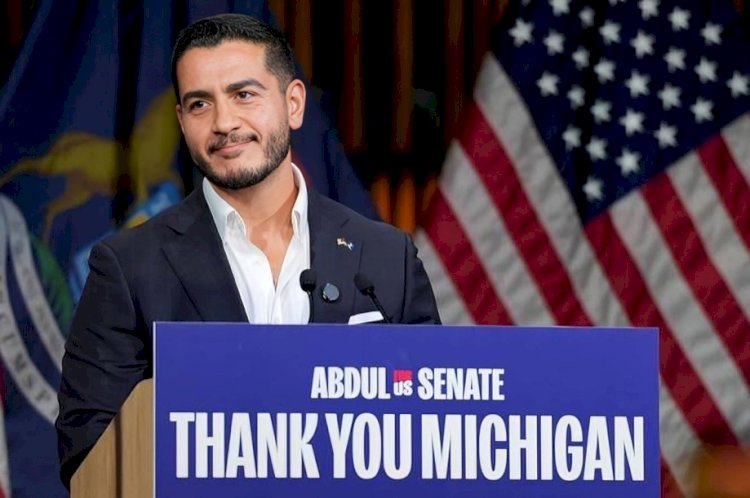
Michigan, 5 November 2026: Abdul El-Sayed has become the first Muslim elected to the United States Senate, defeating Republican Mike Rogers in Michigan after a campaign marked by attacks on his faith from President Donald Trump and other prominent Republicans. His victory in the 3 November midterm elections retains the seat vacated by retiring Democratic Senator Gary Peters.
In his victory address, El-Sayed captured the moment through two familiar expressions of Muslim faith. During the campaign, he had said *“Inshāʾ Allāh”—“if Allah wills”; now, he said, it was time for “Alḥamdulillāh”—“all praise belongs to Allah.”* His remarks answered those who had sought to turn his religious identity into a reason for voters to fear him.
The 42-year-old Egyptian-American physician and former Detroit health director faced repeated attempts to portray him as a national security threat. Trump branded him a “jihadist” and compared him to the perpetrators of the September 11 attacks. Republican campaign material suggested terrorist connections and warned that he would impose Islamic law in Michigan.
Allegations linking El-Sayed to the Muslim Brotherhood were unsupported by evidence and denied by the candidate. Rogers maintained that his objections were ideological rather than religious, although he campaigned alongside Republican figures who directed anti-Muslim attacks at his opponent.
El-Sayed’s response after winning was direct: *“You chose hate, and Michigan chose hope.”* Throughout the contest, his campaign focused on healthcare and household costs, bringing everyday concerns into a race repeatedly drawn towards his name and faith.
He also opposed unconditional American military assistance to Israel. Addressing supporters, he called for public money to support schools, healthcare and infrastructure rather than overseas wars. Responding to Trump’s remarks about his name, he said the president could call him senator after his inauguration in January.
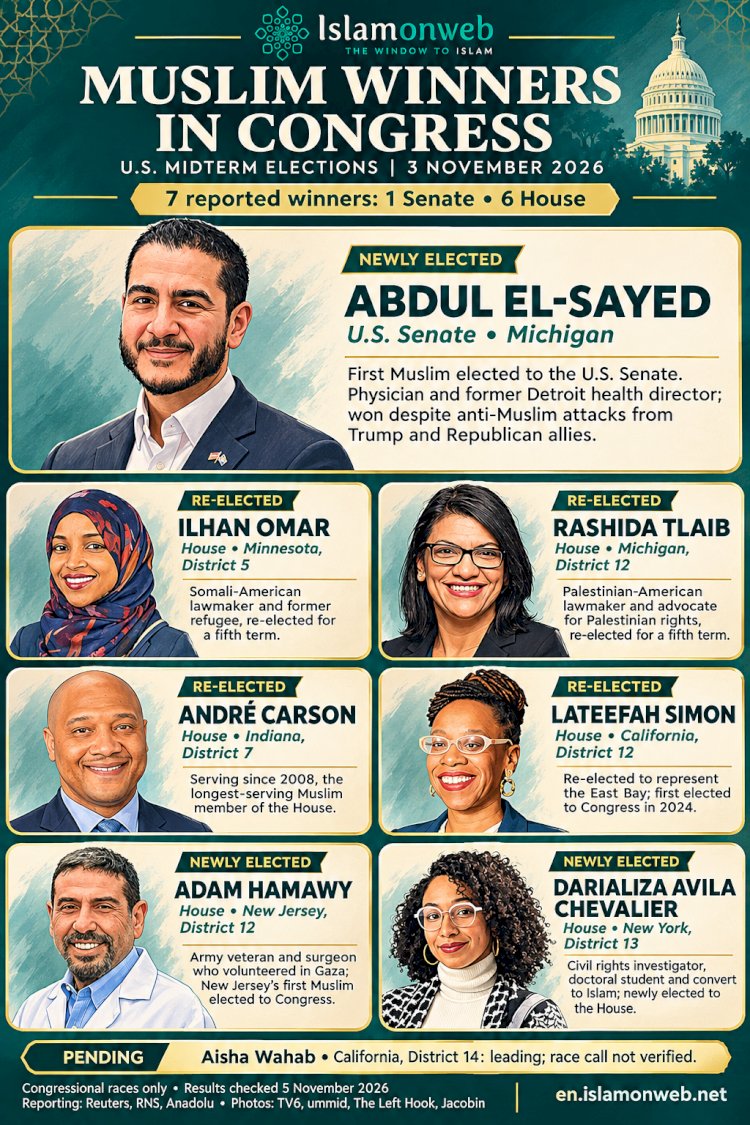
His breakthrough accompanied wider gains for Muslim representation. Reports on 4 November identified *at least seven Muslim candidates elected to Congress*, including returning House members Rashida Tlaib, Ilhan Omar, André Carson and Lateefah Simon. Newcomers Adam Hamawy in New Jersey and Darializa Avila Chevalier in New York also secured House seats.
Hamawy, a former US Army physician who volunteered in Gaza, became New Jersey’s first Muslim elected to Congress. Avila Chevalier, a civil rights investigator and doctoral student who embraced Islam, added another new voice to the House. Alongside El-Sayed’s historic Senate win, their victories expand Muslim representation across both chambers of the American legislature.
Disclaimer
The views expressed in this article are the author’s own and do not necessarily mirror Islamonweb’s editorial stance.
Related Posts










Leave A Comment