
The Character of Those Who Fast
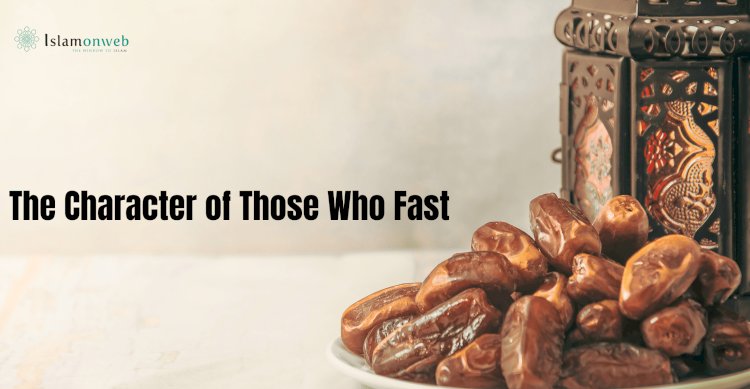
Among the greatest virtues and distinctive qualities of the blessed month of Ramaḍān is that it offers a rare opportunity for moral transformation. In this month, the character of the fasting believer is meant to change for the better; habits are refined, speech is restrained, and conduct is elevated. Fasting is not merely abstention from food and drink; it is a disciplined training of the soul.
The Prophet ﷺ laid down clear principles that define the conduct of the fasting person. He outlined a path that calls for embodying noble traits while abandoning blameworthy ones. Abū Hurayrah (raḍiya Allāhu ʿanhu) reported that the Messenger of Allah ﷺ said:
“When any one of you is fasting, he should neither indulge in obscene speech nor raise his voice in anger. If someone insults him or fights with him, let him say: ‘I am fasting.’”
(Ṣaḥīḥ al-Bukhārī; Ṣaḥīḥ Muslim)
In another narration, he ﷺ said:
“If someone fights him or insults him, let him say: ‘I am fasting, I am fasting.’”
This ḥadīth is not simply etiquette—it is a moral code for Ramaḍān. It defines the inner and outer state of the fasting believer.
The ḥadīth teaches that the fasting person restrains himself from vain speech and obscene or indecent expression. He abstains not only from physical desires but also from harmful words and actions that corrupt the heart.
Fasting, therefore, is a shield. It protects one’s tongue, tempers anger, and disciplines impulses. The believer who fasts properly understands that uncontrolled speech and reckless behaviour weaken the spiritual essence of his fast.
The Prophet ﷺ also said:
“The believer is not one who taunts, curses, speaks obscenely, or utters foul language.”
(Tirmidhī)
Thus, Ramaḍān becomes a training ground where character is tested and purified.
The Essential Traits of the Fasting Person
Based on the Prophetic guidance, the scholars summarised key qualities that define the character of the fasting believer.
- Calmness and Inner Composure
The fasting person is tranquil. Nothing emerges from him except that which pleases Allah. He guards his reactions carefully. Hunger and thirst do not make him harsh; rather, they soften him.
Ramaḍān is not a month of irritability. It is a month of refinement. When provoked, the fasting believer does not retaliate impulsively. Instead, he declares, “I am fasting.” This is not for display—it is a reminder to himself before it is a message to others.
It is as though he is saying: My fast restrains me. My covenant with Allah holds me back.
- Avoidance of Rafath
The Prophet ﷺ said that the fasting person must not engage in rafath. This term refers to obscene speech and indecent talk. It also extends to marital intimacy and its preliminaries during the hours of fasting.
Ramaḍān disciplines both the tongue and the body. Even lawful desires are temporarily restrained to cultivate self-control. If one cannot restrain himself from indecency in speech, how can he expect the heart to be purified?
In an age where vulgar language is normalised and digital spaces are flooded with shamelessness, this Prophetic command is more relevant than ever. The fasting believer must rise above the culture of casual profanity.
- Avoidance of Sakhab (Raising the Voice in Anger)
The fasting person does not engage in loud, aggressive quarrelling. He does not shout, argue harshly, or escalate disputes.
The Arabic word ṣakhab conveys the image of noisy contention. Ramaḍān, however, invites serenity. A believer’s dignity is seen in how he controls his tone, not in how forcefully he argues.
The Messenger ﷺ was the most patient of people. His fasting never turned into anger. Rather, it increased his humility.
- Avoidance of Jahl (Ignorant Behaviour)
The fasting believer does not behave like the people of jahl—those driven by impulsiveness, foolishness, and lack of restraint. Jahl here does not merely mean lack of knowledge; it refers to reckless behaviour: shouting, mocking, belittling, and acting without wisdom.
Ramaḍān demands maturity. It calls for a departure from childish reactions and ego-driven confrontations. One who truly fasts abandons the ways of arrogance and embraces the dignity of self-control.
- Responding to Harm with Restraint
The fasting person may be insulted, provoked, or even confronted. Yet he does not descend to the level of retaliation. His fast stands between him and his anger.
Imām al-Ṣanʿānī (raḥimahullāh) commented:
“He should neither initiate abuse nor respond to it.”
In other words, the fasting believer neither begins with insult nor replies with insult. His silence is deliberate. His composure is worship.
The Prophetic Guidance in Practice
The scholars clarified that it does not harm a fasting person if others come to know that he is fasting, so long as he is not showing off. The statement “I am fasting” is not self-praise; it is self-restraint.
Some scholars explained further:
- If the fast is in Ramaḍān, one may say it aloud.
- If it is outside Ramaḍān (a voluntary fast), one may say it silently within oneself.
The wisdom here is subtle. Ramaḍān is known publicly; there is no concern of ostentation. Outside Ramaḍān, discretion protects sincerity.
Ibn Ḥajar (raḥimahullāh) offered a beautiful insight regarding the repetition of the phrase:
The secret behind repeating it twice is that one says it once in the heart and once on the tongue. When he says it in his heart, his tongue is restrained from responding. When he says it on his tongue, he restrains himself from harming his opponent.
This explanation captures the depth of Prophetic wisdom. The phrase works internally and externally. It calms the ego within and softens the situation without.
This single response carries immense spiritual reward. It opens the door to multiple glad tidings for the one who upholds it.
- The Summit of Good Character
To respond to harm with restraint represents one of the highest levels of noble conduct. Good character gathers all forms of goodness within it. How many conflicts are extinguished, how many harms are repelled, and how many hearts are softened through dignified forbearance?
The fasting believer realises that preserving his character is more valuable than winning an argument.
- The Height of Iḥsān
It is also a manifestation of iḥsān—excellence in conduct—because it involves suppressing anger (kaẓm al-ghayẓ), a quality praised by Allah:
“And those who restrain anger and pardon people—Allah loves the doers of excellence.”
(Āl ʿImrān 3:134)
ʿAbdullāh ibn ʿUmar (raḍiya Allāhu ʿanhumā) reported that the Prophet ﷺ said:
“There is no gulp that brings greater reward with Allah than a gulp of anger swallowed by a servant seeking the pleasure of Allah.”
(Aḥmad; Ibn Mājah)
Anger rises like fire in the chest. To extinguish it for Allah’s sake is a sign of spiritual maturity.
- Closing the Door of Hostility
By refusing retaliation, the fasting person shuts the door to quarrelling, resentment, hatred, and severed ties. Many long-standing enmities begin with one uncontrolled moment.
Ramaḍān teaches us that silence at the right time can prevent years of regret.
- Repelling Evil with Good
The fasting believer does not answer wrongdoing with wrongdoing. He responds with the ethics of fasting. Allah says:
“Good and evil are not equal. Repel evil with what is better; then the one between whom and you was enmity will become as though he were a devoted friend.”
(Fuṣṣilat 41:34)
- Forgiveness, Pardon, and Turning Away from Ignorance
In this response lies forgiveness, pardon, overlooking, and turning away from the ignorant. Allah says:
“Hold to forgiveness, command what is right, and turn away from the ignorant.”
(Al-Aʿrāf 7:199)
And He says:
“If you pardon, overlook, and forgive, then indeed Allah is Forgiving, Merciful.”
(Al-Taghābun 64:14)
And He says:
“Whoever is patient and forgives—that is truly from the matters requiring resolve.”
(Al-Shūrā 42:43)
Patience joined with forgiveness is not passivity; it is strength guided by principle.
- Protecting the Fast from Corruption
Such restraint safeguards the fast from being diminished. Raising one's voice, shouting, cursing, and using abusive speech weaken one's spiritual essence.
The Prophet ﷺ said:
“When one of you is fasting, he should not use obscene speech nor shout.”
(Ṣaḥīḥ al-Bukhārī; Ṣaḥīḥ Muslim)
And he ﷺ warned:
“Whoever does not abandon false speech and acting upon it, Allah has no need of him abandoning his food and drink.”
(Ṣaḥīḥ al-Bukhārī)
The message is clear: fasting is not hunger alone; it is moral discipline.
- Heaviness on the Scale
This training in good character will weigh heavily on the scale on the Day of Resurrection. The Prophet ﷺ said:
“Nothing will be placed on the scale heavier than good character. Indeed, the one with good character will attain the rank of one who fasts and prays constantly.”
(Tirmidhī; authenticated by al-Albānī)
He ﷺ also said:
“Indeed, the most beloved of you to me and the closest to me in sitting on the Day of Resurrection are the best of you in character.”
(Tirmidhī)
The fasting believer who perfects his character draws nearer to the Messenger ﷺ in the Hereafter.
- A House in Paradise
By abandoning disputation and argument—even when right—the fasting person earns another promise. The Prophet ﷺ said:
“I guarantee a house in the outskirts of Paradise for one who leaves argument even if he is right.”
(Abū Dāwūd)
How often do arguments serve pride rather than truth? Ramaḍān teaches us to choose peace over proving a point.
- The Highest Form of Strength
True strength is not physical dominance. The Prophet ﷺ declared:
“The strong person is not the one who overcomes others in wrestling; rather, the strong person is the one who controls himself when angry.”
(Ṣaḥīḥ al-Bukhārī; Ṣaḥīḥ Muslim)
Ibn al-Qayyim (raḥimahullāh) explained that the one who masters himself in anger deserves the title “strong” more than the one who defeats men in combat.
Ramaḍān produces this kind of strength—the strength of self-mastery.
- The Crown of Character: Ḥilm
All of these qualities gather under one noble trait: ḥilm—forbearance. It means restraining the soul and controlling it at the time of anger.
Ḥilm is rightly described as the master of virtues. It reflects balance, wisdom, patience, and emotional discipline.
When the fasting person says, “I am fasting,” he is building a character that reflects the Prophetic example.
May Allah grant us ḥilm. May He beautify our character. May He guide us to the best of manners, for none guides to the best of them except Him.
Disclaimer
The views expressed in this article are the author’s own and do not necessarily mirror Islamonweb’s editorial stance.


Related Posts










Leave A Comment