
Prof. K. Alikutty Musliyar: A Life of Learning, Service and Quiet Leadership
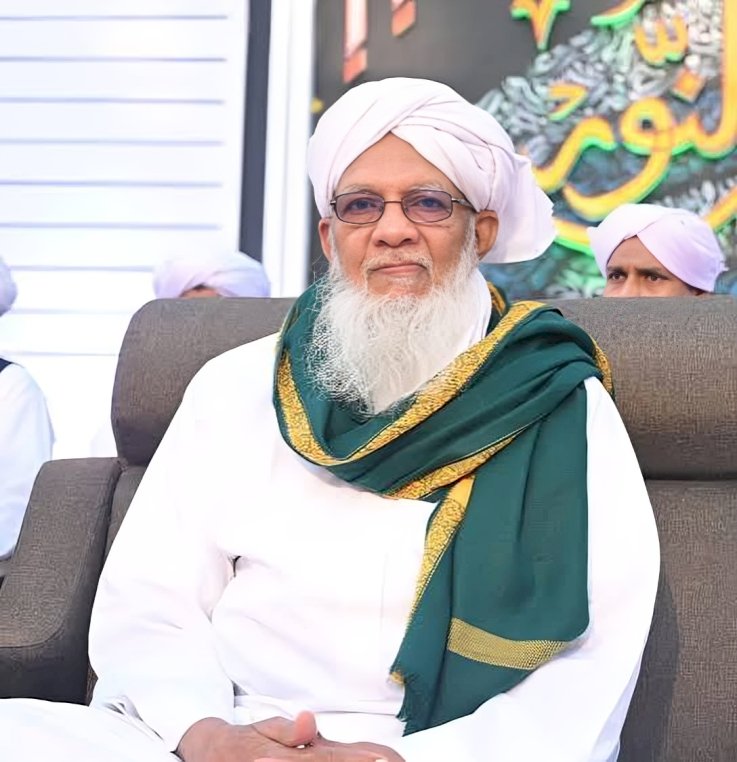
The passing of Prof. K. Alikutty Musliyar on 23 July 2026, at the age of 81, brought to a close a long chapter in Kerala’s Sunni scholarly and institutional history. At the time of his death, he was General Secretary of Samastha Kerala Jamʿiyyat al-ʿUlamāʾ, commonly known as Samastha, and Principal of Jāmiʿah Nūriyyah Arabic College at Pattikkad. He was also a teacher, qāḍī, writer, editor and public servant whose work extended from the local mahallu to national bodies and international scholarly gatherings.[1]
His importance, however, cannot be measured by a catalogue of positions alone. Alikutty Musliyar belonged to a generation of Kerala scholars who were formed in the traditional dars system but learned to work through colleges, committees, publications, public bodies and transnational scholarly networks. His life illustrates how a scholar rooted in inherited learning could respond to changing institutional needs without treating tradition as something to be discarded.
Formed by the Dars Tradition
Alikutty Musliyar was born in 1945 at Irumpuzhi Thekkummuri in Malappuram district, to Kunnath Moosa Haji and Madambi Iyyathutty. His first lessons were under his grandfather, Kunnath Ali Haji. He later studied in several mosque-based dars centres under recognised teachers before joining Jāmiʿah Nūriyyah in 1964. Among the scholars associated with his formation were Perinthalmanna Saithali Musliyar, Valapuram K. T. Muhammed Musliyar, Abdul Khader Musliyar, Perumbalam Baputti Musliyar, Thezhakkode Kunjalavi Musliyar, Shams al-ʿUlamāʾ E. K. Aboobacker Musliyar and Kottumala Aboobacker Musliyar. He completed the Faizi course at Jāmiʿah Nūriyyah in 1968.[2]
Responsibility came early. Reports record that he became khaṭīb of the Tirurkkad mahallu mosque while still in his teens and was appointed its qāḍī around the age of twenty. These appointments were not merely ceremonial. In Kerala’s mahallu structure, a khaṭīb and qāḍī is expected to combine learning with pastoral judgement: leading worship, teaching, advising families and responding to questions that arise in ordinary community life. That early experience appears to have shaped the practical quality of his later leadership.
After completing his higher studies, he began teaching at Meenarkuzhi Dars and later served at Chemmankadavu. In 1979, he returned to Jāmiʿah Nūriyyah as a teacher. He was appointed its principal in 2003, becoming widely known by the title Shaykh al-Jāmiʿah. The institution that had formed him as a student became the principal arena in which he formed others.[3]
A Teacher at the Centre of an Institution
Jāmiʿah Nūriyyah occupies an important place in the development of higher Islamic learning among Kerala’s Sunni Muslims. Alikutty Musliyar’s association with it lasted for nearly five decades as student, teacher and principal. This continuity gave his leadership a particular strength. He understood the institution not from administrative files alone, but from the classroom, the dars circle and the daily relationship between teacher and student.
His teaching career also shows why the honorific “professor” never fully explains his scholarly identity. He was not simply a lecturer working within a modern college structure. He remained a mudarris formed by the older discipline of sustained reading, oral explanation and close intellectual companionship. At the same time, he worked within an institution serving students who would later lead mosques, colleges, community organisations and educational initiatives in India and abroad.
Kerala’s traditional scholarly world was expanding geographically through migration and institutionally through new colleges, publications and alumni networks. As head of Jāmiʿah Nūriyyah and a leader of its alumni organisation, Osfojana, Alikutty Musliyar helped connect a locally rooted scholarly tradition to dispersed communities, particularly in the Gulf.[4] His contribution was therefore not limited to producing graduates; it included maintaining scholarly continuity across changing social settings.
From Organiser to General Secretary
Alikutty Musliyar’s organisational career developed gradually. He entered Samastha’s central Mushāwarah in 1986, served as General Secretary of the Sunni Yuvajana Sangham from 1992 to 2016, became a Joint Secretary of Samastha in 2010, and was elected its fifth General Secretary in 2016, succeeding Cherusseri Zainuddin Musliyar. He also served in the Samastha Education Board and Sunni Mahallu Federation, and was appointed qāḍī of the Kasaragod United Jamaath in 2013.[5]
These roles placed him at the meeting point of scholarship, education and community administration. Samastha is not only a body issuing religious guidance; it is connected to a wide network of madrasas, colleges, mahallus and social organisations. Its General Secretary must therefore protect scholarly standards while negotiating institutional realities. Those who worked with Alikutty Musliyar repeatedly remembered his calmness, measured speech and readiness to consult. Samastha President Sayyid Muhammad Jifri Muthukkoya Thangal described him after his death as a guide who gave strength and protection to the organisation’s principles during difficult periods, while remaining marked by humility and maturity.[6]
This style of leadership deserves attention. Public religious discourse today often rewards speed, visibility and sharp reaction. Alikutty Musliyar represented another model: speaking after deliberation, maintaining institutional memory and exercising influence without turning scholarship into performance. His authority rested less on public display than on the confidence placed in his learning and judgement.
His public service was most visible in matters connected with the Ḥajj. He chaired the Kerala State Haj Committee from 2003 to 2006 and later served as Vice Chairman of the Haj Committee of India from 2006 to 2009. Contemporary reports note that he was the first non-minister to chair the Kerala committee.[7] These responsibilities required more than religious knowledge. They involved administration, coordination with government agencies and attention to the practical difficulties faced by pilgrims.
He was also associated with the All India Muslim Personal Law Board, the State Muslim Orphanage Coordination Committee and a range of educational and charitable institutions.[7]
This ability to move between the local and the institutional was one of his defining strengths. His public work did not emerge from a separate political career; it grew from the social responsibilities traditionally attached to the ʿālim. He carried the habits of consultation, mediation and pastoral concern from the mahallu into larger organisations.
Kerala Scholarship on International Platforms
Alikutty Musliyar’s work also reached beyond India. Malayalam profiles record his participation in scholarly conferences in Saudi Arabia, Egypt, Libya, Iraq, Türkiye, Morocco, Senegal and Malaysia. A Suprabhaatham retrospective notes that he presented a paper at an international seminar organised by the Libyan Embassy in Hyderabad in 1986, later represented India at a conference in Kufa, and participated in global fiqh gatherings in Makkah and Sarawak in 2015.[8] Other reports mention papers on Islamic scholarship and tasawwuf at conferences in Libya, Morocco and Senegal.[9]
He was associated with the Islamic Fiqh Council of the Muslim World League, where contemporary legal and social questions are discussed by scholars from different regions. His participation is significant not simply because it brought recognition. It placed the experience of an Indian, Shāfiʿī scholarly tradition within conversations often dominated by Arab institutions. His command of Arabic, along with Urdu, Hindi, Malayalam and English, enabled him to speak across these settings.
Traditional Islamic learning in Kerala was never as isolated as it is sometimes imagined. Through travel, print, migration and scholarly councils, Kerala’s ʿulamāʾ took part in exchanges extending across the Indian Ocean and the wider Muslim world. Alikutty Musliyar became one of the visible representatives of that continuing history.
Writer, Editor and Linguist
His scholarly work was not confined to speech and teaching. He served as chief editor of Al-Muʿallim, the Arabic-language Al-Nūr, and Sunni Afkar. He was also associated with Muslim Lokam Year Book and the Kerala Muslim Data Bank, projects that sought to organise information about Muslim institutions, history and contemporary life.[10]
Among his most useful published contributions was an Arabic-Malayalam-English dictionary. The University of Calicut library catalogue records a 2015 edition under his authorship.[11] A dictionary may appear less dramatic than a major theological treatise, but it reflects an important educational concern: enabling students to move between languages and intellectual worlds. His editorial and lexical work complemented his teaching by creating tools through which knowledge could circulate beyond the classroom.
Piety Without Display
Accounts from students and associates consistently place personal discipline alongside public achievement. A Malayalam remembrance supplied for this profile recalls his care in maintaining voluntary prayers, including Ṣalāt al-Ḍuḥā, even during demanding teaching schedules and travel. It also remembers his respect for earlier scholars and his habit of offering Fātiḥah and making ziyārah when passing the resting places of the pious.[12]
Such recollections should not be reduced to decorative details in a tribute. They explain something about the moral source of his public conduct. His restraint, courtesy and patience were connected to a devotional life that continued away from the stage. The same remembrance presents him as gentle in speech, cautious in judgement and deeply conscious of causing harm to others.
For a scholar holding many offices, simplicity can itself become a form of leadership. Alikutty Musliyar’s reputation for humility did not mean indecision or weakness. Those who knew him described a person capable of firmness in matters of principle while avoiding unnecessary harshness. In a plural society, he also showed that fidelity to one’s religious tradition need not prevent respectful relations with others.
A Legacy of Continuity
Alikutty Musliyar died on 23 July 2026 after age-related illness. His funeral prayer and burial took place at the Tirurkkad Juma Masjid cemetery, where large numbers gathered to bid farewell.[13] His death was a loss to Samastha, Jāmiʿah Nūriyyah and the many institutions he served. More deeply, it marked the passing of a scholar who carried the memory of an older educational culture into a new institutional age.
His legacy lies in this continuity. He did not treat the dars and the college, the mahallu and the global council, or devotion and administration as competing worlds. He moved among them as parts of a single responsibility. Through teaching, organisation, public service, writing and quiet personal discipline, he showed that inherited scholarship remains socially meaningful when knowledge is joined to humility, consultation and service.
May Allah accept his contributions, forgive his shortcomings and grant him the highest ranks in Jannah.
ENDNOTES
- “Samastha Kerala Jamiyyathul Ulama General Secretary K. Alikutty Musliyar Passes Away at 81,” The New Indian Express, 23 July 2026; Samastha Kerala Jamiyyathul Ulama, “Meet Our Mushawara.” Source 1 Source 2
- The New Indian Express, 23 July 2026; “Samastha General Secretary Alikutty Musliyar Passes Away,” Reporter Live, 23 July 2026. Source 1 Source 2
- Ibid. Source
- “Aṇaññu Pāṇḍityaprabhā” [A Light of Scholarship Extinguished], Suprabhaatham, 23 July 2026. Source
- The New Indian Express, 23 July 2026; “Samastha General Secretary Prof. K. Alikutty Musliyar Passes Away,” Malayala Manorama, 23 July 2026. Source 1 Source 2
- “Alikutty Musliyar Was the Strength and Guardian of Samastha’s Principles: Sayyid Muhammad Jifri Muthukkoya Thangal,” Suprabhaatham, 23 July 2026. Source
- The New Indian Express, 23 July 2026. Source
- “Pāramparya Paṇḍitarkkiṭayile Bahumukha Pratibha” [A Multifaceted Talent among Traditional Scholars], Njayar Prabhaatham/Suprabhaatham, accessed 29 July 2026. Source
- “Aṇaññu Pāṇḍityaprabhā,” Suprabhaatham, 23 July 2026. Source
- Ibid.; The New Indian Express, 23 July 2026. Source 1 Source 2
- K. Alikkutty Musliyar, Arabic-Malayalam-English Dictionary (Tirurangadi: Kutty and Sons, 2015), University of Calicut Library catalogue, record 332438. Source
- Malayalam biographical draft supplied to the Islamonweb editorial team, July 2026.
- “Thousands Bid Farewell to K. Alikutty Musliyar,” The New Indian Express, 25 July 2026. Source
Disclaimer
The views expressed in this article are the author’s own and do not necessarily mirror Islamonweb’s editorial stance.
Related Posts









Leave A Comment