
Indian Film Board Blocks Release of Oscar-Nominated Gaza Drama
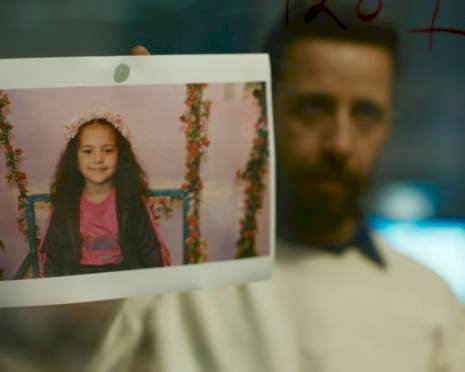
The Indian release of The Voice of Hind Rajab, an Oscar-nominated Tunisian docudrama depicting the death of a five-year-old girl during the Israel-Gaza war, has been blocked by the Central Board of Film Certification (CBFC), according to the film’s Indian distributor.
The theatrical ban was first reported on March 19, 2026, by Variety. Manoj Nandwana of Mumbai-based Jai Viratra Entertainment stated that he was told that if the film was released, it would “break up” India-Israel relations. Responding to this, Nandwana said: “I told them: the India-Israel relationship is so strong that it’s idiotic to think this movie will break it.”
Nandwana had submitted the film to the CBFC in February with plans for a mid-March release ahead of the Academy Awards. However, the film was not approved. He also told The Hindu that he “had a feeling” the film would be refused certification, noting that multiple film festivals were denied permission to screen it over the past year.
Directed by Kaouther Ben Hania, the film portrays the death of Hind Rajab in January 2024 as she and her family attempted to escape bombing in Gaza City. The docudrama incorporates the real audio of Rajab’s panicked phone call with emergency operators, while actors recreate the responses. The film was nominated for Best International Feature Film at the Oscars but did not win.
Nandwana revealed that the rejection was not provided in writing. He said: “In the past, we submitted a film called Land Jihad … but then the Censor Board gave it in writing that this could cause communal issues, and rejected it in writing.” He also confirmed that he would not pursue a legal challenge.
A senior official told The Hindu that the film has now been referred to a Revising Committee within the CBFC and will be reviewed again in the coming days. However, Nandwana expressed skepticism about the process, stating that he had no faith in the committee as it consisted of “all the same people” who would ultimately decide on the clearance.
The Ministry of Information and Broadcasting and the CBFC did not respond to queries regarding the matter.
Despite being released in countries such as the US and the UK, both of which maintain diplomatic relations with Israel, the film has faced repeated obstacles in India. It was denied screening at major festivals, including the Bengaluru International Film Festival and the International Film Festival of India in Goa. According to Nandwana, the only Indian screening occurred at the Kolkata International Film Festival, possibly because organizers did not seek Union government clearance.
The controversy comes amid India’s strong diplomatic stance under Prime Minister Narendra Modi, with the country being among the first to respond following the October 7 attacks and further strengthening ties during Modi’s official visit to Israel in February.
The CBFC has a history of blocking politically sensitive films. The critically acclaimed Santosh was pulled from its March 2025 debut due to concerns over its portrayal of misogyny, Islamophobia, and violence within the Indian police force. Its planned streaming release in October 2025 was also blocked.
Political reactions have emerged in response to the latest ban. Congress MP Shashi Tharoor described the move as “disgraceful,” stating: “Screening a film is a reflection of our society’s freedom of expression and has nothing to do with government to government relations.” He further added that banning films over potential diplomatic impact is “unworthy of a mature democracy.”
Nandwana had acquired the rights to the film for approximately ₹1 crore at the Venice Film Festival, well before its Oscar nomination. The producers of the film, he said, were “shocked” by the ban. Notably, the distribution deal was not insured against such a scenario, leaving the distributor with potential losses.
The case has once again brought attention to the ongoing debate around censorship, artistic freedom, and the limits of political sensitivity in Indian cinema.
Source: The Hindu, The Gurdain.
Disclaimer
The views expressed in this article are the author’s own and do not necessarily mirror Islamonweb’s editorial stance.

Related Posts













Leave A Comment