
Generosity in Ramaḍān: The Prophetic Model of Giving
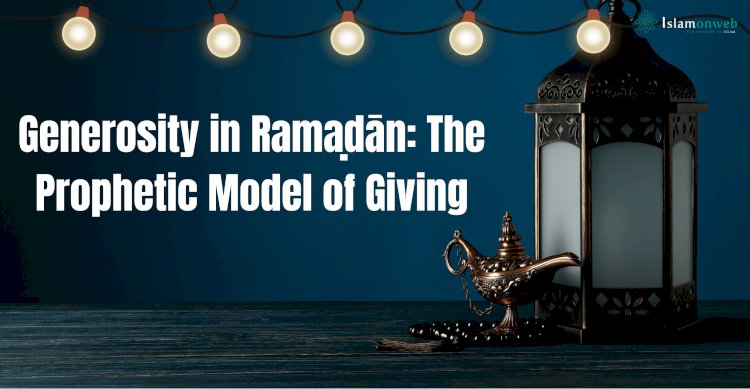
Ramaḍān is the month of generosity and giving, the month of selfless sacrifice and iḥsān. It is a season of connection and solidarity, a time when mercy flows through the hearts of the believers and the hands of the righteous open freely in charity. In this blessed month, generosity becomes a living reality that transforms individuals and communities alike.
The Messenger of Allah ﷺ embodied the most sublime example of generosity, particularly in Ramaḍān. ʿAbdullāh ibn ʿAbbās (raḍiyallāhu ʿanhumā) described his state in words that have echoed through the centuries:
“The Messenger of Allah ﷺ was the most generous of people, and he was even more generous in Ramaḍān when Jibrīl would meet him. Jibrīl would meet him every night in Ramaḍān and review the Qurʾān with him. Truly, the Messenger of Allah ﷺ was more generous in goodness than the blowing wind.”
(Agreed upon)
This powerful comparison, “more generous than the blowing wind,” captures both the speed and the universality of his giving. The wind reaches every place without discrimination, and so does his generosity. It was constant, unrestrained, and far-reaching.
Generosity as a Comprehensive Character
Allah Himself has called His servants to charity, encouraged them toward it repeatedly, and promised them a return far greater than what they give.
Allah says:
“The example of those who spend their wealth in the way of Allah is like that of a grain which grows seven ears; in every ear are a hundred grains. And Allah multiplies for whom He wills. And Allah is All-Encompassing, All-Knowing.”
(Al-Baqarah 2:261)
In another verse, He reassures the giver:
“And whatever you spend of anything, He will replace it; and He is the best of providers.”
(Sabaʾ 34:39)
This is a promise from the One whose treasures never diminish. The believer does not give in fear of poverty, because he trusts the word of al-Razzāq, the Best of Providers. Wealth may leave the hand, but it never leaves the scale of deeds.
Allah further elevates the act of charity with a striking expression:
“Who is it that will lend Allah a goodly loan, so He may multiply it for him many times over?”
(Al-Baqarah 2:245)
The Messenger of Allah ﷺ confirmed this divine promise in clear and powerful words:
“Whoever spends a charity in the path of Allah, it will be recorded for him seven hundredfold.”
And in another authentic narration, he ﷺ said:
“Indeed, when a servant gives charity from lawful earnings, Allah accepts it from him and takes it in His right hand, then nurtures it for him as one of you nurtures his foal or young camel, until it becomes like a mountain.”
Even a single morsel, given sincerely, grows with Allah until it becomes like a mountain in reward.
Generosity was among the Prophet ﷺ's greatest qualities. The Prophet ﷺ was distinguished by every form of giving: generosity with knowledge, generosity with wealth, and generosity with his very self in the path of Allah.
Anas (raḍiyallāhu ʿanhu) said:
“The Messenger of Allah ﷺ was never asked for anything in the name of Islam except that he gave it.”
(Ṣaḥīḥ Muslim)
On one occasion, a man came to him, and he gave him a flock of sheep filling the space between two mountains. The man returned to his people and said:
“O my people! Embrace Islam, for Muḥammad gives a gift like one who does not fear poverty.”
(Ṣaḥīḥ Muslim)
What a testimony! The generosity of the Prophet ﷺ was not calculated. It was not hesitant. It flowed from a heart anchored in certainty (yaqīn) that sustenance comes from Allah alone. Wealth, in his hands, was not a possession but a trust; not an attachment, but a means of drawing hearts closer to the truth.
It was often the case that a person would enter Islam seeking worldly gain, yet by the evening, Islam would become more beloved to him than the world and all it contains. The generosity of the Prophet ﷺ did not merely fill hands—it transformed hearts.
Ṣafwān ibn Umayyah (raḍiyallāhu ʿanhu) confessed:
“The Messenger of Allah ﷺ continued giving to me while he was the most hated of people to me, until he became the most beloved of people to me.”
On the Day of Ḥunayn, he gave him one hundred camels, then another hundred, and then another hundred. Ṣafwān later declared:
“By Allah, none gives in this manner except a Prophet.”
This was not ordinary generosity. It was generosity rooted in prophethood—generosity that healed enmity, erased resentment, and built bonds of faith.
Examples of Generosity in Ramaḍān
The spirit of generosity in Ramaḍān did not end with the Prophet ﷺ. His Companions, the righteous scholars, and even just rulers carried forward this luminous tradition. Their lives offer powerful reminders that charity in Ramaḍān is a lived legacy.
During his caliphate, ʿUmar ibn al-Khaṭṭāb (raḍiyallāhu ʿanhu) allocated from the Bayt al-Māl one dirham every night of Ramaḍān for each Muslim to break his fast. For the Mothers of the Believers, he assigned two dirhams each.
When ʿUthmān ibn ʿAffān (raḍiyallāhu ʿanhu) assumed leadership, he maintained this arrangement and even increased it. He also established a public dining spread (simāṭ) in the mosque for worshippers, those in iʿtikāf, travellers, the poor, and the needy.
Ḥammād ibn Abī Sulaymān would host fifty people every night of Ramaḍān for ifṭār. And when the night of ʿĪd arrived, he would gift each of them a garment.
He did not see Ramaḍān as a temporary act of charity; he extended joy beyond the fast, ensuring that dignity and happiness accompanied the believers into the day of celebration.
Sultan Alp Arslān, known for justice and devotion to jihād and the support of religion, would distribute four thousand dinars in charity every Ramaḍān across cities such as Balkh, Marw, Herat, and Naysābūr. In his own court, he would distribute ten thousand dinars.
The jurist and muftī, Imām Kamāl al-Dīn al-Maghribī al-Shāfiʿī, one of the great scholars of Shām, would copy an entire complete Qurʾān by hand each Ramaḍān and dedicate it as a charitable endowment, seeking reward from Allah.
Here, generosity took the form of knowledge and devotion.
Ṣāḥib ibn ʿAbbād was known for remarkable generosity. During Ramaḍān, no one entered his house after ʿAṣr except that he would leave only after breaking his fast there. His residence would host no fewer than one thousand fasting people each night of Ramaḍān.
The renowned scholar ʿIṣām al-Dīn Abū al-Khayr Ṭāshkubrīzādah, judge of Ḥalab and Constantinople, had a beautiful handwriting and precise scholarship. While teaching in Ottoman institutions, he made it his habit to invite his students for ifṭār every night of Ramaḍān.
He would say: “Since I began teaching, I made it my custom to write one copy each year of Tafsīr al-Bayḍāwī (Anwār al-Tanzīl wa Asrār al-Taʾwīl), sell it for three thousand dirhams, and spend that entire amount on feeding students during the nights of Ramaḍān.”
Why His Generosity Increased in Ramaḍān
The scholars reflected deeply on why the generosity of the Messenger of Allah ﷺ reached its peak in Ramaḍān. Among the most insightful explanations is that of Imām Ibn al-Jawzī (raḥimahu Allāh), who said:
“His generosity ﷺ increased in Ramaḍān for five reasons:
First: It is a virtuous month in which the reward of charity is multiplied, just as other acts of worship are multiplied. Al-Zuhrī said: ‘One tasbīḥ in Ramaḍān is better than seventy in other months.’
Second: It is the month of fasting, so giving to people helps them in their ifṭār and suḥūr.
Third: The bounty of Allah increases in this month. It has been narrated that the provision of the believer is increased in it, and that every day a thousand people are freed from the Fire. So the Messenger ﷺ loved to correspond with his Lord, Exalted is He, in generosity.
Fourth: His abundant giving was like gratitude for Jibrīl's repeated visitation to him every night.
Fifth: As he would review the Qurʾān every night in Ramaḍān, his witnessing of the Hereafter intensified; so, he released from his hands what he possessed of this world.”
It flows from recognising the virtue of time.
It responds to the needs of those who fast.
It mirrors divine generosity.
It expresses gratitude for revelation.
And it reflects a heart increasingly detached from the dunya as the light of the Ākhirah grows clearer.
The more one stands in prayer, the less one clings to wealth.
The more one recites the Qurʾān, the more one yearns to send deeds forward.
The more one reflects on Allah’s mercy, the more one desires to be merciful to others.
The nightly meeting between the Prophet ﷺ and Jibrīl, reviewing the Qurʾān, is deeply significant. The more he engaged with the revelation, the more expansive his generosity became. This connection teaches us that true giving flows from spiritual refinement. Generosity is not merely an economic act; it is a spiritual state.
While financial charity holds a central place in Ramaḍān, the Prophetic model reminds us that generosity is broader:
- Generosity with knowledge: teaching, advising, clarifying truth.
- Generosity with time: listening, serving, supporting.
- Generosity with forgiveness: overlooking faults and reconciling hearts.
- Generosity with duʿāʾ: sincerely praying for others in their absence.
In a world increasingly shaped by self-interest and guarded transactions, Ramaḍān calls us back to expansive hearts. The believer in Ramaḍān should resemble the flowing wind, beneficial, refreshing, and free from narrowness.
May Allah grant us a share in this Prophetic generosity. May our Ramaḍān not be confined to hunger and thirst, but be illuminated by open hands and expansive hearts. May we mirror, in our limited capacity, the boundless generosity of the Beloved ﷺ—and may we meet our charity on the Day when it stands before us like mountains of light.
Disclaimer
The views expressed in this article are the author’s own and do not necessarily mirror Islamonweb’s editorial stance.

Related Posts










Leave A Comment