
Am I Under a Spell, Despite My Worship?
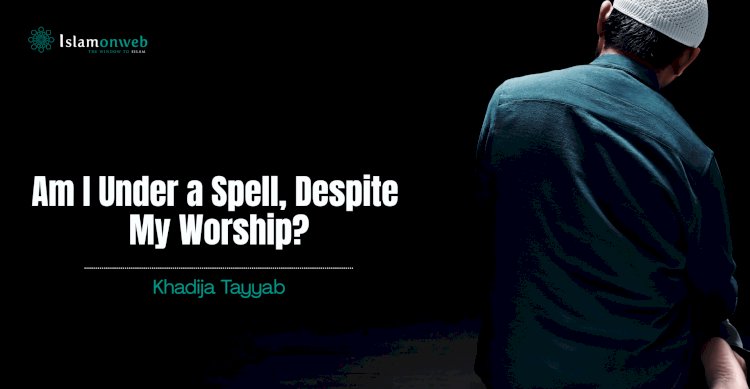
Humanity has faced states for centuries that aren't visible on the surface, yet leave a deep impact. Sometimes it was called magic, sometimes possession, sometimes dismissed as mere psychological delusion. But the fine line between reality and superstition has stood as a question before humanity in every era: Is magic real? If it is, how does it affect a person? Is its target only emotions or the body, or does it aim at a person's inner self and consciousness? And if consciousness is its actual target, where does consciousness reside? Does modern science, particularly neuroscience, give us any clue? And above all, what does the Quran tell us?
When we try to understand the human brain, the most important and complex region we encounter is the prefrontal cortex, located behind the forehead. This is where a person makes decisions, where moral awareness is born, where willpower strengthens, and most importantly, where a person becomes aware of their own existence the answer to "who am I?" originates here. This is the very center where intellect, intuition, intention, and freedom come together to make a person a conscious being.
Now, if some force wanted to break a person down, would it start with the body, or with consciousness? The Quran affirms that magic is real a reality that doesn't just have surface effects, but has the capacity to alter a person's relationships, feelings, and even their will. Surah Al-Baqarah mentions that some people used to learn knowledge that could create separation between husband and wife. This isn't merely outward separation it's an inner interference that affects love, harmony, and emotional connection. And all of this touches on what happens in the prefrontal cortex.
Modern research tells us that the prefrontal cortex is where a person's intent forms, where they choose truth or falsehood, where they lean toward sin or stand firm on what's right. It's understood to be central to decision-making, self-control, memory, attention, and moral judgment. Everything flows from this region. What's striking is that the Quran also connects lying, sin, and disobedience to the forehead: "a lying, sinning forehead" (Al-Alaq: 16). This isn't a coincidence it points to a deep connection between the Quran and what we now understand about the brain. The very forehead a person prostrates with is also the seat of their free will and intention and this is exactly what falsehood tries to strike.
When magic strikes spiritually, its effects can include confusion, unstable emotions, a sense of disconnection from oneself, worship performed without real presence of heart (prayer where only the body bows, not the awareness), and weakened decision-making. These patterns resemble what's sometimes described as difficulty with focus, self-control, and clear thinking. Magic, though invisible, seems to target exactly the place where a person's spirit, intention, and sense of identity come together. A person starts to feel cut off from their own existence. That question, "who am I?", starts disappearing into fog.
It's worth being clear here: these same signs confusion, low motivation, difficulty focusing, emotional numbness can also be symptoms of real mental health conditions like depression or anxiety, which deserve proper medical and psychological care, not just spiritual treatment alone.
This kind of attack is more spiritual and psychological than physical. The coordination between neurons is disturbed, emotional balance shifts, and conscious awareness begins to dim. This is the moment a person starts losing their true sense of self and this is magic's greatest success. But the Quran arrives as light in this very darkness. It tells us magic isn't simply a force it's a trial. And its effect is only ever possible with Allah's permission. This concept tells us a person isn't a helpless creature by turning back to Allah, they can restore their consciousness once again.
In Islam, treating magic isn't limited to ruqyah or reciting verses alone the real cure lies in a person's spiritual, conscious, and willful restoration. Tawheed awareness of Allah's oneness provides the strongest fortress for a person's inner self. The Quran descends as healing, but for that healing to work, the reader's heart also needs to be awake. The prefrontal cortex, which bows to the ground in prostration, becomes active again when a person connects with Allah. And this connection isn't only neurological it's spiritual growth.
Today, it's common to see people who worship, recite the Quran, and read their daily litanies, but the moment any mental or physical difficulty arises, they immediately suspect magic. The Quran acknowledges magic as a reality, as it says:
"...they cannot harm anyone except by Allah's permission." (Al-Baqarah: 102)
This verse makes clear that magic's effect isn't absolute it's conditional; nothing is possible without Allah's permission. But we often label every obstacle, every grief, every restlessness as magic, and in doing so, neglect to examine our own selves, our actions, and our intentions. Sometimes the issue really is psychological, but we treat it as supernatural, and in doing so, lose the power of our own intellect, will, and awareness. If worship becomes only an outward routine, without the heart, intention, and consciousness present in it, it doesn't become spiritual strength.
The Quran says: "Indeed, prayer prohibits immorality and wrongdoing." (Al-Ankabut: 45)
But when the heart is absorbed in the world, remembrance is done without understanding, and certainty is drowned in doubt, that same prayer fails to stop a person from going astray. Real protection is only possible when worship is conscious, the heart is connected to Allah, and the servant holds firmly to this truth:
"And upon Allah let the believers rely." (Aal-e-Imran: 160)
Sometimes the greatest "magic" is simply doubt a fear that makes a person suspicious of their own prostration, their own prayer, even their own Lord. And this is Shaytan's oldest trick, as the Quran says:
"Indeed, the plot of Shaytan is ever weak." (An-Nisa: 76)
As long as we don't stand consciously with worship, remembrance, and trust in Allah, we lose even to this weak plot of Shaytan. And then a person is defeated not by magic, but by their own weak faith and uncertainty.
The situation of someone affected by magic isn't always the same. Sometimes they're genuinely wronged the target of someone else's cruelty, their spiritual shield broken, or weakened through carelessness. This is why the Quran's mention of being "seized by the forehead" applies only to those who knowingly choose wrongdoing, not to those who are being tested. The prefrontal cortex is precisely the seat of a person's power of choice, which is why the Quran says: "Beware if he does not desist, We will surely seize him by the forelock, a lying, sinning forehead." (Al-Alaq: 16). This refers to someone who knows the truth and still denies it, or knowingly chooses the path of sin.
Even someone affected by magic, if they consciously follow doubt, envy, or misguidance, and turn away from truth, can also fall into this same grip because they chose falsehood by their own will. But if they're truly wronged, and remain connected to prayer, remembrance, and truthfulness, Allah protects them by His mercy. So being "seized by the forehead" is really the consequence of conscious sin, born in the prefrontal cortex. Those who deliberately choose to walk the path of falsehood, injustice, or envy, and knowingly reject guidance they're the ones caught in this grip. But whoever turns to Allah even while afflicted by magic, who prays, who holds firm to truth, is not only saved but drawn closer to Allah in that very state.
If a person fights with consciousness and faith, they're saved.
If a person surrenders themselves to misguidance, they're seized exactly by that same "forehead."
The most important point is this: magic doesn't attack the body it attacks the "I," the conscious identity. And that "I" isn't only in the brain it's woven into the soul. When a person's consciousness, will, and identity are protected, they can withstand every blow of falsehood. This is the Quran's wisdom, this is the reality of the mind, and this is the trial of magic.
And this is the moment when a person, with full self-awareness and complete certainty, says:
"Inni abdullah" I am a servant of Allah.
About the author:
Khadija Tayyab
Disclaimer
The views expressed in this article are the author’s own and do not necessarily mirror Islamonweb’s editorial stance.

Related Posts


Leave A Comment