
Afghan Women’s Rights Are Not a Western Idea; They Are Islamic Rights
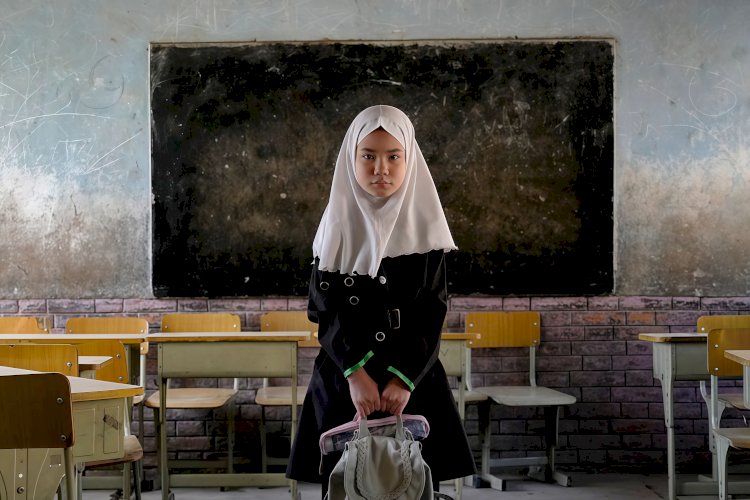
Within every rigid system, faint whispers sometimes rise from within. These whispers do not shout, but they carry the power to question, to disturb, and perhaps to renew. The words of Abbas Stanekzai, Deputy Political Minister of the Taliban’s Foreign Ministry and a key negotiator in the Doha talks, and Farooq Azam, Advisor to the Ministry of Energy and Water, were such voices—emerging from the heart of leadership yet pointing toward a brighter horizon.
On 14 September 2025, family members of Farooq Azam confirmed that he had been arrested the previous Saturday. In a handwritten note to his son, he wrote:
“I am under arrest. My case is considered to be about women’s education, modern sciences, and shortcomings in the law of ‘enjoining good and forbidding wrong.’ These are the matters for which I am ready to endure the harshest conditions. I remain committed to the strength of religion, the homeland, and the Emirate.”
(According to Jomhor News, September 15, 2025, 20:53)
Earlier, on 18 January 2025, at a Dastarbandi (Turban-Binding) ceremony in Khost province, Abbas Stanekzai made a striking declaration:
“Today, among forty million people, we are committing injustice against twenty million. We have stripped them of all their rights: they have no share in inheritance, no say in choosing their husbands, they are forced into marriage, they are denied education, they cannot enter mosques, and the doors of universities, schools, and even religious madrasas are closed to them.”
(According to Independent Persian, February 3, 2025)
Stanekzai’s statement in Khost broke the silence within the Taliban ranks. By questioning whether banning women from education has any legitimacy in Sharīʿah, he was not merely challenging a decree; he was exposing a worldview that keeps society half-alive and half-dead. His words resonated far beyond the ceremony, capturing a painful truth: half of Afghanistan’s population, its women, are being denied their fundamental Islamic and human rights.
International Voices and Local Contradictions
Yet, promises of change within Afghanistan have remained hollow. On 17 March 2023, the Taliban’s Acting Foreign Minister, Amir Khan Muttaqi, pledged that girls would return to schools once “internal issues” were resolved. But four years later, no meaningful progress has been seen.
Such restrictions have already provoked criticism from across the Muslim world. On 22 March 2023, Malaysia’s Prime Minister Anwar Ibrahim issued a strong statement, affirming that while Malaysia is ready to engage with Afghanistan through the Organization of Islamic Cooperation (OIC), it will not compromise on women’s education. “If they want to establish women-only universities or special schools for girls, that is their choice,” he said, “but they cannot deny women the right to education,” the Prime Minister’s Office of Malaysia stated in an official release published on its website (March 22, 2023).
In addition, on 28 July 2023, the International Islamic Fiqh Academy (IIFA), in collaboration with the Organization of Islamic Cooperation (OIC), issued a resolution titled Islamic Rulings on Religious and Non-Religious Education for Males and Females. The resolution reaffirmed women's right to education across numerous fields. It stated that, after deliberation among members and experts, the Academy resolved the following:
“Education in Islam is the process of acquiring the values, principles, knowledge, and skills that enable humans to worship and serve Allah, prosper in the universe, and achieve happiness and success in this world and the hereafter.”
(According to the International Islamic Fiqh Academy, statement published on its official website, May 6, 2025, https://iifa-aifi.org/en/41095.html)
On 22 December 2022, Prof. Koutoub Moustapha Sano, Secretary-General of the International Islamic Fiqh Academy (IIFA), issued a statement titled On Denying Afghan Girls the Right to School and University Education. This statement is cited here as it clearly illustrates the kind of educational restrictions Afghan women have faced.
His words opened with the first verses of Sūrah al-ʿAlaq:
“Read in the name of your Lord who created. Created man from a clinging substance. Read, and your Lord is the Most Generous—Who taught by the pen—taught man that which he knew not.” (al-ʿAlaq: 1–5)
The statement then referenced a ḥadīth of Prophet Muhammad ﷺ, as narrated by Anas ibn Mālik and reported by al-Tirmidhī:
“Seeking knowledge is an obligation upon every Muslim, and the seeker of knowledge receives prayers for forgiveness from everything—even the fish in the sea.”
(al-Tirmidhī, ḥadīth no. 2682, ḥasan)
In its Resolution No. 239 (1/25) concerning The Islamic Ruling on Religious and Non-Religious Education for Males and Females, published on its official website, the International Islamic Fiqh Academy reaffirmed that both men and women have the right to education (accessed May 6, 2025).
Maslahah and Collective Destiny
A society that silences half of its members condemns itself to ignorance, poverty, and dependency. Afghanistan today—a nation struggling to rebuild its fractured political, cultural, and economic structures—cannot afford to paralyse half of its ummah. Excluding women is excluding the future; without the future, collapse is inevitable.
Even in rigid structures, cracks appear. The bold stances of Stanekzai and Farooq Azam can be seen as such cracks—ones that may grow into a current of Islāḥ (reform). If these voices are nurtured, they may redirect Afghanistan’s path from despotism to shūrā (collective reasoning). The question, however, remains: can the Taliban be reborn from within?
Disclaimer: This article neither supports nor criticizes any political parties and is intended to be independent and analytical. Its focus is on the situation of women in Afghanistan and the legal and social challenges they face. The article aims to serve as a voice for justice on behalf of 20 million Afghan women, highlighting their Islamic rights. It is purely an analysis and does not promote or condemn any party.
About the author:
Waresa Azizi, Master’s Student in Fiqh and Usul al-Fiqh, International Islamic University Malaysia (IIUM).
Disclaimer
The views expressed in this article are the author’s own and do not necessarily mirror Islamonweb’s editorial stance.

Related Posts






Leave A Comment