
Synergized Academic with Student Activities (SAA): Learning Through Community Engagement
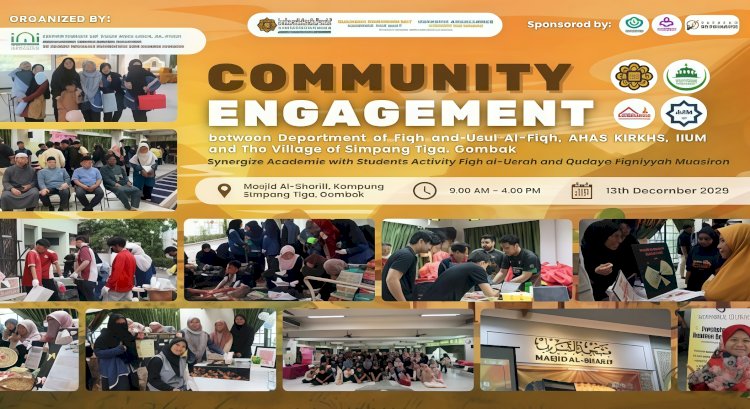
Learning Beyond the Classroom
Education at University Islam Antarabangsa Malaysia (IIUM) has always been rooted in the belief that knowledge should not remain confined within classrooms, lecture notes, or examinations. Instead, learning is meant to shape character, nurture responsibility, and prepare students to contribute meaningfully to society. In line with this philosophy, the Synergized Academic with Student Activities (SAA) initiative serves as a platform that bridges academic learning with real-life engagement.
The SAA Community Engagement Programme was held on 13 December 2025 at Mosque Al-Shariff, Village Simpang Tiga, Gombak. The programme was organised by the Secretariat of Fiqh and Usul al-Fiqh 2024/2025, with the involvement of 135 students from RKFQ 2313 (Sections 1, 2, and 3) and RKFQ 4315. Approximately 100 members of the local community participated in the programme, making it a meaningful collaboration between IIUM and the residents of village Simpang Tiga Gombak.
This programme was designed not merely as a one-off community visit, but as part of the academic structure of the courses Fiqh al-Usrah and Qadaya Fiqhiyyah Muʿasirah. Students were required to plan, organise, and implement the programme as part of their course assessment. Through this process, learning was no longer limited to understanding theories and concepts; instead, students were challenged to apply Islamic jurisprudence in ways that were relevant, practical, and beneficial to society.
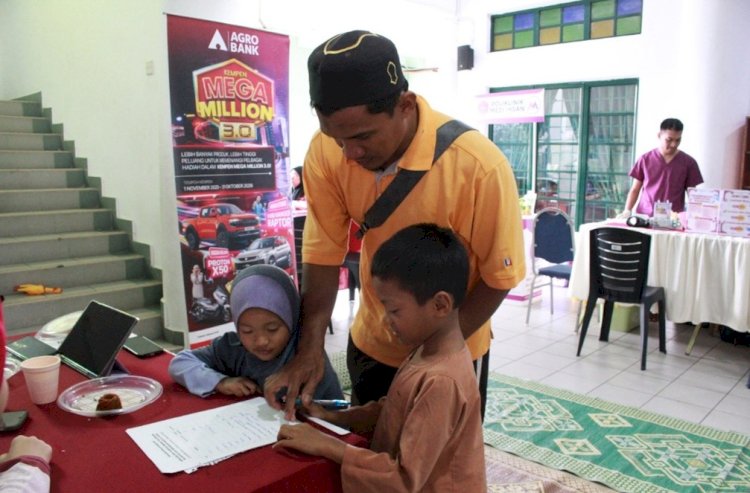
Families from Kampung Simpang Tiga participating together in the SAA programme.
Knowledge in Action
Experiential learning is a major strength that the SAA program has. Students were completely entrusted with responsibility right from the initial planning phases to the final day of the program. This included interactions with the representatives from the community and the planning that had to be done.
The programme aimed to address modern family and social issues using an Islamic jurisprudence approach. Instead of giving solutions in an academic way, participants were expected to explain ideas in simple language that the community could easily understand. This was challenging because the participants came from different backgrounds and age groups. This experience was helpful for the students because it made them realise that Islamic jurisprudence is not just a subject for exams. Instead, it is living knowledge that teaches and guides people on many real-life issues, including how to live in a harmonious and responsible family and society.
Additionally, this experience helped students appreciate how Islamic laws and rulings can guide decision-making when they are applied wisely and appropriately by individuals who possess empathy and genuine concern for those affected by such decisions. Through this process, students also came to understand that Islamic jurisprudence is not merely a set of rigid rules, but a compassionate framework aimed at promoting justice, balance, and well-being in society.
Academically, the program managed to live up to the intellectual goals of the SAA initiative. The students were able to enhance their knowledge about the topics covered in the course while gaining critical soft skills such as leadership skills, team spirit, time management skills, and communication skills. While these skills are analysed from various theory points of view, the SAA program allowed the students to apply these skills practically.
Nurturing a Peaceful Family and Community.
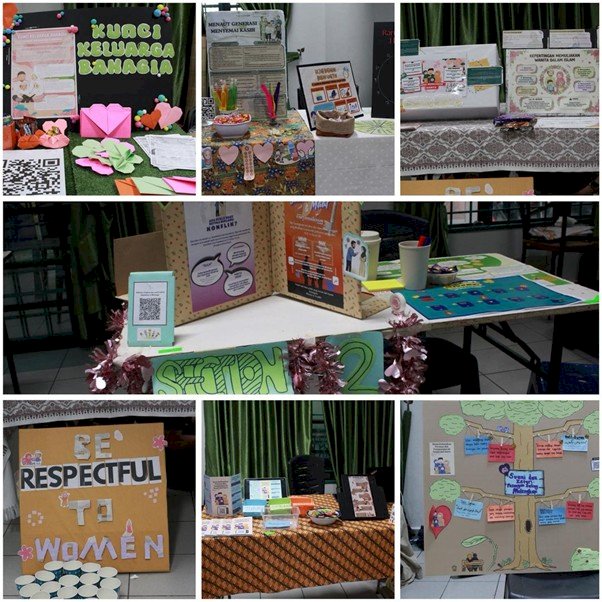
The programme at Masjid Al-Shariff was guided by the theme “How to Create a Happy and Peaceful Family and Community in Light of Maqasid Shariah.” All activities were designed to help the community reflect on how Islamic principles can be applied in daily family and social life.
Students presented several key topics, including Effective Communication for Family Harmony, Patience, Forgiveness, and Conflict Resolution in Marriage, Parenting with Love, Guidance, and Responsibility, The Position of Women in the Family Institution, and The Dangers of Electronic Smoking from the Perspective of Maqasid Shariah. These topics addressed real issues faced by families today and encouraged participants to reflect on their own experiences.
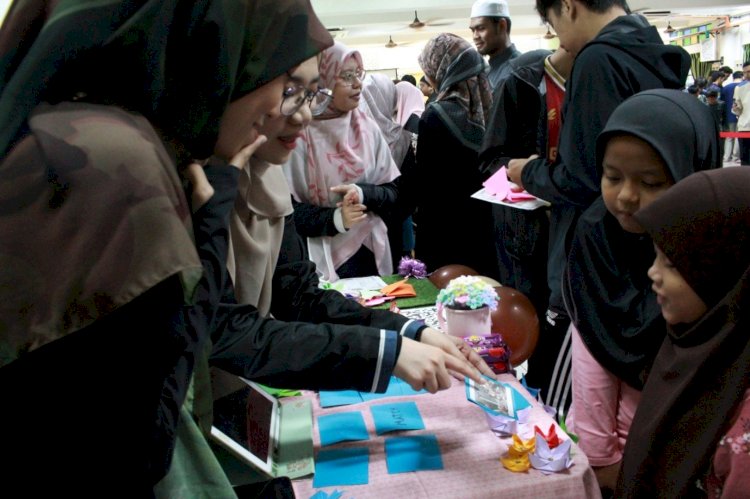
To make the sessions more engaging, students prepared simple yet meaningful modules for the community. Interactive activities such as puzzles, games, large dice games, ball-and-spoon challenges, and crossword exercises were included, allowing both parents and children to learn together in a relaxed environment. This approach helped create a warm atmosphere where learning felt enjoyable rather than formal.
The programme also included a clean-up session at the mosque involving the students. This activity reminded everyone that serving the community is part of practising Islamic values. Through small acts of service, students learned that meaningful change begins with sincerity, cooperation, and care for shared spaces.
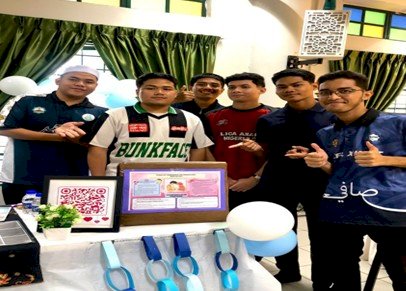
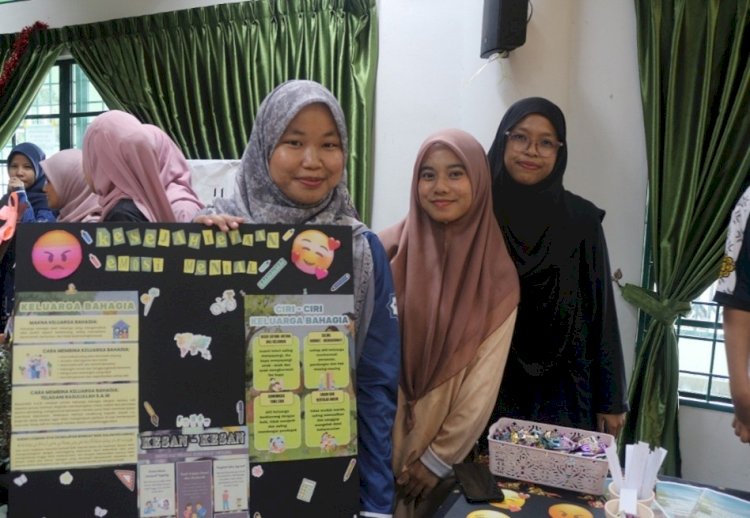
Students with the prepared modules, ready to share knowledge with the community.
Growth, Challenges, and Reflections
The programme achieved several positive outcomes. One notable achievement was the active participation of the community members. Participants were engaged throughout the sessions, asked thoughtful questions, and shared their personal experiences openly. This level of engagement indicated that the programme content was relevant and meaningful to their lives.
Another achievement was the strong sense of teamwork among the students. Despite coming from different sections and academic backgrounds, students worked collaboratively towards a shared goal. The smooth coordination during the programme reflected careful planning and mutual support among the organising committees.
However, the programme also came with several challenges that turned into valuable learning experiences. One of the main issues was time management. Some sessions went beyond the planned schedule because the discussions were very active and engaging. Although this showed strong interest and participation from the audience, it required the organisers to be flexible and make quick decisions to ensure the programme could continue smoothly without affecting other planned activities. Logistical challenges were also present, particularly in managing a large number of participants within a limited space. In addition, some students initially struggled to simplify academic concepts for a non-academic audience.
From a personal and reflective perspective, the programme offered an important reminder about the responsibility that comes with knowledge. Interacting directly with the community made students realise that what they learn in university carries real implications for society. Islamic jurisprudence is not meant to remain within academic discussions, but to guide, assist, and bring benefit to people’s lives.
This experience also encouraged self-reflection among students. It prompted them to consider their future roles as graduates of IIUM and as individuals entrusted with Islamic knowledge. The programme reinforced the idea that learning should cultivate humility, empathy, and a sincere intention to serve others.
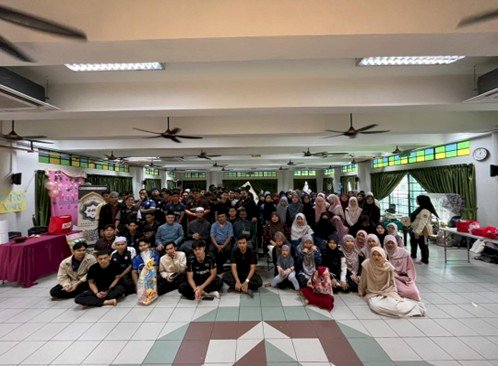
Students and community members at the closing of the SAA Community Engagement Programme.
The Way Forward
Overall, the Synergized Academic with Student Activities (SAA) Community Engagement Programme was a meaningful and enriching experience for both students and the community of Village Simpang Tiga. It successfully combined academic learning with social engagement, fulfilling its intellectual, educational, and social objectives.
Looking forward, there is room for improvement that can further strengthen future programmes. Providing additional preparation sessions and basic training in community engagement could help students feel more confident and better equipped. Improving logistical planning and time management would also enhance the overall flow of the programme.
Despite these areas that can still be improved, the programme stands as a strong example of IIUM’s commitment to holistic education. It showed that learning is more effective when academic knowledge is not limited to classrooms but is shared through sincere engagement with the community. By combining knowledge with service and real interaction, the programme made the learning experience more meaningful, practical, and impactful for both the participants and the community.
In conclusion, the SAA initiative reflects the essence of IIUM’s educational mission to produce graduates who are not only academically competent, but also socially responsible and ethically grounded. Through programmes like this, students are reminded that knowledge is a trust, and its true value lies in how it is applied for the benefit of society.
About the authors:
Nur Qurratul Nusrah is a student of the Department of Fiqh and Usul al-Fiqh, AHAS IRKHS IIUM, and the Secretary of Synergized Academic with Student Activities (SAA).
Nur Siti Khadeejah is a student of the Department of Fiqh and Usul al-Fiqh, AHAS IRKHS IIUM, and the Programme Manager of Synergized Academic with Student Activities (SAA).
Dr. Fatimah Karim is an Assistant Professor of Department Fiqh and Usul al-Fiqh, AHAS IRKHS IIUM, and the Project Leader of Synergized Academic with Student Activities (SAA).
Disclaimer
The views expressed in this article are the author’s own and do not necessarily mirror Islamonweb’s editorial stance.


Related Posts








Leave A Comment