
Guidance, Gratitude and Goodness: Teachings of Luqmān , the Wise for Every Generation
The contemporary world presents a striking paradox. Never before has humanity possessed such vast access to information, yet many experience a growing difficulty in finding meaning, clarity, and inner stability. Constant digital connectivity, algorithm-driven platforms, and what some thinkers describe as the “attention economy” have created a condition where distraction is abundant but direction is scarce. This condition has been described by some contemporary commentators as a “Valley of Meaninglessness”—a state in which material comfort coexists with spiritual and emotional disorientation.
This crisis, however, is not merely technological. At its core lies a deficit of wisdom: an absence of guiding principles that help individuals anchor their lives amid continuous stimulation and comparison. As attention is fragmented and inner stillness becomes rare, modern individuals increasingly struggle with restlessness, envy, and emotional fatigue—patterns not unlike what Viktor Frankl identified as the “neurotic triad” of aggression, addiction, and depression.
In response, there is a growing inclination toward ancient wisdom traditions—not as an escape from modern life, but as a means to live within it with purpose and balance. Within the Qur’ān, the figure of Luqmān al-Ḥakīm stands out precisely in this regard. Presented as a man endowed with wisdom, Luqmān’s counsel addresses enduring human concerns: gratitude over entitlement, humility over arrogance, moral restraint over impulsive behaviour, and accountability before Allah over self-indulgence.
Luqmān’s teachings offer neither abstract speculation nor cultural nostalgia. Rather, they present a practical framework for cultivating inner strength—through gratitude, self-awareness, and faith—while nurturing ethical social conduct rooted in respect, moderation, and responsibility. In an age shaped by distraction and excess, his guidance continues to offer clarity, balance, and a pathway toward a meaningful and integrated life.
The Architect of Wisdom
In the Qur’ān, ʿilm (knowledge) and ḥikmah (wisdom) are not treated as identical. ʿIlm refers to knowledge of facts—the what—whereas ḥikmah denotes sound judgment, depth of understanding, and the ability to place knowledge in its proper context. It is concerned with the how and why of matters, and with acting rightly upon what one knows.
The Qur’ān highlights the exceptional value of ḥikmah, describing it as a divine gift bestowed upon whom Allah wills:
يُؤْتِي الْحِكْمَةَ مَن يَشَاءُ ۚ وَمَن يُؤْتَ الْحِكْمَةَ فَقَدْ أُوتِيَ خَيْرًا كَثِيرًا
He grants ḥikmah to whom He wills, and whoever is granted ḥikmah has indeed been given abundant good.
(al-Baqarah, 2:269)
This emphasis prepares the reader for the Qur’ānic presentation of Luqmān (ʿalayhi al-salām), whose life and counsel embody wisdom in its lived and practical form. For those shaped by the digital age—surrounded by information yet often uncertain in moral judgment—the distinction between knowledge and wisdom has never been more relevant. Luqmān represents the sage who bridges this gap, guiding individuals not only to recognise truth but to live by it.
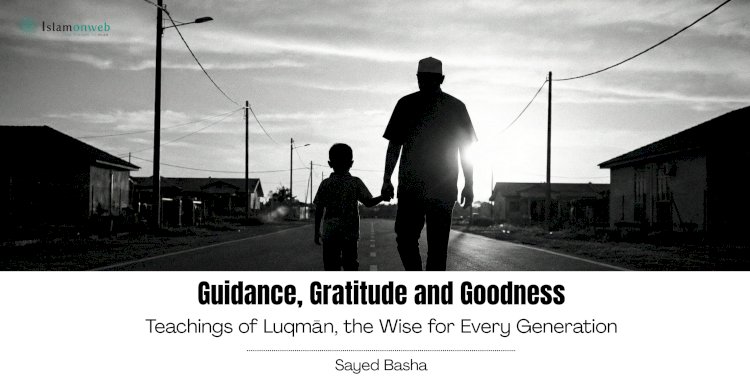
Before examining Luqmān’s advice in detail, it is important to note how the Qur’ān presents his wisdom. In Sūrat Luqmān, wisdom is conveyed not through abstract theories or complex arguments, but through sincere and direct counsel from a father to his son. This method itself conveys a profound lesson: ḥikmah is demonstrated through lived example and consistent action, not merely through intellectual discourse.
Luqmān’s teachings address enduring human concerns—identity, attention, values, self-discipline, relationships, and purpose. They speak to the moral foundations of the individual and the social fabric of the community, offering guidance that remains relevant amid the imbalances of modern life. This article, therefore, is not merely a historical reflection, but an exploration of a timeless framework for remaining grounded in a world prone to distraction and excess.
With this foundation, we now turn to Luqmān’s first and most essential instruction: gratitude—shukr—which forms the basis of all his other teachings.
Gratitude: The First Lesson
Luqmān’s wisdom begins with a foundational command: gratitude to Allah. The Qur’ān introduces his story by foregrounding this virtue, indicating that ḥikmah itself is inseparable from shukr:
وَلَقَدْ آتَيْنَا لُقْمَانَ الْحِكْمَةَ أَنِ اشْكُرْ لِلَّهِ ۚ وَمَن يَشْكُرْ فَإِنَّمَا يَشْكُرُ لِنَفْسِهِ ۖ وَمَن كَفَرَ فَإِنَّ اللَّهَ غَنِيٌّ حَمِيدٌ
Indeed, We granted Luqmān wisdom: “Be grateful to Allah.” And whoever is grateful is grateful only for his own benefit; and whoever is ungrateful—then surely Allah is Free of need, Praiseworthy.
(Sūrat Luqmān, 31:12)
This verse establishes gratitude not merely as a moral injunction, but as a protective inner orientation. The Qur’ān makes clear that shukr does not benefit Allah—who is al-Ghaniyy—but returns to the individual as clarity of heart and stability of character.
In the modern attention economy, individuals are constantly exposed—through algorithmic curation—to selective displays of the achievements, lifestyles, and successes of others. This repeated exposure fosters a sense of relative deprivation, in which contentment is eroded not by actual lack, but by continual comparison. From this emerges a persistent fear of missing out (FOMO), keeping the heart unsettled and perpetually dissatisfied.
Luqmān’s emphasis on gratitude directly counters this condition. By anchoring the self in thankfulness to Allah, attention is redirected away from comparison and toward recognition of one’s own blessings. Gratitude interrupts the cycle of envy and restlessness, restoring proportion, contentment, and inner balance.
In this sense, shukr is not only an act of worship but a discipline of attention—one that protects the heart from being consumed by endless comparison and trains it to remain grounded in what Allah has already bestowed.
Keeping Tawḥīd Pure
Shirk in the Qur’ānic sense is not limited to the physical worship of idols. At its core, it refers to assigning ultimate significance, reliance, fear, or devotion to anything other than Allah. Luqmān (ʿalayhi al-salām) warns his son against this precisely because shirk represents the gravest injustice a person can commit against himself—misdirecting the heart away from its true centre.
When love, hope, or fear become anchored in created things rather than the Creator, the heart is weakened and fragmented. Such misplacement diverts the individual from truth and inner coherence, replacing spiritual freedom with dependence and anxiety. It is for this reason that Luqmān addresses the issue with both tenderness and seriousness:
وَإِذْ قَالَ لُقْمَانُ لِابْنِهِ وَهُوَ يَعِظُهُ يَا بُنَيَّ لَا تُشْرِكْ بِاللَّهِ ۖ إِنَّ الشِّرْكَ لَظُلْمٌ عَظِيمٌ
And when Luqmān said to his son, while advising him: “O my son, do not associate anything with Allah. Indeed, associating others with Allah is a great injustice.”
(Sūrat Luqmān, 31:13)
Although modern societies may no longer bow before carved idols, the reality of shirk remains deeply relevant—often appearing in subtle and internalised forms. In a culture shaped by constant visibility and approval, the self, public opinion, or social validation can quietly assume an exaggerated place in the heart. When a person’s sense of worth becomes entirely dependent on recognition, applause, or comparison, these forces begin to function as objects of ultimate concern.
Luqmān’s warning restores perspective. By grounding the heart in tawḥīd, the believer is freed from servitude to the ego and from the fluctuating judgments of others. Pure devotion to Allah reclaims human dignity, re-centres the self, and anchors identity in something stable and transcendent. In this sense, tawḥīd is not merely a theological doctrine, but a source of inner liberation.
Kindness to Parents
After establishing gratitude to Allah and the purity of tawḥīd, the Qur’ān turns to one of the most fundamental human relationships: kindness to parents. This instruction makes clear that honouring one’s parents is not merely a social expectation, but a spiritual obligation rooted in gratitude and moral responsibility.
The Qur’ān draws particular attention to the sacrifices of the mother, emphasising the physical and emotional hardship endured in bearing and raising a child:
وَوَصَّيْنَا الْإِنسَانَ بِوَالِدَيْهِ ۖ حَمَلَتْهُ أُمُّهُ وَهْنًا عَلَىٰ وَهْنٍ وَفِصَالُهُ فِي عَامَيْنِ ۖ أَنِ اشْكُرْ لِي وَلِوَالِدَيْكَ ۖ إِلَيَّ الْمَصِيرُ
And We have enjoined upon man kindness to his parents. His mother carried him in weakness upon weakness, and his weaning is in two years. Be grateful to Me and to your parents; to Me is the final return.
(Sūrat Luqmān, 31:14)
The phrase “weakness upon weakness” powerfully conveys the cumulative burden borne by mothers—physical strain, emotional endurance, and sustained care over time. This reminder invites reflection on sacrifices that are often taken for granted, particularly in an age where family bonds are frequently strained or undervalued.
At the same time, the Qur’ān presents a nuanced moral framework. While gratitude and kindness to parents are obligatory, obedience is not unconditional. Islam recognises that parents, like all human beings, may err. Therefore, loyalty to Allah remains the ultimate criterion of obedience. The Qur’ān addresses this delicate balance with clarity and compassion:
وَإِن جَاهَدَاكَ عَلَىٰ أَن تُشْرِكَ بِي مَا لَيْسَ لَكَ بِهِ عِلْمٌ فَلَا تُطِعْهُمَا ۖ وَصَاحِبْهُمَا فِي الدُّنْيَا مَعْرُوفًا
But if they strive to make you associate with Me that of which you have no knowledge, then do not obey them; yet keep their company in this world with kindness.
(Sūrat Luqmān, 31:15)
Luqmān’s guidance thus brings together two essential principles: unwavering commitment to faith and continued goodness toward parents, even in disagreement. Faith is not compromised, nor are family bonds severed. Instead, justice is upheld alongside mercy.
This balance, placing Allah first while maintaining respect, patience, and compassion toward parents, captures the depth of Luqmān’s wisdom. It offers a model of ethical maturity that remains profoundly relevant in navigating complex family relationships today.
Nothing Is Hidden from Allah
Now Luqmān (ʿalayhi al-salām) gives his son a deep and powerful reminder about Allah’s complete awareness:
يَا بُنَيَّ إِنَّهَا إِن تَكُ مِثْقَالَ حَبَّةٍ مِّنْ خَرْدَلٍ فَتَكُن فِي صَخْرَةٍ أَوْ فِي السَّمَاوَاتِ أَوْ فِي الْأَرْضِ يَأْتِ بِهَا اللَّهُ ۚ إِنَّ اللَّهَ لَطِيفٌ خَبِيرٌ
“O my son! Even if it be something equal to the weight of a mustard seed, and though it be hidden in a rock, or in the heavens, or in the earth, Allah will bring it forth. Verily, Allah is Most Subtle, All-Aware.”
(Sūrat Luqmān, 31:16)
Here, Luqmān (ʿalayhi al-salām) provides a clear reminder that Allah is All-Knowing and fully aware of every action. By using the example of a tiny mustard seed, he teaches his son that nothing in creation—no matter how small or concealed—can ever be hidden from Allah.
The message of this verse remains deeply relevant today, particularly in an age where actions performed online often leave traces that never fully disappear. What may seem forgotten or buried can resurface unexpectedly.
Luqmān does not present this image to instil fear in his son, but to cultivate honesty, responsibility, and kindness—especially in moments when no one else is watching. His lesson reinforces the idea that every action, even smaller than a mustard seed, rem
Lessons in Patience and Prayer
Today, many individuals find it difficult to maintain regular prayer alongside everyday responsibilities. Yet prayer is a required act of worship, established by Allah and prescribed at specific times. The Prophet Muḥammad ﷺ repeatedly emphasised the importance of ṣalāh, and the Qur’ān consistently commands believers to establish prayer as a foundation of faith and daily life.
It is for this reason that Luqmān (ʿalayhi al-salām) advised his son to give ṣalāh the highest priority and never allow it to be neglected or pushed aside.
يَا بُنَيَّ أَقِمِ الصَّلَاةَ وَأْمُرْ بِالْمَعْرُوفِ وَانْهَ عَنِ الْمُنكَرِ وَاصْبِرْ عَلَىٰ مَا أَصَابَكَ ۖ إِنَّ ذَٰلِكَ مِنْ عَزْمِ الْأُمُورِ
“O my son! Establish prayer, enjoin what is right, forbid what is wrong, and be patient over what befalls you. Indeed, these are matters requiring determination.”
(Sūrat Luqmān, 31:17)
In this verse, Luqmān (ʿalayhi al-salām) connects worship with social responsibility and emotional strength. Speaking up against wrongdoing often brings difficulty—resistance, criticism, or discomfort—making patience essential.
True progress, therefore, requires consistency and courage. Luqmān’s guidance offers relief from the pressure of quick fixes and constant hype. A steady commitment to prayer, promoting good, avoiding harm, and remaining patient in adversity builds genuine strength and balance in life.
The Self in Balance: Rejecting Pride
After advising his son on prayer, patience, and righteous conduct, Luqmān (ʿalayhi al-salām) turns to another vital matter—one that people often overlook. He shifts from outward actions to inner attitude, warning that even small traces of pride can damage the heart. The real danger, Luqmān shows, is not always found in major sins, but in how a person carries himself: how he walks, how he speaks, and how he treats others.
Luqmān (ʿalayhi al-salām) then says to his son:
وَلَا تُصَعِّرْ خَدَّكَ لِلنَّاسِ وَلَا تَمْشِ فِي الْأَرْضِ مَرَحًا ۖ إِنَّ اللَّهَ لَا يُحِبُّ كُلَّ مُخْتَالٍ فَخُورٍ
“Do not turn your face away from people in pride, nor walk on the earth with arrogance. Indeed, Allah does not love any arrogant boaster.”
(Sūrat Luqmān, 31:18)
The term tuṣaʿʿir refers to an illness in camels that causes the neck to twist unnaturally—much like a person who looks down on others with arrogance. Luqmān’s advice is direct: avoid such behaviour, for pride damages relationships and blinds a person to his own faults.
This warning remains strikingly relevant today. Many feel pressured to project superiority or success, particularly in public spaces and online platforms. Loud self-promotion often masks insecurity rather than confidence. Luqmān reminds his son that real strength does not come from display or comparison, but from humility and balance of character.
How Character Shows in Actions
In his final piece of advice to his son, Luqmān (ʿalayhi al-salām) instructs him on everyday conduct—how to walk, how to speak, and how to behave in the company of others. It is through these seemingly small actions that a person’s character is revealed.
Luqmān (ʿalayhi al-salām) goes further to emphasise that a person’s true nature often appears in details people tend to overlook. The way we walk, talk, and sound in public reflects what lies within. That is why he says to his son:
وَاقْصِدْ فِي مَشْيِكَ وَاغْضُضْ مِن صَوْتِكَ ۚ إِنَّ أَنكَرَ الْأَصْوَاتِ لَصَوْتُ الْحَمِيرِ
“Be moderate in your walking and lower your voice. Indeed, the harshest of all voices is the braying of donkeys.”
(Sūrat Luqmān, 31:19)
Luqmān’s advice is especially relevant today, where public and online discussions often turn into shouting matches. The image of the donkey’s bray powerfully represents loud, rude, and meaningless noise—much like the toxic comments, trolling, and angry exchanges frequently seen on social media.
These verses teach how character should be displayed—online and offline. They call for restraint, respect, and dignity, and warn against mockery, ridicule, and unnecessary noise. Truth does not need to be shouted to be heard. True wisdom is calm, respectful, and dignified, and a noble character leaves its mark quietly and gracefully.
Conclusion
The story of Luqmān (ʿalayhi al-salām) offers a complete guide for navigating the challenges of an age shaped by screens and digital life. In the face of consumerism and constant comparison, he teaches gratitude. Against the rise of ego and narcissism, he calls to humility. When families drift apart, he emphasises kindness, responsibility, and respect. And amid the harsh and poisonous ways people often speak today, he teaches calmness, balance, and civilised discourse.
Luqmān (ʿalayhi al-salām), the Wise, reminds us that true progress is not achieved through faster devices or more advanced technology, but through the refinement of character. In an era of uncertainty and rapid global change, his timeless counsel redirects our focus to what truly matters: the condition of the heart and one’s relationship with Allah.
O Allah, grant us the ability to understand the wisdom of Luqmān (ʿalayhi al-salām) and to live by the guidance he conveyed. Āmīn.
About the author:
Sayed Basha, from Andhra Pradesh, is a final-year scholar in the Department of Qur’an and Related Sciences at Darul Huda Islamic University, Kerala. His primary focus of study is Islamic texts and classical literature. He hopes to provide a meaningful contribution to Qur’anic and Islamic studies.
References
Khan, Muhammad Muhsin, and Muhammad Taqi-ud-Din Al-Hilali. The Noble Qur’an: Translation of the Meanings of the Noble Qur’an in the English Language. Madinah: King Fahd Complex for the Printing of the Holy Qur’an.
Al-Bukhari, Muhammad ibn Ismail. Sahih al-Bukhari. Muslim, Ibn al-Hajjaj. Sahih Muslim.
Herbert Simon Attention Economy (concept on limited human attention).
Disclaimer
The views expressed in this article are the author’s own and do not necessarily mirror Islamonweb’s editorial stance.


Related Posts









Leave A Comment