
After the Genocide Ruling, the Rohingya Still Face an Uncertain Return
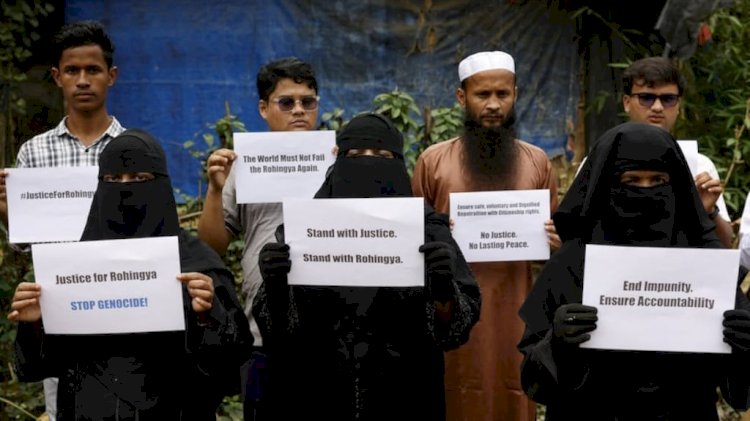
The International Court of Justice has ordered Myanmar to facilitate the safe return of displaced Rohingya and compensate survivors. More than 1.2 million refugees remain in Bangladesh, while fighting and restrictions in Rakhine keep many from going home.
Bangladesh is stepping up diplomatic pressure on Myanmar following the International Court of Justice’s ruling that Myanmar committed genocide against the Rohingya in 2017. In an interview reported by Reuters on 23 November 2026, Bangladesh’s State Minister for Foreign Affairs, Shama Obaed Islam, called for greater international pressure on Myanmar and the Arakan Army, which controls most of Rakhine State. Dhaka also urged donors to sustain and increase humanitarian assistance while refugees remain in Bangladesh.[1]
The judgment, delivered in The Hague on 19 November, held Myanmar responsible under the Genocide Convention for acts committed during its military operations in northern Rakhine. For Rohingya families who have spent nine years in exile, the ruling raises practical questions about whether they can return safely, recover their homes and land, and live in Myanmar with recognised rights.[2]
What the court found
By nine votes to six, the court found that Myanmar committed genocide against the Rohingya in northern Rakhine State. It concluded that security forces killed thousands of Rohingya civilians, carried out widespread sexual violence and attacked children and people trying to flee. The majority found that the acts were committed with the intent to destroy a substantial part of the Rohingya group in northern Rakhine. The 2017 offensive forced about 750,000 people to flee to Bangladesh, where earlier waves of Rohingya refugees had already sought refuge.[2][3]
The Gambia brought the case in November 2019 with support from the Organisation of Islamic Cooperation. The judgment establishes Myanmar’s responsibility as a state under the Genocide Convention. It also requires Myanmar to investigate people reasonably suspected of acts prohibited by the convention in connection with the 2017 operations and to prosecute and punish them where warranted. Myanmar’s Foreign Ministry expressed disappointment about the finding and cited dissenting judges’ concerns over the standard of proof and the weight given to some evidence.[2][4]
What Rohingya face inside Rakhine
Rohingya families still in Myanmar face both longstanding discrimination and the consequences of the current conflict. A 2026 report by the UN Secretary-General found that more than 519,000 people in Rakhine, most of them Rohingya, remained stateless. The report said Rohingya seeking citizenship had been required to identify as “Bengali” or under another officially recognised ethnicity. Barriers to registering births and restrictions on movement compounded that exclusion. By July, nearly 225,000 Rohingya were living in confined camps in Rakhine.[5]
Control of much of Rakhine has shifted to the Arakan Army, while Myanmar’s military retains some positions. The UN human rights office has documented abuses against Rohingya by both sides. In areas controlled by the Arakan Army, it reported forced recruitment, arbitrary detention, confiscation of property and restrictions that made it harder for Rohingya to reach health services or earn a living. This is one reason safe return depends on conditions in the communities where refugees would actually live. A family returning to Rakhine needs to be able to reclaim its home, travel freely and reach a clinic or school.[5][6]
Growing up in Bangladesh’s refugee camps
Joint figures from Bangladesh and the UN refugee agency put the Rohingya refugee population in Bangladesh at 1,208,018 as of 31 October 2026. Nearly 1.175 million were in Cox’s Bazar and about 33,000 on Bhasan Char. The same data identify about 156,000 recent arrivals through biometrics, reflecting continued flight from Myanmar in the years after the 2017 exodus.[3][7]
More than half of those living in the camps are children, according to UNHCR. In September, the agency warned that funding shortages had reduced access to food and education and put further pressure on health services. With few opportunities to earn a living, families remain heavily dependent on aid. The UN and its partners appealed in May for US$710.5 million to meet critical needs among refugees and Bangladeshi host communities.[8]
Some Rohingya have sought safety or a livelihood elsewhere in the region by sea. By 23 September, UNHCR said more than 5,800 Rohingya had taken to sea in 2026 and more than 800 had been reported dead or missing. UNHCR called for sustained aid and more access to education, skills training and livelihoods while conditions for safe return remain absent.[8]
What Myanmar must do under the ruling
The court ordered Myanmar to facilitate the safe, voluntary and dignified return of Rohingya displaced by its wrongful acts, whether they fled abroad or were displaced inside Myanmar. The orders include measures to reunite separated families and restore or replace lost homes, land and other property. Myanmar must also compensate the Rohingya community and its members for harm that restitution cannot remedy. It has two years to submit a report on its restitution measures and proposed compensation arrangements. The court will determine the amount and terms of compensation at a later stage.[2]
Speaking in Cox’s Bazar the day after the ruling, the President of the UN General Assembly said return requires protection from persecution and discrimination, freedom of movement, safeguards on access to citizenship and a voice for Rohingya in decisions about their future. Rohingya advocate Nay San Lwin likewise said that justice means recognition of Rohingya identity, restoration of citizenship and a safe return home.[9]
Bangladesh has urged prompt implementation and continued aid. Myanmar has said return would be possible when conditions permit. The diplomatic response reported on 23 November has yet to produce a timetable for safe return. For families weighing that decision, the immediate questions are whether they can return by choice, recover what they lost and live without facing the restrictions and violence that displaced them.[1][2][9]
[1] Bangladesh Ministry of Foreign Affairs, statement welcoming the ICJ judgment, published 22 November, and Reuters, interview with Bangladesh’s state minister, 23 November, under “Rohingya Verdict.”
[2] International Court of Justice, judgment of 19 November 2026, especially paragraphs 615, 625 and 646, and the court’s press release.
[3] UNHCR, briefing on Rohingya refugees in Bangladesh.
[4] UN Independent Investigative Mechanism for Myanmar, case background, and Myanmar Ministry of Foreign Affairs, response to the judgment.
[5] UN Secretary-General, report A/81/302 on Rohingya Muslims and other minorities in Myanmar, paragraphs 10–11 and 47–50.
[6] UN High Commissioner for Human Rights, report A/HRC/63/21, paragraph 19.
[7] Government of Bangladesh and UNHCR, refugee population figures as of 31 October 2026.
[8] UN High Commissioner for Refugees, remarks on the Rohingya crisis, 23 September, and United Nations in Bangladesh, 2026 humanitarian appeal.
[9] President of the UN General Assembly, statement in Cox’s Bazar, 20 November, and Reuters, Rohingya advocates’ reactions to the judgment.
Disclaimer
The views expressed in this article are the author’s own and do not necessarily mirror Islamonweb’s editorial stance.

Related Posts











Leave A Comment