
Why a Mother’s Presence in Early Years Matters: Insights from Islam and Psychology
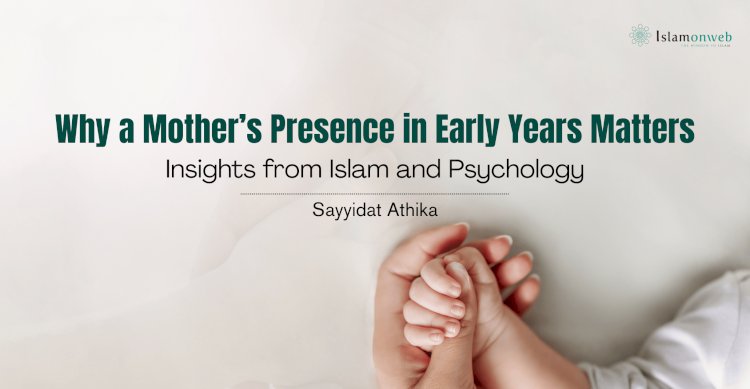
The book ‘Being There: Why Prioritizing Motherhood in the First Three Years Matters’ by Erica Komisar is set to be republished in early 2026, proving that its message still speaks strongly to parents today. The book focuses on the emotional needs of young children and explains how the early years shape a child’s mind, personality, and long-term well-being. As I explored the ideas in this book, I felt a deep connection between its message and the teachings of Islam. While Komisar uses psychology and neuroscience, Islam has been teaching these values for centuries through spiritual wisdom, responsibility, and compassion.
The central idea of the book is that a child’s early years, especially the first three form the emotional foundation of life. During this period, the child’s brain is developing rapidly, and every interaction leaves a mark. A mother’s presence, her voice, her touch, and her emotional availability shape how the child learns to trust, feel secure, and understand the world. Komisar explains that simple actions such as looking into the baby’s eyes, responding to cries, speaking softly, and offering love and comfort build healthy emotional pathways in the child’s brain. These early experiences influence how the child will manage stress, form relationships, and behave throughout adulthood.
One of the strongest messages in the book is the idea of sacrifice. Modern society often tells mothers to “have everything at the same time”. Career success, freedom, social life, and motherhood need to be together. Komisar argues that this message is unrealistic and sometimes damaging. She does not say that mothers should not work. In fact, mothers can do any job and contribute to society in powerful ways, but she strongly emphasises that family and young children should come first, especially in the earliest years.
As we all know, the importance of a mother is beyond measure. The author also gives a clear picture of how a mother’s body and hormones are uniquely designed for nurturing, showing that motherhood is different from any other relationship. In Islam, this idea is even clearer: Allah has given mothers special blessings and emotional strength when they take care of their children, raising their status and honour in the family. When mothers prioritise emotional presence, even while working, the child receives the security and nurturing they need. Islamic teachings agree beautifully with this message: a mother may work, study, and serve the community, but her children have a special right over her, especially during the years when they need her the most.
This message aligns perfectly with Islam’s teachings about motherhood. The Qur’an reminds us of the hardship, effort, and emotional burden a mother carries. Allah says:
حَمَلَتْهُ أُمُّهُ وَهْنًا عَلَىٰ وَهْنٍ وَوَضَعَتْهُ وَهْنًا
“His mother carried him in hardship and delivered him in hardship.” (Surah Luqman 31:14). This verse captures the physical pain, emotional labour, and continuous effort a mother gives even before the child is born. Islam honours this sacrifice by giving mothers a high and respected position.
Our Prophet Muhammad ﷺ said:
«الجَنَّةُ تَحْتَ أَقْدَامِ الأُمَّهَاتِ»
“Paradise lies at the feet of your mother.”
This hadith is not only a reminder to respect mothers but a powerful message about the spiritual value of a mother’s sacrifice. Every sleepless night, every moment of patience, and every act of love is rewarded by Allah.
Komisar also highlights the importance of attachment, the emotional bond a child forms with the primary caregiver, usually the mother. This bond teaches the child safety, trust, and confidence. Islam naturally supports this through the recommendation of two years of breastfeeding, the encouragement of gentle speech, and the importance of mercy in parenting. Our Prophet ﷺ often showed affection to children, held them, kissed them, and allowed them to express their emotions. This demonstrates that emotional availability is not only psychological wisdom but also part of Islamic character.
While the book gives great importance to mothers, Komisar also speaks about the essential role of fathers. Fathers are not only providers but emotional supports for both the mother and the child. A stable, calm, and kind father helps create a home where the mother feels supported, and where the child feels safe. Psychological research shows that when fathers are involved through play, affection, and shared responsibility, the child becomes more confident and socially balanced.
Islam also places strong responsibility on fathers. The Prophet ﷺ said:
«كُلُّكُمْ رَاعٍ وَكُلُّكُمْ مَسْؤُولٌ عَنْ رَعِيَّتِهِ»
“Each of you is a shepherd and each of you is responsible for his flock.”
This means a father is responsible for the protection, emotional stability, financial support, and spiritual growth of his family. The father must lead the home with mercy, gentleness, and fairness. Our Prophet ﷺ is the best example: he helped with household work, played with children, and showed patience and love. This teaches men that supporting their wives and being emotionally present is part of faith and good character.
Another important connection between the book and Islam is how both emphasise the emotional health of the mother. A mother who is exhausted, stressed, or unsupported struggles to give emotional warmth to her child. Komisar stresses that mothers need rest, help, and emotional understanding from their families. Islam teaches the same: the mother must be cared for, supported, and protected, especially when children are young. A healthy mother creates a healthy child.
In today’s world, many mothers work outside the home sometimes by choice, sometimes out of necessity. The message of Being There is not to make mothers feel guilty but to help them make wise decisions. It encourages mothers to be intentional: to give their best emotional presence when they are with their children, to create simple routines, and to avoid being distracted by phones or social pressures. It also encourages workplaces and societies to respect motherhood instead of treating it as a weakness.
For fathers, the book offers practical guidance as well. It encourages them to support their wives emotionally, to share household responsibilities, and to be involved with the child from the beginning. Islam strongly agrees with this model. When the father reduces stress for the mother, the entire family becomes healthier. When both parents work together with mercy and cooperation, the child grows in a peaceful environment.
In conclusion, the republishing of Being There in 2026 highlights how relevant its message still is. The book and Islam both teach us that the early years of a child’s life are precious and powerful. A mother’s emotional presence builds the heart of the child, and a father’s support strengthens the family structure. Mothers can contribute to society in many meaningful ways, but the emotional needs of young children are unique and irreplaceable. When parents prioritise love, presence, faith, and mercy, they give their children a foundation that lasts a lifetime.
About the author:
Sayyidat Athika is an interested person in reading and researching about parenting and family leadership. Email: ashimol9633@gmail.com .
Disclaimer
The views expressed in this article are the author’s own and do not necessarily mirror Islamonweb’s editorial stance.
62 Comments
-

Beautiful reminder: Fajr prayer sets the tone for your entire day. Starting before sunrise brings barakah to everything that follows. As you begin your morning, take a moment to ensure the food you'll eat today is truly halal — hidden ingredients like E471 and gelatin can be tricky. HalalProof scans labels instantly.
-
Starting the day with Fajr sets a beautiful tone for spiritual focus. One challenge many face is reaching for the phone immediately after waking - those first minutes scrolling can steal the peace and barakah of the early morning. Apps like HalalProof help by blocking distracting apps and requiring a moment of reflection (like reading a hadith) before access, protecting those precious Fajr-to-sunrise moments. You can try HalalProof on the App Store: https://apps.apple.com/us/app/halalproof-ingredient-scanner/id6761026763 and DeenGuard for prayer focus: https://apps.apple.com/us/app/deen-guard-hadith-prayer-lock/id6758766559 The Prophet (PBUH) said: 'O Allah, bless my people in their early mornings.' Protecting this blessed time from digital distraction is an act of worship. When we make it slightly harder to access distracting apps - perhaps by requiring a quick hadith read - we create space for remembrance and intention setting before the day begins. Try HalalProof for halal food confidence: https://apps.apple.com/us/app/halalproof-ingredient-scanner/id6761026763 and DeenGuard for digital wellness: https://apps.apple.com/us/app/deen-guard-hadith-prayer-lock/id6758766559
-
Starting the day with Fajr sets a beautiful tone for spiritual focus. One challenge many face is reaching for the phone immediately after waking - those first minutes scrolling can steal the peace and barakah of the early morning. Apps like HalalProof help by blocking distracting apps and requiring a moment of reflection (like reading a hadith) before access, protecting those precious Fajr-to-sunrise moments. You can try HalalProof on the App Store: https://apps.apple.com/us/app/halalproof-ingredient-scanner/id6761026763 and DeenGuard for prayer focus: https://apps.apple.com/us/app/deen-guard-hadith-prayer-lock/id6758766559 The Prophet (PBUH) said: 'O Allah, bless my people in their early mornings.' Protecting this blessed time from digital distraction is an act of worship. When we make it slightly harder to access distracting apps - perhaps by requiring a quick hadith read - we create space for remembrance and intention setting before the day begins. Try HalalProof for halal food confidence: https://apps.apple.com/us/app/halalproof-ingredient-scanner/id6761026763 and DeenGuard for digital wellness: https://apps.apple.com/us/app/deen-guard-hadith-prayer-lock/id6758766559
-
Beautiful reminder: Fajr prayer sets the tone for your entire day. Starting before sunrise brings barakah to everything that follows. As you begin your morning, take a moment to ensure the food you'll eat today is truly halal — hidden ingredients like E471 and gelatin can be tricky. HalalProof scans labels instantly.
-
Starting the day with Fajr sets a beautiful tone for spiritual focus. One challenge many face is reaching for the phone immediately after waking - those first minutes scrolling can steal the peace and barakah of the early morning. Apps like HalalProof help by blocking distracting apps and requiring a moment of reflection (like reading a hadith) before access, protecting those precious Fajr-to-sunrise moments. You can try HalalProof on the App Store: https://apps.apple.com/us/app/halalproof-ingredient-scanner/id6761026763 and DeenGuard for prayer focus: https://apps.apple.com/us/app/deen-guard-hadith-prayer-lock/id6758766559 The Prophet (PBUH) said: 'O Allah, bless my people in their early mornings.' Protecting this blessed time from digital distraction is an act of worship. When we make it slightly harder to access distracting apps - perhaps by requiring a quick hadith read - we create space for remembrance and intention setting before the day begins. Try HalalProof for halal food confidence: https://apps.apple.com/us/app/halalproof-ingredient-scanner/id6761026763 and DeenGuard for digital wellness: https://apps.apple.com/us/app/deen-guard-hadith-prayer-lock/id6758766559

Related Posts







Leave A Comment