
The Higher Objectives of Ḥajj in the Light of the Qur’an
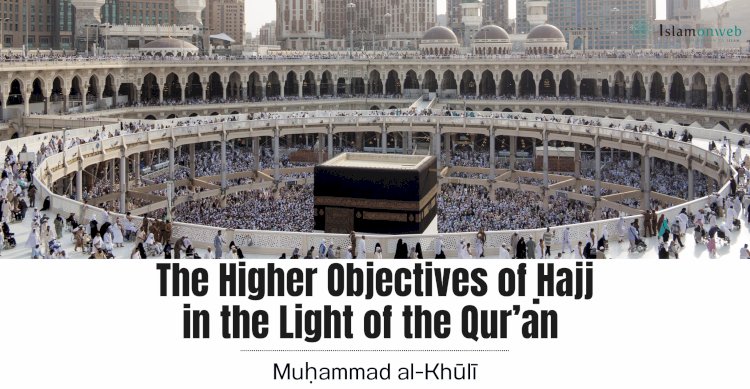
The obligation of Ḥajj is one of the fundamental pillars of Islam. Throughout the Qur’an, Allah points to several profound objectives and spiritual dimensions of this great act of worship. When a believer reflects deeply upon these Qur’anic insights, they cultivate a greater sense of reverence, humility, and spiritual presence within the heart. This article seeks to shed light on some of the higher purposes of Ḥajj as indicated in the verses of the Noble Qur’an.
As these blessed days return each year, hearts begin to yearn and souls long for the pilgrimage to the Sacred House of Allah. Every Muslim hopes to attain the honour of visiting al-Bayt al-ʿAtīq (the Ancient House), seeking Allah’s forgiveness and responding to the timeless call of Prophet Ibrāhīm (ʿalayhi al-Salām), whom Allah commanded to proclaim the pilgrimage to all humanity. Allah says:
“And proclaim to the people the Ḥajj; they will come to you on foot and on every lean camel, coming from every distant pass.”— Sūrah al-Ḥajj, 22:27
Ḥajj occupies an immense position within Islam and stands among the greatest acts of worship in virtue and status. One indication of its significance is that Allah mentions Ḥajj in several places throughout the Qur’an, including Sūrah al-Baqarah, Sūrah Āl ʿImrān, Sūrah al-Mā’idah, Sūrah al-Tawbah, and Sūrah al-Ḥajj — the only sūrah named after one of the pillars of Islam.
Furthermore, Allah discusses the rites and details of Ḥajj with a level of elaboration not found in many other acts of worship. This clearly reflects the special care and lofty status this pillar holds in the sight of Allah. The eminent scholar Ibn ʿĀshūr رحمه الله beautifully observed:
“The special care Allah has shown towards this magnificent act of worship is evident in the detailed manner in which He explained its rites and circumstances, while also correcting the distortions introduced into it during the period of Jāhiliyyah.”[1]
Anyone who reflects upon the Qur’anic discourse concerning Ḥajj will discover numerous objectives, wisdoms, and spiritual lessons that deserve careful contemplation, particularly from those preparing to undertake this sacred journey. Understanding the higher purposes (maqāṣid) and inner wisdoms of worship plays a vital role in deepening one’s reverence for it and nurturing true presence of heart during its performance.
One reason the transformative impact of Ḥajj has weakened in the lives of some Muslims today is an excessive preoccupation with its legal and procedural aspects, while neglecting its spiritual, ethical, and maqāṣid-oriented dimensions. Therefore, dear reader, let us journey together through some of the profound purposes of Ḥajj as illuminated by the Noble Qur’an.
- Tawḥīd and Sincerity to Allah
Allah ﷻ did not command Prophet Ibrāhīm (ʿalayhi al-Salām) to build the Sacred House except for the realisation of tawḥīd. This becomes clear in the Qur’an, where the command to build and purify the House is directly linked with the prohibition of shirk and the removal of all its traces. Allah says:
“And ˹remember˺ when We designated for Ibrāhīm the site of the House, ˹saying,˺ ‘Do not associate anything with Me, and purify My House for those who perform ṭawāf, stand in prayer, and bow and prostrate.’” — Sūrah al-Ḥajj, 22:26
As for sincerity (ikhlāṣ), it is one of the greatest fruits of tawḥīd. Allah ﷻ reminded His servants of the need to observe sincerity in Ḥajj when He said:
“Complete the Ḥajj and ʿUmrah for Allah.” — Sūrah al-Baqarah, 2:196
Commenting on this verse, Shaykh al-Qāsimī writes:
“That is, perform them completely with their prescribed rites purely for the sake of Allah.”[2]
Al-Rāghib also transmits from Imām al-Shāfiʿī that he said:
“Allah specifically mentioned ‘for Allah’ in relation to Ḥajj and ʿUmrah, while this expression was not mentioned regarding ṣalāh and zakāh, because the Arabs of Jāhiliyyah used to dedicate some rites of Ḥajj and ʿUmrah to idols. Therefore, Allah specifically emphasised that these acts must be for Him alone, encouraging sincerity and distancing people from such prohibited beliefs.”[3]
Imām al-Ghazālī advised the pilgrim to cultivate sincerity and warned against ostentation and seeking reputation. He writes:
“Let the pilgrim make his intention purely for the sake of Allah ﷻ, free from the stains of showing off and seeking fame. He must realise that neither intention nor action is accepted unless it is sincere. Indeed, among the gravest wrongs is that a person sets out for the House and Sanctuary of Allah while seeking something other than Him. Therefore, he must rectify his intention through sincerity, and preserve that sincerity by avoiding everything tainted with ostentation and reputation-seeking. Let him beware of exchanging what is better for what is inferior.”[4]
Ḥajj, therefore, is not merely a physical journey undertaken by the body, but a profound spiritual journey of the heart toward devotion to Allah alone. Every rite of pilgrimage carries within it a renewed declaration of tawḥīd, servitude, humility, and complete submission before the Lord of the worlds.
- Servitude and Complete Submission to Allah
This objective becomes clearly visible when the pilgrim responds to the call of Ḥajj, dons the garments of iḥrām, performs ṭawāf around the Kaʿbah, walks between Ṣafā and Marwah, and stands in ʿArafah. In all these rites, the pilgrim submits wholeheartedly to the command of Allah ﷻ and follows the example of the Messenger of Allah ﷺ. Even if the deeper wisdoms and purposes behind some of these rituals may not be fully understood, the believer remains conscious of one essential reality: he is a servant obediently submitting to his Lord's command.
Imām al-Ghazālī beautifully explains this profound dimension of Ḥajj when discussing its rites:
“Through such acts, the completeness of servitude and submission becomes manifest. Zakāh involves compassion and financial support, and its wisdom is easily understood, with the intellect naturally inclined towards it. Fasting suppresses desires, which are the tools of Allah’s enemy, and allows one to devote oneself to worship by abandoning distractions. Likewise, bowing and prostration in ṣalāh are acts of humility before Allah ﷻ, and the soul naturally finds comfort in glorifying Him.
As for repeatedly walking during saʿy, stoning the jamarāt, and similar rites, the souls find no obvious pleasure or familiarity in them, nor can the intellect independently grasp all their meanings. Therefore, the only motive for performing them is the pure command itself and the intention of obeying Allah simply because He commanded it. In this lies the removal of the intellect from attempting to control the matter, and the distancing of the soul and natural inclinations from what they find familiar.
Indeed, whenever the intellect comprehends the wisdom behind an act, the human soul tends to incline towards it, and this inclination may assist in motivating the action. Thus, complete servitude and submission may not become fully apparent. For this reason, the Prophet ﷺ specifically said regarding Ḥajj: ‘Labbayka bi-ḥajjatin ḥaqqan taʿabbudan wa riqqan (Here I am responding with a true pilgrimage, in worship and servitude).’ He did not say this regarding ṣalāh or other acts of worship.”[5]
Ḥajj therefore trains the believer to embody true ʿubūdiyyah — a state in which obedience to Allah transcends personal preference, habit, and even full intellectual comprehension. The pilgrim learns to surrender not merely when the wisdom is apparent, but because the command comes from Allah, the All-Wise and All-Knowing.
- Purifying the Soul from Blameworthy Character Traits
Allah ﷻ prohibited the pilgrim from engaging in obscenity, sinful behaviour, idle speech, quarrelling, and disputes during Ḥajj. He says:
“Whoever undertakes the obligation of Ḥajj therein, let there be no obscenity, no sin, and no disputing during Ḥajj. And whatever good you do, Allah knows it well.” — Sūrah al-Baqarah, 2:197
This prohibition serves, on the one hand, to preserve the sanctity and dignity of Ḥajj, and on the other, to train the believer to abandon such blameworthy traits even after the pilgrimage has ended. These behaviours are condemned at all times and in every place, but their prohibition becomes even more emphasised during the sacred journey of Ḥajj.
Shaykh al-Saʿdī writes:
“You must honour the state of iḥrām for Ḥajj and protect it from everything that may corrupt it or diminish its reward. This includes rafath, which refers to sexual relations and all speech or actions leading to it, especially in the presence of women; fusūq, which includes all acts of disobedience, including the prohibitions of iḥrām; and jidāl, which refers to argumentation, disputes, and quarrelling, as these provoke evil and lead to hostility.
The purpose of Ḥajj is humility and brokenness before Allah, drawing closer to Him through acts of worship as much as possible, and distancing oneself from sins. Through this, the Ḥajj becomes mabrūr (accepted and righteous), and a mabrūr Ḥajj has no reward except Paradise. Although these matters are prohibited at all times and places, their prohibition becomes even more severe during Ḥajj.”[6]
Ḥajj is therefore a spiritual school for refining one’s character and disciplining the soul. The pilgrim learns patience amidst hardship, gentleness amidst crowds, restraint in moments of anger, and dignity in speech and conduct. A truly transformative Ḥajj is not one that merely exhausts the body through travel and rituals, but one that purifies the heart and reforms the character.
- Reminding the Believer to Prepare for the Hereafter
Allah ﷻ reminds the pilgrim — who carefully prepares provisions for the worldly journey of Ḥajj — not to neglect preparing provisions for the journey to the Hereafter. The finest provision for that eternal journey is taqwā: consciousness of Allah through obedience to Him and avoidance of sins and wrongdoing. Allah says:
“And take provisions, but indeed the best provision is taqwā. And fear Me, O people of understanding.” — Sūrah al-Baqarah, 2:197
Ibn al-Qayyim beautifully reflects on this verse, saying:
“Allah commanded the pilgrims to take provisions for their journey and not to travel without supplies. Then He directed them towards the provision for the journey of the Hereafter, which is taqwā. Just as a traveller cannot reach his destination without provisions that carry him there, likewise the traveller to Allah and the abode of the Hereafter cannot reach his destination except with the provision of taqwā. Thus, Allah combined both types of provision together.”[7]
Ḥajj constantly reminds the believer of the reality of life’s ultimate journey. Leaving behind one’s home, wealth, comforts, and familiar surroundings mirrors, in many ways, the soul’s departure from this world. The simple garments of iḥrām resemble a shroud; the gathering of pilgrims evokes the gathering on the Day of Judgement; and the long, demanding journey serves as a reminder that the path to the Hereafter requires preparation, patience, and spiritual readiness.
- Honouring the Sacred Symbols of Allah
The sacred symbols (shaʿāʾir) of Allah are the manifest signs of His religion, along with the commands and prohibitions through which He has instructed His servants to worship Him. Revering these symbols is a sign of a servant’s closeness to Allah and a clear indication of the taqwā rooted within the heart. This stands as one of the great objectives of Ḥajj.
When a Muslim becomes accustomed to honouring the sacred rites of Ḥajj — such as ṭawāf around the Kaʿbah, standing at ʿArafah, stoning the jamarāt, offering the sacrificial animal (hady), and other rituals — this nurtures within the soul a lasting reverence for the commands of Allah and a deeper consciousness of Him in every aspect of life. For this reason, Allah ﷻ says, after mentioning the rites of Ḥajj:
“That is so. And whoever honours the symbols of Allah — indeed, it is from the taqwā of hearts.” — Sūrah al-Ḥajj, 22:32
- Balancing Worldly and Spiritual Interests
One of the beauties and higher objectives of Islam is its balanced approach between worldly needs and spiritual aspirations. This balance is evident in many Islamic rulings and acts of worship, including Ḥajj. Allah ﷻ permitted the pilgrim to combine the performance of the sacred rites with trade and lawful earning, provided that such worldly pursuits do not distract from the primary purpose of the journey — namely, worship and devotion to Allah.
Allah says:
“There is no blame upon you for seeking the bounty of your Lord.” — Sūrah al-Baqarah, 2:198
He also says:
“So that they may witness benefits for themselves and mention the name of Allah during the appointed days.” — Sūrah al-Ḥajj, 22:28
Commenting on these verses, Shaykh al-Saʿdī writes:
“Allah informs us that seeking His bounty through trade and lawful earning during the seasons of Ḥajj and at other times carries no blame, so long as it does not distract from obligatory duties, and provided that the primary intention remains Ḥajj itself. Such earnings must be lawful and attributed to the bounty of Allah, not merely to the servant’s own skill or effort while forgetting the One who grants the means and success. For that, in reality, is the true cause of blame.”[8]
Through Ḥajj, the believer learns that worldly benefit and spiritual growth are not inherently contradictory, so long as worldly concerns remain subordinate to one’s devotion and obedience to Allah.
- Connecting the Heart to the Remembrance of Allah
Dhikr (the remembrance of Allah) is among the most beloved acts of worship to Allah ﷻ and among the greatest in reward. Allah has closely linked many acts of worship with His remembrance, and among the clearest examples of this is Ḥajj. This connection appears repeatedly throughout the Qur’anic discussion of the rites of pilgrimage.
Allah says:
“Then when you depart from ʿArafāt, remember Allah at al-Mashʿar al-Ḥarām. And remember Him as He has guided you, for indeed before that you were among those astray. Then depart from where the people depart and seek forgiveness from Allah. Indeed, Allah is Most Forgiving, Most Merciful. And when you have completed your rites, remember Allah as you used to remember your forefathers, or with even greater remembrance.” — Sūrah al-Baqarah, 2:198–200
He also says:
“And proclaim to the people the Ḥajj; they will come to you on foot and on every lean camel, coming from every distant pass, so that they may witness benefits for themselves and mention the name of Allah during the appointed days.” — Sūrah al-Ḥajj, 22:27–28
Ibn al-Qayyim said regarding dhikr:
“Indeed, it is the soul, essence, and ultimate purpose of Ḥajj.” He then cited the statement of the Prophet ﷺ: “Ṭawāf around the House, saʿy between Ṣafā and Marwah, and the stoning of the jamarāt were prescribed only for the establishment of the remembrance of Allah.”[9]
A believer who becomes accustomed to remembering Allah during ṭawāf, saʿy, the stoning of the jamarāt, the standing at ʿArafah, the sacrifice of the hady, and throughout the sacred journey will find it difficult for the tongue to become dry from dhikr after returning from Ḥajj. Having tasted the sweetness of remembering Allah, the heart naturally becomes attached to the One who is remembered.
Through this constant engagement with dhikr, the pilgrim’s heart becomes more alive, more attentive to Allah, and more spiritually connected to Him.
- Affirming the Spirit of Equality Among Humanity
Islam is a religion founded upon equality, and this principle becomes especially visible in the gatherings of prayer and Ḥajj. During pilgrimage, the rich stand beside the poor, the Arab beside the non-Arab, all gathered upon the same ground wearing similar garments — in complete contrast to the class distinctions and tribal pride that existed during the era of Jāhiliyyah.
Allah says:
“Then depart from where the people depart and seek forgiveness from Allah. Indeed, Allah is Most Forgiving, Most Merciful.” — Sūrah al-Baqarah, 2:199
Commenting on this verse, Sayyid Quṭb writes in Fī Ẓilāl al-Qur’ān:
“Stand where the people stand, and depart from where they depart. Islam recognises neither lineage nor class. Humanity is one nation, equal like the teeth of a comb. No person holds superiority over another except through taqwā.
Islam instructed them during Ḥajj to strip away the garments that distinguish them, so that they may gather in the House of Allah as equal brothers. They do not remove their garments only to boast of lineage and ancestry. Leave behind the tribalism of Jāhiliyyah and enter fully into the spirit of Islam.
Thus, Islam establishes the conduct of Muslims in Ḥajj upon the foundation of a worldview it gifted to humanity: equality and the unity of one Ummah, not divided by class, race, language, or worldly distinctions. Then Allah directs them to seek His forgiveness for everything that contradicts this pure and noble vision.”[10]
Another manifestation of this principle is that Allah commanded the pilgrims to occupy themselves with the remembrance of Allah instead of boasting about their forefathers and tribal ancestry. Allah says:
“And when you have completed your rites, remember Allah as you used to remember your forefathers, or with even greater remembrance.” — Sūrah al-Baqarah, 2:200
Imām al-Ṭabarī explains:
“Some scholars said that the people in Jāhiliyyah, after completing their pilgrimage rites, would gather and boast about the achievements of their forefathers. So Allah commanded them in Islam that their remembrance, praise, gratitude, and glorification should instead be directed to their Lord alone, and that they should devote themselves to abundant remembrance of Him just as they had once devoted themselves to mentioning their forefathers.”[11]
Ḥajj thus dismantles barriers of race, wealth, nationality, language, and social status, reminding humanity that all people ultimately stand equal before Allah. The only true standard of honour in Islam is taqwā, and the sacred journey of Ḥajj serves as one of the greatest living manifestations of this timeless truth.
- Cultivating Precision and Discipline in the Life
One of the profound lessons of Ḥajj is the cultivation of precision, order, and discipline. This is clearly reflected in the carefully defined temporal and spatial boundaries associated with the pilgrimage.
The temporal boundaries (mawāqīt zamāniyyah) refer to the specific months designated by Allah ﷻ for the performance of Ḥajj. Likewise, Allah has assigned precise timings for major rites such as standing at ʿArafah — a rite without which the Ḥajj becomes invalid — as well as specific times for the stoning of the jamarāt and other rituals. Allah says:
“Ḥajj is during well-known months.” — Sūrah al-Baqarah, 2:197
Commenting on this verse, Shaykh al-Saʿdī writes:
“Allah informs that Ḥajj takes place during months already well known to the people and widely recognised, such that they require no further specification. This is unlike fasting, for which the specific month had to be identified, and unlike the five daily prayers, whose timings were explicitly clarified.
Ḥajj was part of the religion of Ibrāhīm, which remained continuously known among his descendants. According to the majority of scholars, the ‘well-known months’ refer to Shawwāl, Dhū al-Qaʿdah, and the first ten days of Dhū al-Ḥijjah, for these are the periods in which entering into iḥrām for Ḥajj commonly occurs.”[12]
As for the spatial boundaries (mawāqīt makāniyyah), they are the designated locations specified by the Prophet ﷺ where pilgrims intending Ḥajj or ʿUmrah enter into the state of iḥrām. Once the pilgrim crosses these boundaries, certain actions that were previously permissible become prohibited as part of the sacred discipline of pilgrimage.
These temporal and spatial regulations serve as a practical training ground for the Muslim, nurturing precision, self-discipline, commitment, and respect for limits in all aspects of life beyond Ḥajj itself. Through this sacred journey, the believer learns that true servitude to Allah requires not only sincerity of heart but also discipline in action and adherence to divine guidance.
- Affirming the Unity and Solidarity of the Ummah
Among the greatest objectives of Ḥajj is the affirmation of the unity, cohesion, and brotherhood of the Muslim Ummah. The gathering of millions of Muslims from different races, languages, cultures, and lands upon the worship of one Lord creates a profound spiritual, psychological, and social impact upon the hearts of believers. At the same time, it demonstrates the strength and unity of Islam before the world.
For this reason, Allah ﷻ commanded the believers to remain united upon His religion:
“And hold firmly to the rope of Allah all together and do not become divided.” — Sūrah Āl ʿImrān, 3:103
Shaykh al-Saʿdī comments on this verse:
“Allah commands them with that which assists them in attaining taqwā: namely, unity and holding firmly to the religion of Allah, so that the call of the believers becomes one, their hearts united rather than divided.
Through the unity of Muslims upon their religion and the harmony of their hearts, both their religious and worldly affairs are rectified. Through unity, they gain strength in all matters, and countless benefits arise which cannot be fully enumerated — including cooperation in righteousness and taqwā.
On the other hand, division, hostility, and disunity corrupt their order, sever their bonds, and lead each person to pursue only personal desires, even if it results in widespread harm.”[13]
There is no doubt that the Muslim Ummah today experiences many forms of fragmentation and division. Yet Ḥajj revives within the Ummah the spirit of unity, brotherhood, and shared identity year after year. It reminds Muslims that they belong to one Ummah united by faith, worshipping one Lord, following one Messenger ﷺ, and facing one qiblah.
Through this gathering, the believer is lifted beyond personal concerns and individual struggles to reconnect with the greater concerns, hopes, and responsibilities of the Ummah as a whole.
Conclusion
In conclusion, dear reader, these are but some of the wisdoms, objectives, and spiritual secrets that Allah ﷻ has allowed certain servants to perceive regarding this magnificent act of worship. Yet the wisdom of Allah, the secrets of His commands, and the higher purposes behind His acts of worship remain an immense and boundless ocean. Allah reveals from them whatever He wills and withholds whatever He wills.
In all circumstances, the servant must remain firmly grounded in complete servitude to Allah — whether the wisdom behind a command becomes apparent or remains hidden. For the believer worships a Lord who is All-Wise, who never commands except with wisdom, and never prohibits except with wisdom.
We ask Allah ﷻ to grant us the opportunity to perform Ḥajj and ʿUmrah, and not to deprive us of visiting His Sacred House. Indeed, even if one is not granted the blessing of pilgrimage, reflecting on these lofty objectives and meanings remains among the greatest ways to spiritually benefit from this sacred obligation.
May Allah send His peace and blessings upon our master Muḥammad ﷺ, his family, and all his companions.
This article is a translation of the original article by the author in Arabic, published on Islamonline and edited by Faisal Niyaz Hudawi
Original Article can be accessed: https://tafsir.net/articles/11270
References:
[1] Ibn ʿĀshūr, al-Taḥrīr wa al-Tanwīr, 2/231.
[2] Al-Qāsimī, Maḥāsin al-Taʾwīl, 2/63
[3] Al-Rāghib al-Aṣfahānī, Tafsīr al-Rāghib al-Aṣfahānī, 1/412
[4] Al-Ghazālī, Iḥyāʾ ʿUlūm al-Dīn, 1/267
[5] Al-Ghazālī, Iḥyāʾ ʿUlūm al-Dīn, 1/266
[6] Al-Saʿdī, Taysīr al-Karīm al-Raḥmān fī Tafsīr Kalām al-Mannān (Tafsīr al-Saʿdī), p. 91
[7] Ibn al-Qayyim, Ighāthat al-Lahfān min Maṣāyid al-Shayṭān, 1/58.
[8] Al-Saʿdī, Tafsīr al-Saʿdī, p. 92.
[9] Ibn al-Qayyim, Madārij al-Sālikīn, 2/399
[10] Sayyid Quṭb, Fī Ẓilāl al-Qur’ān, p. 200.
[11] Al-Ṭabarī, Jāmiʿ al-Bayān, 4/196
[12] Al-Saʿdī, Tafsīr al-Saʿdī, p. 91
[13] Al-Saʿdī, Tafsīr al-Saʿdī, p. 142.
Disclaimer
The views expressed in this article are the author’s own and do not necessarily mirror Islamonweb’s editorial stance.

Related Posts














Leave A Comment