
Ramadan in Palestine Amid Ruins and Restriction
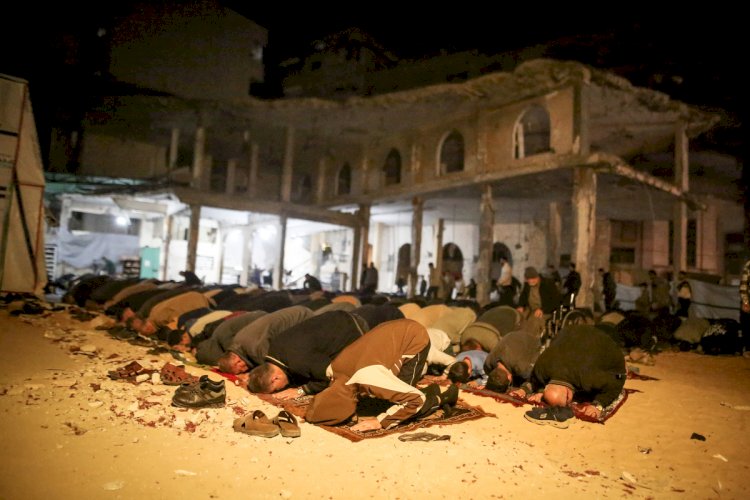
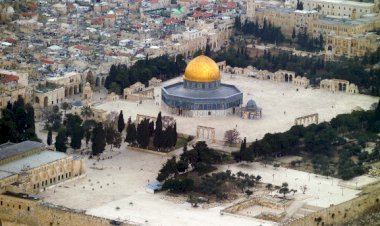
Yesterday’s first Friday of Ramadan unfolded under heavy restrictions in Jerusalem, placing renewed focus on access to the Al-Aqsa Mosque, one of Islam’s holiest sites. Israeli authorities announced that no more than 10,000 Palestinians from the occupied West Bank would be allowed to enter the compound, and only with permits. This came despite the fact that around 3.3 million Palestinians live in the occupied West Bank. In previous years, the first Friday of Ramadan saw attendance figures reach up to 250,000 worshippers at the holy site. This year, the numbers were dramatically lower. Jerusalem’s Islamic Waqf, the body that administers the compound, stated that 80,000 people attended Friday prayers.
For generations, travelling to Jerusalem for the first Friday of Ramadan has been a deeply rooted tradition for Palestinians. Families and communities have long made the journey to pray at Al-Aqsa, spend the day within the mosque compound, and break their fast in the city. This tradition, passed down over hundreds of years, connects communities from the occupied West Bank with occupied East Jerusalem and with Palestinian citizens from inside Israel. This year, however, many were unable to follow this tradition. The restrictions meant that large numbers of worshippers could not reach the mosque compound, disrupting long-established patterns of worship, family gatherings, and communal presence in Jerusalem during the holy month.
As worshippers faced restrictions in Jerusalem, Palestinians in the Gaza Strip entered Ramadan amid devastation, grief, and ongoing uncertainty. The holy month, which is usually associated with family gatherings, spiritual devotion, reflection, and generosity, has arrived in Gaza in a radically altered reality. According to figures provided by the Ministry of Health, at least 72,061 people have been killed and 171,715 wounded since October 2023. More than 11,000 people remain missing. About 90 per cent of homes across the Strip have been destroyed, leaving families without stable shelter. At least 18,000 Palestinians are waiting for medical evacuation, while much of the population now lives in displacement camps or makeshift shelters.
Despite the announcement of a US-brokered ceasefire, deaths have continued. Reports indicate that at least 600 Palestinians have been killed since October even after the ceasefire came into force. The sense of insecurity has not faded, and daily life continues under the shadow of shelling, shooting, and the constant risk of harm. For many families, Ramadan has begun with mourning. Homes that once gathered relatives and neighbours for iftar now have empty chairs, reflecting the loss of loved ones who have been killed, gone missing, or detained.
Economic hardship dominates everyday life in Gaza during this Ramadan. Markets reflect widespread poverty, with many people reporting that there is little cash in circulation and almost no work available. The holy month, which often involves preparing special meals and sharing food with others, has arrived in a context where families struggle to secure basic necessities. The collapse of livelihoods has compounded the emotional toll of loss and displacement, reshaping what Ramadan looks like for countless households.
Harsh winter conditions have further intensified suffering. Extreme cold has claimed the lives of children, while heavy rains have flooded displacement camps and caused damaged buildings to collapse. Families living in tents or partially destroyed structures face daily exposure to the elements, making fasting and daily survival more difficult. These conditions have deepened the already severe humanitarian crisis facing Gaza’s population.
The destruction has also reached places of worship, which hold particular significance during Ramadan. Many mosques across Gaza have been reduced to rubble. In response, worshippers have attempted to rebuild prayer spaces using whatever materials are available. According to the religious affairs authorities in Gaza City, 430 prayer areas have been reconstructed, some using plastic sheets from greenhouses, some made of wood, and others constructed from plastic sheets taken from tents. These temporary prayer spaces have become the main venues for communal worship, providing a place for collective prayer and spiritual gathering amid widespread ruin.
Yet, alongside grief and hardship, scenes of preparation for Ramadan have appeared across Gaza. Streets in refugee camps and narrow alleys have been decorated with the limited Ramadan lanterns people could obtain. Posters of the Dome of the Rock have been placed on the remaining walls of destroyed buildings. Children walk through the streets carrying lanterns, moving from place to place and exchanging Ramadan greetings. Elders hang lights in the few spaces still standing, while mothers prepare for the month using the small amounts of aid and resources available to them. Homes and shelters are being shaped, as much as possible, to reflect the arrival of Ramadan.
These scenes represent small moments of warmth and continuity in a landscape defined by loss. With little left materially, such acts of decoration and preparation become expressions of endurance. They reflect an effort to preserve dignity and maintain spiritual life even when physical surroundings have been shattered. Through these collective gestures, families and neighbours reinforce bonds of togetherness, affirming that shared faith and community remain central, even in the absence of security, comfort, and stability.
As in previous moments of crisis, Palestinians continue to draw strength from faith and shared memory. The arrival of Ramadan, despite devastation and loss, becomes a marker of continuity in the midst of rupture. This Ramadan begins with grief for many, but it is also marked by attempts to hold on to meaning, connection, and inner resolve, both in Jerusalem, where access to holy spaces is restricted, and in Gaza, where daily life is shaped by destruction and displacement.
Disclaimer
The views expressed in this article are the author’s own and do not necessarily mirror Islamonweb’s editorial stance.
Related Posts








Leave A Comment