
"Laughing too much deadens the heart.": What Does the Hadith Mean?
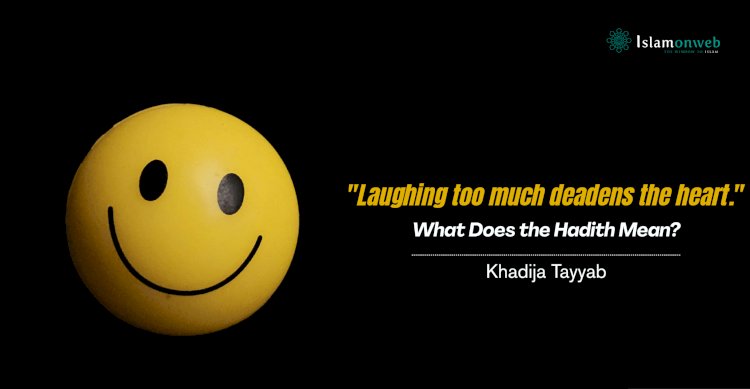
The Prophet ﷺ said: "Laughing too much deadens the heart." (Sunan Ibn Majah: 4193). On the surface, this looks like a simple sentence. But it holds a striking insight into human psychology and emotional balance.
When we look at this hadith through the lens of modern psychology, it points to something that shapes our awareness and behaviour in real ways. Laughter is a natural part of being human, tied to joy, comfort, and connection with others. But when laughter becomes unbalanced, when a person avoids life's seriousness by staying constantly immersed in humour, what's actually happening underneath? And how could that genuinely "deaden" the heart?
Psychology tells us that joy and pleasure are tied to certain chemical processes in the brain. Laughing brings a person into a pleasant state, at least temporarily. Some research suggests that if a person becomes used to laughing constantly, the sense of joy can slowly turn into something more like fleeting relief that keeps demanding a bigger dose each time, while the capacity to find joy in simple things quietly fades.
This pattern echoes, to some degree, the logic of habit and dependency, where a person becomes accustomed to chasing instant relief, and in that pursuit, the capacity for serious reflection and grappling with life's real complexity begins to weaken. Some people reach for humour specifically to escape reality, and end up sealed inside a kind of shell where seriousness struggles to get through.
The "death" of the heart mentioned here isn't only physical it can be spiritual and emotional too. It's as if a person still laughs, but the laughter turns hollow; they look happy, but feel empty inside. Maybe this is exactly the state the hadith is pointing to when it speaks of a "deadened" heart.
It's also worth considering that laughter isn't all the same. Some laughter is a genuine expression of joy and contentment. Some laughter becomes a way of masking stress. And some laughter exists only to please others, while the person feels something entirely different beneath the surface.
Sometimes, people who joke around constantly are actually using humour as a shield covering their pain, fear, or uncertainty. Humour becomes a support that lets a person turn attention away from their real worries. But when it's overused, facing reality itself becomes harder.
Another possible explanation for this "deadening" of the heart might be a fading of empathy. Someone constantly immersed in humour can start treating the world's pain and serious struggles as trivial. They grow accustomed to living in artificial happiness, cut off from what's real. When a person's capacity to feel others' pain begins slipping away, that may be the moment the heart truly starts to deaden.
There's a spiritual and moral dimension to this hadith too. When a person laughs excessively, their connection to remembrance, reflection, and closeness with God can weaken. Imam Ghazali wrote that too much laughter hardens the heart, and a hardened heart drifts from gentleness, humility, and honesty with oneself. This is likely why the Prophet ﷺ himself often smiled but avoided excessive, unrestrained laughter.
By contrast, someone who tends to stay serious, while still holding a genuine sense of humour, tends to see life in a more balanced way. Such people usually weigh things carefully rather than reacting instantly. They often have a greater capacity to feel what others are feeling and take other people's struggles seriously. Rather than chasing shallow pleasures, they keep their eyes on what truly matters over time and tend to show more patience. They face reality instead of running from it.
This hadith isn't just a religious teaching; it points to a real psychological truth. In today's world, where social media and the entertainment industry push humour into every waking moment, where laughter itself has become a symbol of success, the wisdom in this hadith feels more relevant than ever.
A genuinely happy, balanced life is one where seriousness and humour exist in the right measure. Laugh, but don't lose sight of your reality, your purpose, or the depth of what you actually feel. That's the wisdom this hadith leaves us with.
About the author:
Khadija Tayyab
Disclaimer
The views expressed in this article are the author’s own and do not necessarily mirror Islamonweb’s editorial stance.
1 Comments



Related Posts
















Leave A Comment