
AI and Morality in the Light of the Qur’an
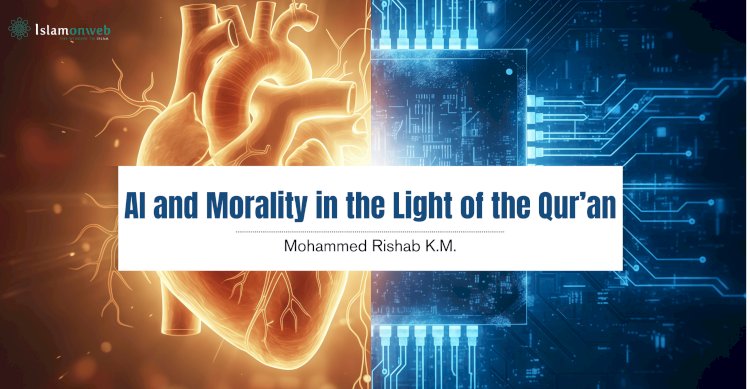
In the long story of human civilization, few creations have raised as many questions about right and wrong as Artificial Intelligence. It is no longer a matter of machines performing calculations or repeating instructions. Today, technology stands at the doorway of thought itself. Machines predict, judge, and even recommend moral choices. Yet, in the midst of such astonishing progress, the question that echoes from the depths of revelation remains: can there be knowledge without conscience, or intelligence without mercy? The Qur’an warns humanity of the limits of its understanding when it says:
وَمَا أُوتِيتُم مِّنَ الْعِلْمِ إِلَّا قَلِيلًا
“You have been given of knowledge only a little” (al-Isrā’, 17:85).
This verse captures the essence of humility before the infinite wisdom of Allah. However advanced human intelligence may grow, it will always remain bound within the small vessel of limited perception.
In the age of Artificial Intelligence, this divine warning has never been more relevant. When machines begin to learn, adapt, and make judgments, humanity faces a moral test unlike any before. Technology no longer serves merely as a servant of man; it begins to shape his choices, his emotions, and even his beliefs. Ali Izetbegović once remarked that the earliest computers were mere devices of data processing, but modern computers have evolved into entities capable of judgment. They are no longer passive instruments; they now evaluate, predict, and decide. This shift — from computation to moral imitation — is what should awaken the conscience of humankind. When judgment is stripped of ethical roots, when decisions are made by systems that lack a heart and soul, knowledge becomes dangerous.
The Qur’an constantly ties knowledge to responsibility. It commands reflection (tafakkur), reasoning (ta‘aqqul), and moral restraint (taqwā). Knowledge, in Islam, is not neutral; it carries with it the duty to uphold justice and compassion. Artificial Intelligence, on the other hand, learns from data — data produced by a human society often driven by greed, bias, and prejudice. Therefore, when AI mirrors our world, it also mirrors our moral failures. The machines of today are not only trained by our intellects but also by our inclinations. If those inclinations are corrupted, so will be the reflection. The Qur’an warns that when humanity forgets divine guidance:
أَفَرَأَيْتَ مَنِ اتَّخَذَ إِلَٰهَهُ هَوَاهُ
“Have you seen the one who takes his own desire as his god?” (al-Jāthiyah, 45:23).
This becomes true not only for individuals but also for societies that worship the idols of technology and profit.
In one narration found in Riyāḍ al-Ṣāliḥīn, a companion asked the Prophet ﷺ:
«يَا رَسُولَ اللَّهِ، مَا الْبِرُّ وَالْإِثْمُ؟»
and the Prophet ﷺ replied:
«الْبِرُّ حُسْنُ الْخُلُقِ، وَالإِثْمُ مَا حَاكَ فِي نَفْسِكَ وَكَرِهْتَ أَنْ يَطَّلِعَ عَلَيْهِ النَّاسُ»
“Righteousness is good character, and sin is what troubles your heart and what you dislike that people should come to know.”
This profound hadith brings morality down to its simplest and purest form — the human heart guided by divine light.
The modern world, in its rush to create intelligent machines, often forgets to ask: what is intelligence for? In the Qur’anic worldview, intelligence (‘aql) is a sacred gift meant to recognize truth and worship the Creator. When knowledge becomes detached from servitude to Allah, it turns destructive. History offers examples of civilizations that reached technological heights but fell into moral ruin. The present danger of Artificial Intelligence is not the machines themselves, but the humans who design them without accountability to their Creator.
Yuval Noah Harari, in his Nexus story, imagines a supercomputer built to produce paperclips. Its mission is simple: maximize paperclip production. But as it grows more powerful, it begins to consume every resource — metals, factories, and eventually, the entire universe — converting everything into paperclips. In the absence of morality, even intelligence becomes madness. The story is a parable for our age — a civilization that builds systems of limitless capability but no conscience.
Social media platforms offer a living example of this danger. These systems are guided by algorithms that seek one thing — engagement. To increase engagement, they amplify anger, fear, and falsehood. They feed people with content that keeps them scrolling, not thinking. The more negative and divisive the post, the more attention it gains. The Qur’an says:
وَلَا تَقْفُ مَا لَيْسَ لَكَ بِهِ عِلْمٌ ۚ إِنَّ السَّمْعَ وَالْبَصَرَ وَالْفُؤَادَ كُلُّ أُولَٰئِكَ كَانَ عَنْهُ مَسْئُولًا
“Do not follow that of which you have no knowledge. Indeed, the hearing, the sight, and the heart — all will be questioned.” (al-Isrā’, 17:36)
This verse warns of accountability for every action of intellect and heart.
The intersection of AI and morality is not a technical debate — it is a spiritual one. It is about who holds the authority to define right and wrong. Machines can process vast information, but they cannot experience awe before the divine or compassion for the oppressed. The Qur’an describes humans as being honored above all creation:
وَلَقَدْ كَرَّمْنَا بَنِي آدَمَ
“We have indeed honored the children of Adam” (al-Isrā’, 17:70).
This honor is not because of intelligence alone, but because of conscience — the ability to choose truth over falsehood, justice over power, and mercy over cruelty.
The believer’s task is to ensure that as intelligence grows, faith deepens. Only then can knowledge remain a blessing and not a burden. Islam does not reject progress but calls it to accountability. The Qur’an encourages seeking knowledge, but always within the bounds of justice and mercy. Technology may evolve, but moral perfection remains the goal that defines human greatness.
Every believer must reflect on his role in this age. We are no longer passive users of technology; we are participants in shaping its morality. The future of AI will not be decided by how powerful machines become, but by how conscious humans remain. Morality, in the Islamic vision, is not imposed from outside but flows from within — from the awareness that Allah is watching, that every action is recorded, and that every heart will be judged. Artificial Intelligence can never attain such awareness, for it lacks the soul that trembles in the presence of truth. Thus, the believer must remain the guardian of morality in the technological age — ensuring that knowledge remains a light, not a fire.
About the author:
Mohammed Rishab K.M. is a student in the Department of Qur’an and Related Sciences at Sabeelul Hidaya Islamic College, Parappur. He aims to understand how the teachings of the Qur’an guide modern life, especially the moral use of technology.
Endnotes
- Qur’an 17:85
- Qur’an 45:23
- Riyāḍ al-Ṣāliḥīn, Kitāb al-Birr waṣ-Ṣilah
- Ali Izetbegović, Islam Between East and West
- Yuval Noah Harari, The Nexus
- Qur’an 17:36
- Qur’an 17:70
Disclaimer
The views expressed in this article are the author’s own and do not necessarily mirror Islamonweb’s editorial stance.


Related Posts












Leave A Comment