
Zakāt al-Fiṭr in the Four Schools of Islamic Law
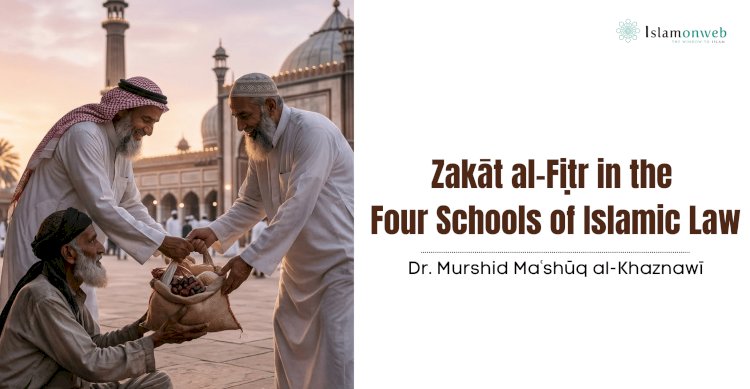
Zakāt al-Fiṭr refers to the charity that becomes due upon the breaking of the fast of Ramaḍān. It is also known as Ṣadaqat al-Fiṭr, and both terms are established in the textual sources. This charity is given at the end of Ramaḍān—during the night of ʿĪd al-Fiṭr and its morning. It is called Zakāt al-Fiṭr because it was prescribed upon the completion of Ramaḍān in the second year after Hijrah, at the very time when the fasting people break their fast. Thus, it is the charity of breaking the fast, or the charity of ʿĪd al-Fiṭr following the completion of the month. It is also referred to as Zakāt Ramaḍān due to its connection with the month itself, and as Zakāt al-Abdān (the charity of the body), since it relates to individuals. The term fiṭrah itself refers to one’s natural disposition, as Allah تعالى says: “The fiṭrah of Allah upon which He created mankind” (al-Rūm: 30), meaning the innate nature upon which they were formed. Here, it signifies a charity given on behalf of the self and the body.
The wisdom behind its legislation is deeply connected to the nature of fasting itself. This act of worship was prescribed for two primary purposes, as explained by the companion ʿAbdullāh ibn ʿAbbās رضي الله عنهما, who said: “The Messenger of Allah ﷺ obligated Zakāt al-Fiṭr as a purification for the fasting person from idle talk and obscenity, and as food for the poor. Whoever gives it before the prayer, it is accepted as zakāt; and whoever gives it after the prayer, it is a charity among charities.”[1] Since human beings are prone to error, and fasting is often affected by minor shortcomings such as idle speech and lapses in conduct, Zakāt al-Fiṭr serves to purify the fast, allowing it to rise to Allah free from these deficiencies.
This meaning is further illustrated by what Imām al-Nawawī relates in al-Majmūʿ from Wakīʿ ibn al-Jarrāḥ رحمه الله, the great ḥadīth scholar and teacher of Imām al-Shāfiʿī, who said: “Zakāt al-Fiṭr for Ramaḍān is like the prostrations of forgetfulness for prayer; it compensates for the deficiency of fasting just as prostration compensates for the deficiency in prayer.”[2]
In this sense, Zakāt al-Fiṭr is not merely a financial obligation; it is a spiritual completion. It purifies the soul from blameworthy traits such as miserliness, perfects the reward of fasting, and nurtures righteous action. At the same time, it fulfils an essential social purpose: enabling the poor and needy to share in the joy of ʿĪd, sparing them from the need to ask on a day of celebration, and bringing happiness into their lives. Among the unique qualities of Ramaḍān is this shared human experience—where the wealthy come to understand hunger and thirst, and thus develop compassion for those who live with it daily.
The jurists differ regarding the ruling of Zakāt al-Fiṭr, and their positions can be summarised into two main views. The majority of scholars hold that Zakāt al-Fiṭr is obligatory upon every Muslim. This is based on the narration of ʿAbdullāh ibn ʿUmar رضي الله عنهما, who said: “The Messenger of Allah ﷺ obligated Zakāt al-Fiṭr from Ramaḍān upon the people: a ṣāʿ of dates or a ṣāʿ of barley, upon every free person or slave, male or female, among the Muslims.”[3] The majority—comprising the Shāfiʿīs, Ḥanafīs, Ḥanbalīs, and a view within the Mālikī school—relied on this ḥadīth and understood the term farada (فرض) in its clear sense of obligation.
The second view holds that Zakāt al-Fiṭr is a Sunnah and not obligatory. This position is reported within the Mālikī school and was adopted by scholars such as al-Aṣamm and al-Ashhab ibn ʿAbd al-ʿAzīz [4].
Conditions for the Obligation of Zakāt al-Fiṭr
The obligation of Zakāt al-Fiṭr is subject to two primary conditions. The first is Islam, which is unanimously agreed upon by the scholars. However, it is reported within the Shāfiʿī school that a non-Muslim may be required to give Zakāt al-Fiṭr on behalf of his Muslim dependents.
The second condition is the ability to pay. This too is agreed upon among the scholars, as Zakāt al-Fiṭr is not required from one who lacks the means, in accordance with the verse: “Allah does not burden a soul beyond its capacity” (al-Baqarah: 286). Nevertheless, the jurists differ in defining what constitutes this ability. The Mālikīs, Shāfiʿīs, and Ḥanbalīs[5] hold that Zakāt al-Fiṭr becomes obligatory upon one who possesses surplus beyond his own sustenance and that of those under his care for the night and day of ʿĪd, provided that this surplus is also beyond his essential needs such as housing and necessary service. They support this view with the ḥadīth of Sahl ibn al-Ḥanẓaliyyah رضي الله عنه, in which the Prophet ﷺ said: “Whoever asks while he has what suffices him is only accumulating fire.” They asked, “O Messenger of Allah, what suffices him?” He replied: “What is enough to provide him with a morning and evening meal.”[6]
In contrast, the Ḥanafīs define the ability to pay as ownership of the niṣāb, the minimum wealth threshold that obligates zakāt, regardless of the type of wealth—whether gold, silver, livestock such as camels, cattle, and sheep, or trade goods[7]. The niṣāb for silver is two hundred dirhams (approximately 600 grams), and for gold, twenty dinars (approximately 85 grams). Whoever possesses this amount in excess of his essential needs—such as food, clothing, housing, weapons, and transport—is obligated to pay Zakāt al-Fiṭr. They reason that one who possesses less than this amount is eligible to receive charity, and therefore it would be inconsistent for charity to be both obligatory upon him and permissible for him to receive. They support this with the ḥadīth of Abū Hurayrah رضي الله عنه, in which the Prophet ﷺ said: “There is no charity except from surplus wealth.”[8]
Upon Whom Zakāt al-Fiṭr Is Obligatory
The jurists differ significantly regarding those upon whom Zakāt al-Fiṭr is due. The Ḥanafīs hold that if a man possesses wealth, he must give Zakāt al-Fiṭr on behalf of himself and those over whom he has legal authority (wilāyah), namely his minor son, minor daughter, and his adult son if he is mentally incapacitated. This is because he has the right to manage their wealth in a manner beneficial to them without requiring their permission, provided they are poor; if they are wealthy, then it is given from their own wealth.
However, the Ḥanafīs do not consider it obligatory for a man to give Zakāt al-Fiṭr on behalf of his adult children, his parents, his relatives, or his wife—whether they are wealthy or poor. This is because, although he may be financially responsible for them if they are in need, his authority over them is limited; as evidenced by the fact that he cannot dispose of their wealth without their consent[9].
The Mālikīs, on the other hand, hold that a man must give Zakāt al-Fiṭr on behalf of himself and all those whose maintenance he is obligated to provide. This includes his poor parents, his poor children—male or female—and his wife, even if she possesses wealth. It also extends to the wife of his poor father. They base this on the narration reported by al-Dāraquṭnī from Ibn ʿUmar رضي الله عنهما: “The Messenger of Allah ﷺ commanded Zakāt al-Fiṭr for the young and old, the free and the slave, from those whom you support,” meaning those under one’s financial care. From this, it is understood that the Mālikīs do not require a person to give Zakāt al-Fiṭr on behalf of his wealthy children or wealthy parents.
The Shāfiʿīs and Ḥanbalīs broadly agree with the Mālikī position, affirming that a person gives Zakāt al-Fiṭr on behalf of himself and everyone whose maintenance is obligatory upon him, though they differ slightly in detail. The Shāfiʿīs state that a man must give it on behalf of himself and those he is required to support among Muslims—whether due to kinship, marriage, or ownership. This includes his ascendants, even if distant, such as grandparents, and his descendants, male or female, if they are poor. He must also give it on behalf of his wife, and even for a divorced wife in a revocable divorce (ṭalāq rajʿī). As for a woman in an irrevocable divorce, he is not required to give on her behalf unless she is pregnant, in accordance with the verse: “And if they are pregnant, then spend on them until they give birth” (al-Ṭalāq: 6).
They also state that Zakāt al-Fiṭr is given on behalf of a servant if his maintenance is not fixed; however, if the servant’s wages are predetermined—whether daily, monthly, or yearly—then he is treated like a hired worker, and no Zakāt al-Fiṭr is due on his behalf, since his maintenance is not obligatory[10].
Time of Obligation and Payment of Zakāt al-Fiṭr
The jurists have differed regarding the exact time at which Zakāt al-Fiṭr becomes obligatory. The first view, held by the Ḥanafīs and a position within the Mālikī school[11], is that its obligation begins at the break of dawn (fajr) on the day of ʿĪd. They base this on the narration of Ibn ʿUmar رضي الله عنهما that the Prophet ﷺ commanded that Zakāt al-Fiṭr be given before people set out for the ʿĪd prayer[12]. Their reasoning is that since the Prophet ﷺ instructed its payment prior to going to the place of prayer, this indicates that its obligation is tied to the day of ʿĪd itself. Furthermore, the very name Zakāt al-Fiṭr suggests that its obligation is connected to the act of breaking the fast, which only occurs at the dawn of the day of ʿĪd. Before that moment, a person is still considered to be fasting, and thus the designation of fiṭr does not apply.
The second view, which is the relied-upon position of the Shāfiʿīs, the Ḥanbalīs, and another opinion within the Mālikī school[13], is that Zakāt al-Fiṭr becomes obligatory at sunset on the last day of Ramaḍān. The practical implications of this difference appear in cases such as birth or death around this time. According to the Shāfiʿīs and Ḥanbalīs, as well as one Mālikī opinion, if a person dies after sunset on the last day of Ramaḍān, Zakāt al-Fiṭr is due on his behalf because he was alive at the time the obligation commenced. In contrast, according to the Ḥanafīs and another Mālikī view, it is not due, as the obligation had not yet begun. Similarly, if a child is born after sunset on the last day of Ramaḍān, the Ḥanafīs and that Mālikī view consider Zakāt al-Fiṭr due on his behalf, as he existed at the time of obligation according to their definition, whereas the Shāfiʿīs and Ḥanbalīs do not consider it due, since he was not present at the moment they define as the time of obligation.
As for the time of performance, the Ḥanafīs generally hold that the time for paying Zakāt al-Fiṭr is flexible, since the command to give it is not restricted to a specific time, similar to zakāt in general. Thus, whenever it is paid, it is considered valid performance rather than delayed compensation, although it remains recommended to give it before proceeding to the ʿĪd prayer, based on the statement of the Prophet ﷺ: “Enrich them on this day.” In contrast, the Mālikīs, Shāfiʿīs, and Ḥanbalīs maintain that delaying it until after the ʿĪd prayer without a valid excuse is sinful, relying on the ḥadīth: “Whoever gives it before the prayer, it is accepted as zakāt; and whoever gives it after the prayer, it is a charity among charities.”[14]
Despite these differences, all jurists agree that Zakāt al-Fiṭr does not lapse if its time passes. Rather, it remains a debt owed to those entitled to it, and it is not discharged except by fulfilling it, since it is a right of the recipients. As for the delay itself, it constitutes a shortcoming in fulfilling the right of Allah, which can only be rectified through repentance and seeking forgiveness.
Regarding giving Zakāt al-Fiṭr in advance, the jurists have expressed three opinions. The first, which is the position of Abū Ḥanīfah, permits giving it even one or two years in advance, treating it analogously to zakāt[15], and it is reported that the Prophet ﷺ accepted advance payment of charity from al-ʿAbbās for two years, which some scholars have considered sound. The second view, held by some Ḥanafīs and Shāfiʿīs, allows it to be given from the beginning of Ramaḍān. Imām al-Nawawī explains this by noting that Zakāt al-Fiṭr is connected to two causes: fasting Ramaḍān and breaking the fast; therefore, if one of these is present, it is permissible to advance it, just as zakāt may be given before the completion of the year once the niṣāb is possessed. However, it is not permitted to give it before Ramaḍān, as that would precede both causes[16]. The third view, held among the Ḥanafīs, Mālikīs, and Ḥanbalīs, permits giving it one or two days before ʿĪd, based on the practice of Ibn ʿUmar [17]رضي الله عنهما, who used to give it a day or two before the day of fiṭr[18].
Amount of Zakāt al-Fiṭr
The jurists are in agreement that the obligatory amount to be given in Zakāt al-Fiṭr is one ṣāʿ from the types of food that are permissible for its payment. However, they differ specifically regarding wheat. The majority of scholars from the Mālikī, Shāfiʿī, and Ḥanbalī schools[19] hold that the required amount for wheat is also one full ṣāʿ. They base this on the narration of Abū Saʿīd al-Khudrī رضي الله عنه, who said: “We used to give Zakāt al-Fiṭr when the Messenger of Allah ﷺ was among us as one ṣāʿ of food, or one ṣāʿ of dates, or one ṣāʿ of barley, or one ṣāʿ of raisins, or one ṣāʿ of dried yogurt, and I continued to give it as I used to give it throughout my life.”[20]
In contrast, the Ḥanafīs hold that the required amount for wheat is half a ṣāʿ, and the same applies to wheat flour[21]. The ṣāʿ referred to in this context is the ṣāʿ of the people of Madinah, as the Prophet ﷺ established the standard of measurement based on their measure. This is indicated in the ḥadīth of Ibn ʿUmar رضي الله عنهما, in which the Prophet ﷺ said: “The measure is according to the measure of the people of Madinah, and the weight is according to the weight of the people of Makkah.”[22] Since the ṣāʿ is a unit of measurement, it must therefore be understood according to the measure used in Madinah during the time of the Prophet ﷺ.
It should also be noted that the exact weight of a ṣāʿ varies depending on the type of food being measured, as different substances have different densities. Therefore, when giving Zakāt al-Fiṭr, care should be taken to ensure that the quantity corresponds to a full ṣāʿ of the specific item being given. The Prophetic ṣāʿ is defined as four mudd, which is equivalent to four handfuls using the two hands of an average person—neither tightly closed nor fully open. In approximate modern weights, this corresponds to about 2200 grams of wheat, 2100 grams of barley, 2075 grams of flour, 2675 grams of rice, 1800 grams of dates, and 2425 grams of raisins. It’s always better to use measurement rather weighing to ensure the required amounts is given.
Type of Item in Zakāt al-Fiṭr
The jurists have differed regarding the type of item that must be given in Zakāt al-Fiṭr, and their views may be summarised into three positions. The first view, held by the Mālikīs and Shāfiʿīs[23], is that the obligation is fulfilled by giving the staple food of the land. If a person is unable to access the common staple of his region, then he may give from his own staple food.
The second view, held by the Ḥanbalīs [24], is that the obligation is restricted to the specific types mentioned in the ḥadīth of Abū Saʿīd al-Khudrī رضي الله عنه, who said: “We used to give Zakāt al-Fiṭr when the Messenger of Allah ﷺ was among us on behalf of every young and old, free and slave, as one ṣāʿ of food, or one ṣāʿ of dried yogurt, or one ṣāʿ of barley, or one ṣāʿ of dates, or one ṣāʿ of raisins. We continued to give it in this manner until Muʿāwiyah ibn Abī Sufyān came to Madinah as a pilgrim or visitor and addressed the people from the pulpit, saying: ‘I see that two mudd of the wheat of Syria are equivalent to one ṣāʿ of dates.’ The people then adopted that.” Abū Saʿīd added: “As for me, I will continue to give it as I used to give it for as long as I live.”[25] Based on this, the Ḥanbalīs maintain that the specified items—wheat, barley, dates, dried yogurt, and raisins—form the basis of payment, and if these are unavailable, then any staple food from grains or fruits suffices.
The third view, adopted by the Ḥanafīs, holds that the primary items are wheat, barley, and dates, and these serve as reference standards for other types. If a person gives from other categories, then their value is assessed in relation to these items, and the equivalent amount is given accordingly. On this basis, the Ḥanafīs also permit giving the monetary value in Zakāt al-Fiṭr, and they even consider it preferable, as it allows the poor to fulfil their needs more effectively on the day of ʿĪd.
In contrast, the majority of scholars do not permit giving monetary value, due to the absence of explicit textual evidence for it. Nevertheless, it is evident that giving value in the form of money may, in many cases, be more beneficial and practical for the recipient, as it enables them to purchase what they truly need—whether food, clothing, or essential expenses such as rent. When payment is made in the form of food items, the recipient may incur additional effort or loss in selling them if they do not meet his immediate needs, especially when such items are of lesser demand or quality in the market. In such cases, the intended purpose of Zakāt al-Fiṭr—namely, to relieve need and provide sufficiency—may not be fully realised. It becomes clear, therefore, that the objective of this charity is not tied to the items themselves, but to the welfare of the poor and providing what is most beneficial for them.
Recipients of Zakāt al-Fiṭr
The jurists have differed regarding the rightful recipients of Zakāt al-Fiṭr, and their views may be summarised into two primary positions. The first view, held by the majority of scholars from the Ḥanafī, Shāfiʿī, and the predominant Ḥanbalī opinion[26], is that its distribution follows the same categories as Zakāt al-Māl. Accordingly, it may be given to any of the eight groups mentioned in the Qur’ān: “Indeed, alms are only for the poor, the needy, those employed to collect them, those whose hearts are to be reconciled, for freeing captives, for those in debt, in the cause of Allah, and for the stranded traveller—an obligation from Allah. And Allah is Knowing and Wise” (al-Tawbah: 60).
Within this view, the Shāfiʿīs go further and hold that it should be distributed among all eight categories if they are present; otherwise, it is given to those available among them. The Ḥanafīs and Ḥanbalīs, however, do not require distribution across all categories, permitting its allocation even to a single group from among the eight.
The second view, held by the Mālikīs and another narration from the Ḥanbalīs[27], is that Zakāt al-Fiṭr is specifically designated for the poor and the needy alone, and not for all categories of Zakāt al-Māl. They base this on the ḥadīth of Ibn ʿAbbās رضي الله عنهما, in which the Prophet ﷺ said: “The Messenger of Allah ﷺ prescribed Zakāt al-Fiṭr as a purification for the fasting person from idle talk and obscenity, and as food for the poor.” This explicit designation of it as nourishment for the poor indicates, in their view, that its primary and exclusive purpose is to support them.
Place of Payment
The general principle regarding Zakāt—whether it is Zakāt on wealth or Zakāt al-Fiṭr—is that it should be paid in the locality where the obligation falls upon the individual. Thus, it is distributed among the eligible recipients in the place where the payer resides at the time it becomes due. Transferring it to another location is not permitted if deserving recipients are present locally. This is based on the well-known instruction of the Prophet ﷺ to Muʿādh ibn Jabal رضي الله عنه when sending him to Yemen: “…Inform them that Allah has made charity obligatory upon them, to be taken from their rich and given back to their poor.”[28]
However, the Ḥanafīs made certain exceptions to this rule. They permitted transferring Zakāt al-Fiṭr to relatives in need, as it combines charity with maintaining family ties. It is also allowed, in their view, to transfer it to a community that is in greater need, or to individuals who are more righteous, more beneficial to the Muslim community, or more deserving in other valid considerations—such as students of knowledge or those residing in more difficult circumstances.
As evidence, they cite the report from Ṭāwūs, in which Muʿādh رضي الله عنه said to the people of Yemen: “Bring me garments—fine or ordinary—in place of barley and corn for charity; it will be easier for you and better for the companions of the Prophet ﷺ in Madinah.”[29] This indicates the permissibility of transferring charity from one region to another when there is a recognised benefit.
Translated from Arabic original Article link : https://tinyurl.com/3cbrf5yr
Citations:
[1] Narrated by Abū Dāwūd, Ibn Mājah, al-Dāraquṭnī, and al-Ḥākim, who authenticated it.
[2] Al-Majmūʿ by al-Nawawī, 6/140.
[3] Reported by al-Bukhārī.
[4] Al-Muqaddimāt al-Mumahhidāt (1/332), Bidāyat al-Mujtahid (2/40), Al-Dhakhīrah by al-Qarāfī (3/154), and Al-Qawānīn al-Fiqhiyyah (p. 75)
[5] Mawāhib al-Jalīl by al-Ḥaṭṭāb (2/366), Al-Majmūʿ by al-Nawawī (6/110), Al-Inṣāf by al-Mardāwī (3/164).
[6] Narrated by Abū Dāwūd and Ibn Ḥibbān
[7] Tabyīn al-Ḥaqāʾiq by al-Zaylaʿī with the marginal notes of al-Shiblī (1/306).
[8] Reported by Imām Aḥmad ibn Ḥanbal.
[9] Al-Baḥr al-Rāʾiq by Ibn Nujaym (2/272).
[10] Mawāhib al-Jalīl by al-Ḥaṭṭāb (3/264), Al-Majmūʿ by al-Nawawī (6/113), Al-Furūʿ by Ibn Mufliḥ (4/216).
[11] Fatḥ al-Qadīr by Ibn al-Humām (2/297), Sharḥ Mukhtaṣar Khalīl by al-Kharashī (2/228).
[12] Reported by al-Bukhārī and Muslim.
[13] Mughnī al-Muḥtāj by al-Shirbīnī (1/401), Al-Mughnī by Ibn Qudāmah (3/89), Sharḥ Mukhtaṣar Khalīl by al-Kharashī (2/228)
[14] Reported by Abū Dāwūd and Ibn Mājah.
[15] See: Al-Mabsūṭ by al-Sarakhsī (6/110).
[16] See: Al-Majmūʿ by al-Nawawī (6/126).
[17] Manḥ al-Jalīl by ʿAlīsh (2/106), Al-Mughnī by Ibn Qudāmah (3/89).
[18] Reported by al-Bukhārī.
[19] See: Sharḥ Mukhtaṣar Khalīl by al-Kharashī (2/228), Rawḍat al-Ṭālibīn (2/301), Al-Mughnī by Ibn Qudāmah (3/81).
[20] Reported by al-Bukhārī and Muslim.
[21] Al-Ḥāwī al-Kabīr by al-Māwardī (3/380).
[22] Reported by Abū Dāwūd, al-Nasāʾī, and al-Ṭabarānī; authenticated by al-Albānī in Ṣaḥīḥ al-Nasāʾī.
[23] See: Sharḥ Mukhtaṣar Khalīl by al-Kharashī (2/229), Rawḍat al-Ṭālibīn by al-Nawawī (2/303).
[24] Al-Mughnī by Ibn Qudāmah (3/85).
[25] Reported by al-Bukhārī and Muslim.
[26] See: Ḥāshiyat Ibn ʿĀbidīn (2/368), Al-Majmūʿ by al-Nawawī (6/186), Kashshāf al-Qināʿ by al-Buhūtī (2/246).
[27] Ḥāshiyat al-ʿAdawī (1/645), Al-Inṣāf by al-Mardāwī (3/132).
[28] Reported by al-Bukhārī and Muslim.
[29] Reported by al-Bukhārī in a muʿallaq (suspended) form.
Disclaimer
The views expressed in this article are the author’s own and do not necessarily mirror Islamonweb’s editorial stance.


Related Posts


















Leave A Comment