
Muslim World Marks Eid Across Two Days as Al-Aqsa Closure and Regional Tensions Cast Shadow
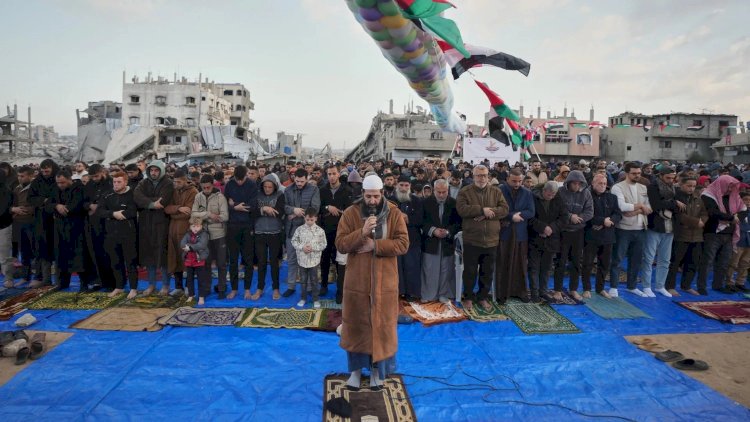
Across much of the world, Muslims are marking Eid al-Fitr 2026, celebrations this year split between Friday and Saturday due to differing moon-sighting outcomes.
In Saudi Arabia and across the Gulf—including the UAE, Qatar, Kuwait, Bahrain, and Oman—Eid was observed on Friday after the completion of 30 days of Ramaḍān. Large congregations gathered for prayers, followed by traditional celebrations with family and community.
Across Africa, countries such as Egypt, Nigeria, and South Africa also marked Eid on Friday, while many Muslim communities in Europe and North America joined in the same day based on coordinated announcements and calculations.
Meanwhile, India, Pakistan, Bangladesh, and Sri Lanka are celebrating Eid on Saturday after the crescent moon was not sighted on Thursday evening in most regions, completing a full 30 days of fasting. However, limited local sightings in parts of southern India led to Friday observances in some areas.
Amid the festive atmosphere, ongoing geopolitical tensions have tempered celebrations in parts of the region. Escalation following reported US–Israeli strikes on Iran, and Iran’s counter actions affecting areas within the Gulf, has heightened caution across West Asia.
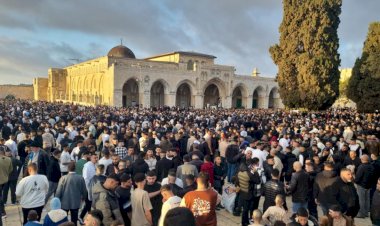
In Jerusalem, Eid was marked under severe restrictions. Israeli authorities prevented the holding of Eid prayers at Al-Aqsa Mosque—in what witnesses described as the first such closure since 1967. Heavy police deployment across the Old City blocked worshippers from accessing the mosque, with barriers set up at key entrances.
Clashes were reported near Bab al-Sahira, where Israeli police fired tear gas at Palestinians attempting to perform Eid prayers. At least one person was detained. Worshippers were also dispersed from areas including Bab al-Amud and Bab al-Asbat, where small groups had gathered for prayer.
Inside Al-Aqsa, only a limited number of custodians and Waqf staff were allowed to perform the prayer, while takbīrāt echoed from within the compound without public participation. The mosque has remained closed since late February, with authorities citing security concerns.
Despite condemnations from several Muslim countries, restrictions remain in place, with residents describing the closure—particularly during Ramaḍān and Eid—as unjustified and deeply painful.
Even with differing dates and difficult circumstances in some regions, the spirit of Eid endures—marked by prayer, charity, and togetherness, alongside a renewed sense of empathy for those whose celebrations are overshadowed by hardship.
Disclaimer
The views expressed in this article are the author’s own and do not necessarily mirror Islamonweb’s editorial stance.

Related Posts















Leave A Comment