
Fasting in the Month of Rajab: Juristic Rulings and the Authenticity of Its Hadiths
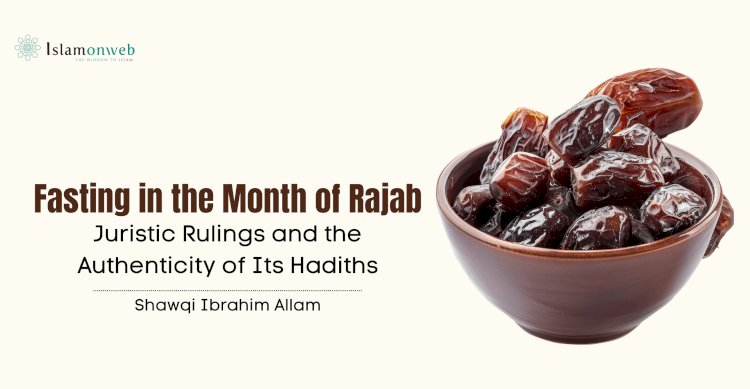
With the arrival of the sacred month of Rajab, questions frequently arise regarding the ruling on fasting during this month and the authenticity of the hadiths associated with its virtue. Confusion is often fueled by claims that fasting Rajab is an innovation or based on unreliable narrations.
This article presents a clear, scholarly clarification based on the fatwa titled “The Ruling on Fasting the Month of Rajab and Clarifying the Authenticity of the Hadiths Reported Concerning It”, issued on 23 April 2019 by Shawqi Ibrahim Allam, the Grand Mufti of Egypt, and published on the Dar al-Ifta website in Arabic. Drawing upon classical juristic consensus, principles of hadith criticism, and established legal maxims, the fatwa explains the permissibility and recommendation of fasting in Rajab, while carefully distinguishing between authentic, weak, and fabricated narrations.
It addresses the question of whether some people’s claim that singling out the month of Rajab for fasting is a prohibited innovation (bidʿah) and that the jurists who considered it, such as the Shāfiʿī scholars, were mistaken, allegedly relying on weak or fabricated hadiths.
This piece aims to offer readers a balanced, traditional, and well-grounded understanding rooted in the legacy of the scholars and faithful to the methodology of Ahl al-Sunnah wa al-Jamāʿah.
Is it permissible to fast in the month of Rajab?
The correct view according to the majority of jurists is that observing voluntary fasts in the month of Rajab is recommended, just as voluntary fasting is recommended throughout the year. Although there is no rigorously authentic hadith that specifically establishes a unique virtue for fasting in Rajab itself, fasting during this month falls under the general Islamic texts that encourage fasting in absolute terms.
Moreover, some of the narrations reported regarding fasting in Rajab—while weak—are of the type that many scholars consider acceptable to act upon in matters of virtuous deeds (faḍāʾil al-aʿmāl). Therefore, fasting in Rajab is permissible and commendable as a form of voluntary worship.
The Month of Rajab Is One of the Sacred Months
Rajab is one of the sacred months mentioned by Allah عزّ وجلّ in the clear Qur’anic text. Allah says:
“Indeed, the number of months with Allah is twelve months in the Book of Allah since the day He created the heavens and the earth; of them, four are sacred. That is the upright religion, so do not wrong yourselves therein.”
(Qur’an, al-Tawbah 9:36)
These sacred months are: Dhū al-Qaʿdah, Dhū al-Ḥijjah, Muḥarram, and Rajab, as clarified by the purified Sunnah. Imām al-Bukhārī and Imām Muslim narrate from Abū Bakrah رضي الله عنه that the Prophet ﷺ said:
“Time has returned to its original state as it was on the day Allah created the heavens and the earth. The year is twelve months, of which four are sacred: three consecutive months—Dhū al-Qaʿdah, Dhū al-Ḥijjah, and Muḥarram—and Rajab of Muḍar, which comes between Jumādā and Shaʿbān.”
These sacred months are the most honourable of the year, in addition to the month of Ramaḍān, which is the most virtuous of them all without exception.
(See: Ḥāshiyat al-Sharqāwī ʿalā al-Taḥrīr, 1/426)
Rajab as a Revered Month Among the Arabs
Rajab was also among the months highly revered by the Arabs. They gave it many names, following their custom that when they feared or honoured something, they multiplied its names. The abundance of names indicates the nobility or perfection of the thing named, as noted by al-Fayrūzābādī in Baṣāʾir Dhawī al-Tamyīz (1/88).
The scholar Ibn Dihyah al-Kalbī listed eighteen names for Rajab in his book Adāʾ mā Wajaba min Bayān Waḍʿ al-Waḍḍāʿīn fī Rajab (p. 30). Among them are:
- al-Fard (the Singular): because the other sacred months—Dhū al-Qaʿdah, Dhū al-Ḥijjah, and Muḥarram—are consecutive, while Rajab stands alone.
- al-Aṣamm (the Silent): because no sound of weapons was heard in it, as warfare was suspended during the month.
And there are other names mentioned by Ibn Dihyah indicating its honoured status.
The Virtue of Rajab in the Prophetic Sunnah
Imām Abū Muḥammad al-Ḥasan al-Khallāl compiled a collection of reports concerning the virtues of Rajab. Ibn ʿAsākir authored a separate work on the virtue of Rajab, and Ibn Dihyah al-Kalbī wrote the aforementioned book Adāʾ mā Wajaba. Ḥāfiẓ Ibn Ḥajar al-ʿAsqalānī also gathered the narrations related to Rajab and clarified their grades in Tabyīn al-ʿAjab bimā Warada fī Faḍl Rajab. Likewise, Ḥāfiẓ Ibn Rajab al-Ḥanbalī discussed it comprehensively in Laṭāʾif al-Maʿārif fīmā li-Mawāsim al-ʿĀm min al-Waẓāʾif.
Among the narrations related to Rajab is what Imām al-Nasāʾī and others report from Usāmah ibn Zayd رضي الله عنهما. He said:
“I said, ‘O Messenger of Allah, I do not see you fasting in any month as much as you fast in Shaʿbān.’ He ﷺ replied: ‘That is a month which people neglect between Rajab and Ramaḍān.’”
Ibn Ḥajar comments in Tabyīn al-ʿAjab (p. 26):
“This indicates a resemblance between Rajab and Ramaḍān, and that people busy themselves with acts of worship in Ramaḍān while neglecting similar acts in Shaʿbān. For this reason, the Prophet ﷺ used to fast in it. His singling it out for fasting suggests the virtue of Rajab and that this was well known and established among them.”
The Virtue of Fasting in Rajab
Among the reports concerning the virtue of fasting some days of Rajab is what Imām Abū Dāwūd narrates from Mujībah al-Bāhilīyyah, from her father or uncle. He said that he came to the Messenger of Allah ﷺ, then left and returned a year later, having changed in appearance and condition. The Prophet ﷺ asked:
“What has changed you, when you used to be of good appearance?”
He replied: “I have not eaten any food except at night since I left you.”
The Messenger of Allah ﷺ said:
“Why did you torture yourself?”
Then he said:
“Fast the month of patience (i.e., Ramaḍān), and one day from every month.”
He asked for more, and the Prophet ﷺ gradually increased it until he said:
“Fast from the sacred months and leave (some days), fast from the sacred months and leave,”
repeating it three times and gesturing with three fingers, closing them and then opening them.
Also reported by Imām al-Bayhaqī in Faḍāʾil al-Awqāt from Anas ibn Mālik رضي الله عنه that the Prophet ﷺ said:
“In Paradise there is a river called Rajab, whiter than milk and sweeter than honey. Whoever fasts one day in Rajab, Allah will give him to drink from that river.”
Clarifying the Authenticity of the Hadiths Reported about Fasting in the Month of Rajab
It should be clarified that none of the hadiths reported specifically regarding the virtue of fasting in the month of Rajab are sound (ṣaḥīḥ). In fact, no authentic hadith exists in this particular chapter, as stated by the leading hadith authorities. Ḥāfiẓ Ibn Ḥajar al-ʿAsqalānī says in Tabyīn al-ʿAjab (p. 23):
“No authentic hadith has been reported concerning the virtue of the month of Rajab, nor concerning fasting in it, nor fasting any specific part of it, nor standing in prayer on any particular night of it—nothing that is suitable to be used as proof.”
Imām al-Bayhaqī narrates from Abū Qilābah رضي الله عنه that he said: “In Paradise there is a palace for those who fast in Rajab.” Imām Aḥmad commented on this report:
“Even though it is mawqūf (stopped) at Abū Qilābah, who is from the Tābiʿīn, someone like him would not say such a statement except based on something conveyed to him from one above him—someone who receives revelation. And Allah is the Giver of success.”
As for the narrations reported regarding fasting Rajab or fasting some days of it, although they are weak, they fall under the category of reports acted upon in matters of virtuous deeds (faḍāʾil al-aʿmāl), according to what is well established among the majority of scholars. This has been transmitted by Imām al-Nawawī and others. Imām al-Nawawī states in al-Adhkār (p. 8):
“The scholars among the hadith experts, jurists, and others have said: it is permissible and recommended to act upon weak hadiths in matters of virtues, encouragement, and warnings, so long as the hadith is not fabricated.”
He also states in al-Taqrīb wa al-Taysīr fī Maʿrifat Sunan al-Bashīr al-Nadhīr (p. 48):
“According to the scholars of hadith and others, leniency is permitted regarding chains of transmission, and it is permissible to narrate and act upon weak hadiths—other than fabricated ones—without clarifying their weakness, in matters other than the attributes of Allah and legal rulings such as ḥalāl and ḥarām. This includes stories, virtues of deeds, exhortations, and the like, which have no connection to creed or legal rulings. And Allah knows best.”
Likewise, the jurist Ibn Ḥajar al-Haytamī states in al-Fatāwā al-Fiqhiyyah al-Kubrā (2/54):
“It has been established by consensus that weak, mursal, munqaṭiʿ, muʿḍal, and mawqūf reports are acted upon in matters of virtuous deeds. There is no doubt that fasting in Rajab is among virtuous deeds; thus, weak hadiths and similar reports suffice in this regard. No one rejects this except an ignorant and deluded person.”
Furthermore, even if none of these weak narrations existed, the other authentic and general texts that encourage voluntary fasting absolutely are sufficient to establish its permissibility. The established principle among the scholars is that a general text remains upon its generality, and an unrestricted text remains unrestricted, unless a specific qualifier or restriction is established. See: al-Baḥr al-Muḥīṭ by al-Zarkashī (5/8) and al-Talwīḥ ʿalā al-Tawḍīḥ by al-Taftāzānī (1/117).
Among these authentic general texts is what Imām al-Bukhārī narrates from Abū Hurayrah رضي الله عنه that the Prophet ﷺ said:
“Every deed of the son of Ādam is for him, except fasting; it is for Me, and I shall reward it. And the smell from the mouth of a fasting person is more pleasant to Allah than the fragrance of musk.”
Also among them is what Imām Aḥmad narrates from Ṣadaqah al-Dimashqī that a man came to Ibn ʿAbbās رضي الله عنهما asking him about fasting. He said that the Messenger of Allah ﷺ used to say:
“Indeed, among the best of fasting is the fasting of my brother Dāwūd: he would fast one day and break his fast the next.”
The Juristic Views on Fasting in the Month of Rajab
The jurists have explicitly mentioned and affirmed the recommendation of fasting in the month of Rajab in their authoritative works. This is the position of the Ḥanafī, Mālikī, and Shāfiʿī schools of law.
The Ḥanafī School
Among the clear Ḥanafī texts is what appears in al-Fatāwā al-Hindiyyah (1/202):
“The desirable fasts are of various kinds: the first is fasting in Muḥarram, the second is fasting in Rajab, and the third is fasting in Shaʿbān and fasting on the day of ʿĀshūrāʾ.”
This text explicitly places fasting in Rajab among the recommended voluntary fasts.
The Mālikī School
As for the Mālikīs, it is stated in Mukhtaṣar Khalīl and its commentary by Aḥmad al-Dardīr (1/516):
“It is recommended to fast in Muḥarram, Rajab, and Shaʿbān, as well as the rest of the four sacred months. The most virtuous of them is Muḥarram, then Rajab, then Dhū al-Qaʿdah, then Dhū al-Ḥijjah.”
This establishes Rajab as one of the recommended months for fasting within the Mālikī school.
The Shāfiʿī School
The Shāfiʿī position is articulated by Shaykh al-Islām Zakariyyā al-Anṣārī in Asnā al-Maṭālib (1/432):
“The best months for fasting after Ramaḍān are the sacred months: Dhū al-Qaʿdah, Dhū al-Ḥijjah, Muḥarram, and Rajab—based on the report narrated by Abū Dāwūd and others: ‘Fast from the sacred months and leave; fast from the sacred months and leave; fast from the sacred months and leave.’
The command to ‘leave’ was directed to the one addressed because frequent fasting was difficult for him, as explicitly stated in the narration. As for one for whom it is not difficult, fasting all of them has virtue. The best of them is Muḥarram, based on the hadith in Ṣaḥīḥ Muslim: ‘The best fasting after Ramaḍān is the month of Allah, al-Muḥarram.’ Then come the remaining sacred months. The apparent meaning is their equality, though Rajab is given precedence to avoid disagreement with those who preferred it over the other sacred months, followed by Shaʿbān.”
The Ḥanbalī School
As for the Ḥanbalīs, they held that singling out Rajab alone for fasting is disliked (makrūh). This is one of the distinctive views of their school. However, this dislike is removed by fasting some of it and breaking the fast on at least one day, or by fasting another month along with it—even if that month does not immediately follow Rajab.
(See: al-Inṣāf by ʿAlāʾ al-Dīn al-Mardāwī, 3/346–347)
Statements of Leading Scholars
Ḥāfiẓ Ibn al-Ṣalāḥ stated in his Fatāwā (p. 80) that no scholar of the Ummah ever accused a person of sin for fasting the entire month of Rajab.
The eminent jurist Ibn Ḥajar al-Haytamī strongly condemned those who claimed that fasting in Rajab is prohibited. In al-Fatāwā al-Fiqhiyyah al-Kubrā (2/53), when asked about such claims, he said:
“As for this jurist’s persistence in forbidding people from fasting in Rajab, it is ignorance on his part and reckless audacity against this purified Sharīʿah. If he does not retract, it becomes obligatory upon the judges of the Sharīʿah to restrain and discipline him severely, in a manner that deters him and others like him from recklessness in the religion of Allah.
It is as though this ignorant person is deceived by what is narrated—that Hellfire is stoked year after year for those who fast in Rajab—while he does not realize that this is a false and fabricated report whose narration is unlawful, as stated by Shaykh Abū ʿAmr Ibn al-Ṣalāḥ.”
The Fatwā of al-ʿIzz ibn ʿAbd al-Salām
Ibn Ḥajar al-Haytamī also quoted the decisive fatwā of Sulṭān al-ʿUlamāʾ al-ʿIzz ibn ʿAbd al-Salām in refutation of those who forbade fasting in Rajab. He was asked about reports attributed to some hadith scholars discouraging fasting in Rajab and magnifying its sanctity, and whether a vow to fast the entire month is valid. He replied:
“A vow to fast it is valid and binding, and one draws closer to Allah through such an act. Whoever forbids fasting in Rajab is ignorant of the foundations of the Sharīʿah. How could it be forbidden when none of the scholars who codified the Sharīʿah mentioned its inclusion among disliked fasts? Rather, fasting it is an act of devotion to Allah, due to the authentic hadiths encouraging fasting, such as the saying of the Prophet ﷺ:
‘Allah says: Every deed of the son of Ādam is for him except fasting,’
and his saying ﷺ: ‘The smell from the mouth of a fasting person is more pleasant to Allah than the fragrance of musk,’
and his saying ﷺ: ‘Among the best of fasting is the fasting of my brother Dāwūd; he used to fast one day and break his fast the next.’
Dāwūd عليه السلام used to fast without restricting it to any month other than Rajab. Whoever venerates Rajab in a manner other than how the pre-Islamic people venerated it is not imitating them. Not everything they did is forbidden unless the Sharīʿah explicitly prohibited it or the legal principles necessitate its abandonment. Truth is not abandoned simply because falsehood’s people practiced something.
The one who forbids fasting in Rajab is an ignorant person known for ignorance, and it is not permissible for a Muslim to follow him in religion, for taqlīd is only valid with one well known for knowledge of Allah’s rulings and their foundations. Whoever follows him has been deceived in his religion.”
Refuting the Claim that the Shāfiʿīs Relied on Fabricated Hadiths to Recommend Fasting in Rajab
The claim mentioned in the question—that the Shāfiʿī scholars based their recommendation of fasting in Rajab on a fabricated (mawḍūʿ) hadith—is false and unfounded. The eminent jurist Ibn Ḥajar al-Haytamī explicitly refuted this assertion in al-Fatāwā al-Fiqhiyyah al-Kubrā (2/54), stating:
“Many fabricated hadiths have indeed been narrated regarding the virtue of fasting in Rajab, but our Imams and others never relied upon them in recommending its fasting—far be it from them to do so.”
This clarifies that while fabricated narrations exist on the topic, they were never the basis for the Shāfiʿī position, nor for the position of other reliable scholars.
Fasting in Rajab as Part of Virtuous Deeds
A Muslim should be keen to observe virtuous deeds, among which is fasting in the month of Rajab—whether fasting the entire month, part of it, or even a single day in one’s lifetime—so as to partake in its virtue. al-Nawawī states in al-Adhkār (p. 8):
“You should know that whoever learns of something concerning virtuous deeds should act upon it, even if only once, so that he may be among those who attain its virtue. He should not abandon it altogether; rather, he should do whatever is easy for him of it—based on the authentic, agreed-upon hadith of the Prophet ﷺ:
‘When I command you to do something, do of it whatever you are able.’”
Conclusion
Based on the above, fasting in the month of Rajab is recommended. Although no authentic hadith establishes a specific, exclusive virtue for fasting Rajab in particular, it clearly falls under the general Islamic texts that encourage voluntary fasting in absolute terms. In addition, the weak narrations reported on this subject, so long as they are not fabricated, are acted upon by the scholars in the domain of virtuous deeds.
And Allah, Glorified and Exalted, knows best.
The article is translation of fatwas published in the below link :https://tinyurl.com/463uxhky
Disclaimer
The views expressed in this article are the author’s own and do not necessarily mirror Islamonweb’s editorial stance.

Related Posts











Leave A Comment