
The Tawhidic Mind and Systems Thinking
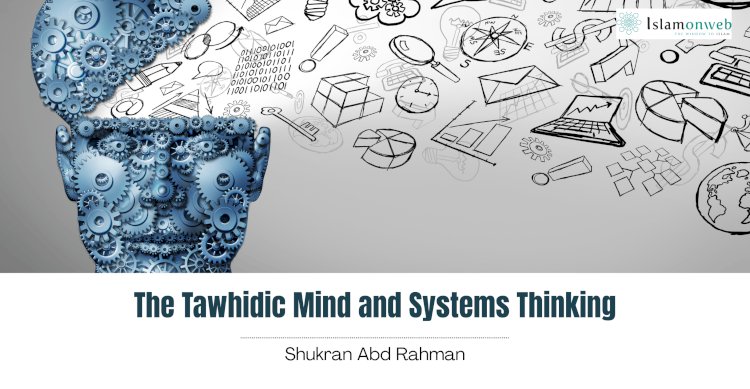
Modern organisational decision-making often emphasises strategic thinking, with a focus on achieving specific goals and strengthening the organisation’s competitive advantage. However, relying solely on strategic thinking may lead to siloed actions, where initiatives are well executed in isolation but lack coherence across the broader organisational system. At times, such initiatives may also become misaligned with wider environmental and societal considerations, ultimately resulting in the poor attainment of broader organisational objectives and sustainable outcomes (Asma Ismail, 2025). In contrast, systems thinking promotes a holistic approach that integrates multiple perspectives, considers interrelationships between units in the organisation, and anticipates the long-term implications of decisions. This approach aligns with the Tawhidic Mind, a unified way of thinking grounded in the principle of tawhid, which emphasises the unity of knowledge, effort, and purpose in addressing complex organisational challenges that require meaningful and sustained transformation.
By emphasising the unification of knowledge, ideas, and activities, a Tawhidic mindset encourages organisations to synergise the functions of diverse agencies, information streams, and data sources in a structured and purposeful manner, fostering outcomes that are holistically aligned. In other words, it integrates knowledge and action, enabling organisations to coordinate resources and utilise information to chart a clear path toward achieving meaningful and well-aligned outcomes.
Conversely, without such integration, actions may become fragmented, misaligned, or siloed, leading to solutions that may appear efficient in one area but prove counterproductive when viewed across the system as a whole. Decisions taken in isolation risk overlooking critical interdependencies, generating unintended consequences, and potentially neglecting ethical, social, or environmental considerations. In this sense, the absence of a Tawhidic mind and systems-oriented approach may produce outcomes that appear strategically sound in the short term but ultimately fail to achieve holistic, sustainable, and ethically coherent objectives.
In an organisation, work processes and their delivery should integrate knowledge, coordinate organisational roles, and synthesise evidence to develop solutions, design interventions, and guide decision-making. Comprehensive information is essential for shaping direction and charting the way forward. This aligns closely with the principles of systems thinking, which enable an organisation to synchronise its operations with strategic goals, ensuring that daily activities, services, and mechanisms contribute meaningfully to long-term objectives.
Drawing from the Qur’anic guidance, verse 4 of Surah As-Ṣaff states: “Indeed, Allah loves those who stand in His way in a row, as if they were a structure joined firmly.” This verse underscores the importance of working collectively in a row (ṣaffan), resembling a solid structure (ka’annahum bunyānan marṣūṣ), to accomplish shared missions. It provides a profound metaphor for collective strength and purposeful alignment, illustrating that effective collective action relies on integration and coordination, both are the principles that mirror systems thinking in organisational practice. Just as the verse highlights unity and cohesion, organisations function as integrated systems in which coordinated parts align toward shared goals. Such alignment strengthens coherence, reduces fragmentation, and enhances the system’s capacity to achieve meaningful, sustainable, and impactful outcomes.
The Row (Saff)
The concept of Ṣaffan (row) is metaphorically described as a strong building or a firmly bonded structure (ka’annahum bunyānan marṣūṣ), symbolizing unity and harmony despite the diversity of individuals. The terms “row” and “solid building” convey a powerful message about coherence, discipline, and purposeful collaboration. Specifically, the concept of a row reflects the interconnectedness of all components within an establishment, emphasizing both discipline and intentionality. It illustrates how members of a group, organization, or institution should operate collectively, with coherence and unity, when carrying out missions that require shared responsibility. This underscores the importance of individuals in an organization acting as a ṣaff, that is a line or row of people working together toward common objectives.
The Tightly Bonded Structure
The metaphor of Bunyānan Marṣūṣ, or a firm, tightly bonded structure, emphasizes the need for strong relationships among individuals of diverse backgrounds and competencies. It suggests that the strength of these bonds can be reinforced through their connection with God and the universe. The metaphor (a) underscores the necessity of a system to govern human life and shape activities; (b) highlights the importance of an integrated whole that enables high levels of effectiveness and efficiency; and (c) reinforces the need to form a soundly competitive organization, a cohesive society, an efficient workplace system, or a united nation.
The verse illustrates that the uniqueness of individuals does not lead to division or the functioning of separate units. This is because they are guided by the spirit of unity and their commitment to worship God, wherein work is internalized as Ibadah. Such alignment allows them to function collectively as part of a greater whole. The analogy of a tightly bonded structure extends beyond its immediate context and resonates closely with the principles of systems thinking.
The Systems Thinking
Systems thinking emerged in the mid-20th century, drawing on developments in biology, cybernetics, engineering, psychology, and organizational development. Key contributors like Ludwig von Bertalanffy, who introduced General Systems Theory, emphasized that living systems cannot be fully understood by examining their components in isolation. Instead, the meaning of an action or event actually arises from the relationships, feedback loops, and patterns among the components of the system. Systems thinking later expanded through scholars like Peter Senge, who applied it to organizational learning and societal transformation.
At its core, systems thinking promotes an appreciation of interconnectedness, dynamic interactions, and the need for coordinated, synergistic action. In short, it encourages us to understand how different parts are connected and how they influence one another. It highlights the importance of coordinated and collaborative action to achieve effective outcomes. For example, in an organization, all departments, administrative functions, technological systems, and financial support must work together as an integrated system rather than acting independently.
The Strategic Thinking versus Systems Thinking
Strategic thinking is primarily concerned with direction setting, competitive positioning, and organisational advantage. It enables organisations to anticipate future possibilities, set long-term directions, and make decisions that position the organisation advantageously. It necessitates organisation leaders to understand different perspectives, act with clear purpose, and ensure present decisions and actions support the achievement of future goals. (Liedtka, 1998). Complementing this perspective is systems thinking, a holistic approach to understanding how parts of a system interact, influence one another, and contribute to the behavior of the whole. It emphasizes interrelationships, continuous improvement feedback, and long-term system dynamics (Senge, 1990). The emphasis is for organisation to recognise complexity, interdependence, and how different parts in the organisation work together within a larger system to achieve shared outcomes (Senge, 1990).
Taken together, effective thinking and action in organisations require the ability to see issues from multiple perspectives, act deliberately with clear purpose, and ensure that current actions contribute to long-term goals. In short, strategic thinking is goal-oriented and forward-looking, while systems thinking is relational and integrative. In this regard, the call to stand as a “solid structure” (bunyānan marṣūṣ) does not only demand strategic alignment but also requires structural cohesion, which represents the embodiment of systems thinking. This requires deep unity, cohesion, and mutual support, where individuals and groups in all units are firmly connected, working together with shared purpose, discipline, and commitment so that the collective effort becomes strong, stable, and resilient.
In short, while strategic thinking emphasizes specific goals and positioning, systems thinking requires a holistic view that integrates perspectives, disciplines, and actions into one unified whole (Senge, 1990). The Qur’anic metaphor reinforces that achieving meaningful outcomes requires both, the strategic sense of direction and a systems-based commitment to collective integration.
The Need for Tawhidic Thinking
The Qur’anic metaphor of a row which functions as a solid building powerfully mirrors the modern challenge of addressing and solving complex global issues. Contemporary problems, such as climate change, pandemics, economic interdependence, technological disruption, workforce issues, and moral degradation cannot be solved in isolation. They require integrated perspectives, coordinated action, and collective intelligence. The Qur’an’s emphasis on structural unity thus becomes a timeless reminder that fragmented efforts lead to fragmented outcomes. In contrast, structured collaboration, mutual support, and aligned intentions enhance the probability of success.
In operationalizing the concept of As-Ṣaff as Solid Structure, the paradigm of systems thinking can be applied. It enables scientists, professionals, leaders, administrators, and policymakers to judiciously address challenges that are not linear problems but complex and interdependent. In other words, systems thinking helps organisation tackle issues that are interconnected, dynamic, and multifaceted, rather than simple cause-and-effect problems. Solutions to these issues require synergized activities, including shared data, coordinated policies, adequate resources, cross-disciplinary research, and ethically grounded decision-making. Systems thinking facilitates the effective contributions of diverse groups of professionals and scholars, allowing them to complement and support one another collectively, echoing the Qur’anic principle of standing shoulder-to-shoulder in a row to achieve common goals.
The alignment between the verse and systems thinking becomes clear through their shared emphasis on relationships, feedback, structure, and synergy. The metaphor of a bonded structure applies seamlessly to today’s systems thinking as it reflects the need for cohesive teams, stresses solidarity and shared purpose, calls for members in organisation to cooperate rather than act independently, and requires them to carry out their responsibilities with harmony. The Qur’an urges believers to organize themselves into a solid formation, unified in intention and action.
Systems thinking encourages members in an organisation to see wholes, understand patterns, and coordinate actions across disciplines, befitting the concept of Tawhidic thinking. Practically, this is reflected in (a) coordinated policy-making rather than isolated reforms, (b) cross-disciplinary research rather than siloed inquiry, (c) collaborative leadership rather than hierarchical control, and (d) ethical and purposeful decision-making grounded in shared values. By embodying these principles, an organisation mirrors the Qur’anic guidance of individuals standing in a row, functioning as interlinked units within a solid structure.
Systems Thinking in Organisational Decision-Making
Systems thinking stresses seeing the big picture, recognizing interconnections, and maintaining alignment and coherence across all parts of the system. In organisational settings, this perspective requires that decisions be grounded in comprehensive understanding and coordinated analysis. In short, it emphasizes making informed, well-considered, and collaborative decisions rather than acting on incomplete information or in silos. The following elements substantiate this approach.
Information-Driven Foundations
To ensure that strategies reinforce rather than contradict an organisation’s foundational values, systems thinking requires careful attention be given to relevant and reliable information. This includes:
- Organisational identity and guiding ethos. This refers to clear understanding of the organisation’s missions, identity, purposes, values, and culture, which serve as guiding principles that define its direction and character.
- Knowledge of organisational capacities and realities. This necessitates the awareness of the organisation’s core businesses, its people, competitive advantages, operational conditions, and existing challenges.
- Integration of diverse information sources. This entails a synthesis of stakeholder perspectives, organisational data, and other relevant information to ensure balanced and comprehensive insights.
By synthesizing these inputs, plans, decisions and solutions can better reflect the systemic nature of organisational processes, ensuring that proposed actions are informed by well-rounded and contextualized understanding.
Unified Features of Systems Thinking
Systems thinking also requires examining how different components of an organisation function and interact within the broader organisational environment. Key features include:
- Contextual understanding of the organisational system. This underscores that effective decisions and suggestions must begin with a clear understanding of the organisation’s current set-up, including its strengths, existing issues, structures, and operational realities.
- Recognition of interconnected elements. This requires organisations to operate as interconnected systems in which structures, policies, culture, leadership, resources and people influence and complement one another. Any proposal must therefore consider how changes or problems occurring in one area may affect other parts of the system.
- Avoidance of uncritical adoption of external models. Systems thinking cautions against simply importing external models or responding to external pressures without considering their compatibility with the organisation’s unique structure, culture, and mission.
- Organisational fit and internal alignment. This emphasises the essentiality of ensuring that any proposals are evaluated against the organisation’s policies, mission, culture. philosophy, and operational conditions in order to maintain coherence and internal alignment.
Practical Purpose of Systems Thinking
Ultimately, systems thinking supports organisational development that is both strategic and sustainable. Its key purposes include:
- Strategic–systemic coherence. This highlights the need for organisational development to pursue strategic goals while ensuring alignment with the organisation’s internal systems, core values, and long-term direction.
- Sustainable and system-aware decision-making. This underscores the need for recommendations or solutions in organisation to aim for sustainable improvement by considering long-term implications and systemic consequences rather than focusing solely on short-term outcomes.
Optimising Systems, Institutionalising Transformation
The concept of systems thinking resonates closely with the idea of a Tawhidic mind. While systems thinking emphasizes understanding interconnectedness, patterns, and the dynamic relationships among different elements within a system (Senge, 1990; Meadows, 2008), the Tawhidic mind is grounded in the Islamic principle of tawhid, which affirms unity, coherence, and purposeful order in the understanding of phenomena, the resolution of problems, and the pursuit of collective endeavors within the broader realities of life and creation. From this perspective, knowledge, actions, organisations, and human responsibilities are not perceived as isolated components, but as interrelated parts of a larger, divinely ordered whole.
A Tawhidic mind, or unified mind, therefore encourages individuals and institutions to approach knowledge, decision-making, and organisational development in an integrative and balanced manner. Just as systems thinking seeks to understand relationships, feedback loops, and systemic consequences, the Tawhidic worldview promotes harmony, alignment, and collective purpose in human endeavors, grounded in the intention to serve others and to internalise work as an act of ibadah. In this sense, systems thinking may be viewed as a methodological and operational expression of the Tawhidic orientation toward unity, coherence, and purposeful coordination in both thought and action.
When applied to organisational governance and development, this perspective highlights that optimising systems is not merely a technical exercise of improving efficiency or producing desired outputs. Rather, it involves cultivating a deeper awareness of how structures, resources, policies, processes, and human actors interact to shape institutional outcomes. Transformation becomes meaningful and sustainable when it is institutionalized, embedded within organisational culture, decision-making processes, and strategic directions.
Consequently, effective organisational decision-making requires more than identifying desirable outcomes. It calls for a careful appreciation of how the various components of the organisation interact, reinforce, and influence one another. Suggestions and recommendations must therefore be grounded in a thoughtful understanding of the organisation’s context, including its structures, strengths, challenges, mission, missions, vision and culture. By integrating contextual awareness, organisational identity, and strategic purpose, systems thinking enables institutions to optimise their systems while institutionalising transformation that is sustainable, internally coherent, and faithful to their foundational ethos.
About the author:
Shukran Abd Rahman is a Professor in the Department of Psychology at the AbdulHamid AbuSulayman Kulliyyah of Islamic Revealed Knowledge and Human Sciences, International Islamic University Malaysia, and serves as Principal Director of the Office of Strategic Institutional Transformation, IIUM. His teaches and conducts research in organisational change and development; organizational policy and strategy; organizational behavior; and occupational psychology.
Disclaimer
The views expressed in this article are the author’s own and do not necessarily mirror Islamonweb’s editorial stance.


Related Posts
















Leave A Comment